

















FEATURES: Hon. Abang: Raising the Bar of Effective Representation in Boki- Ikom Federal Constituency
By Isaac AQUA (Guest Writer)
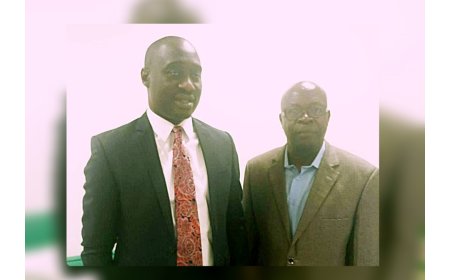
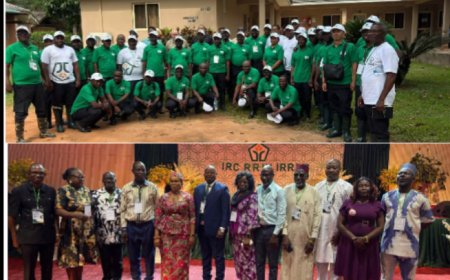
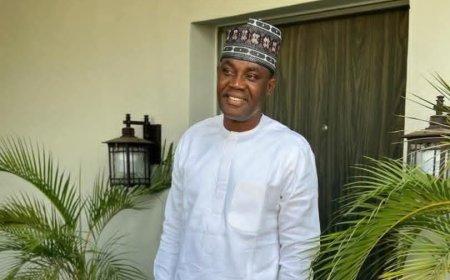
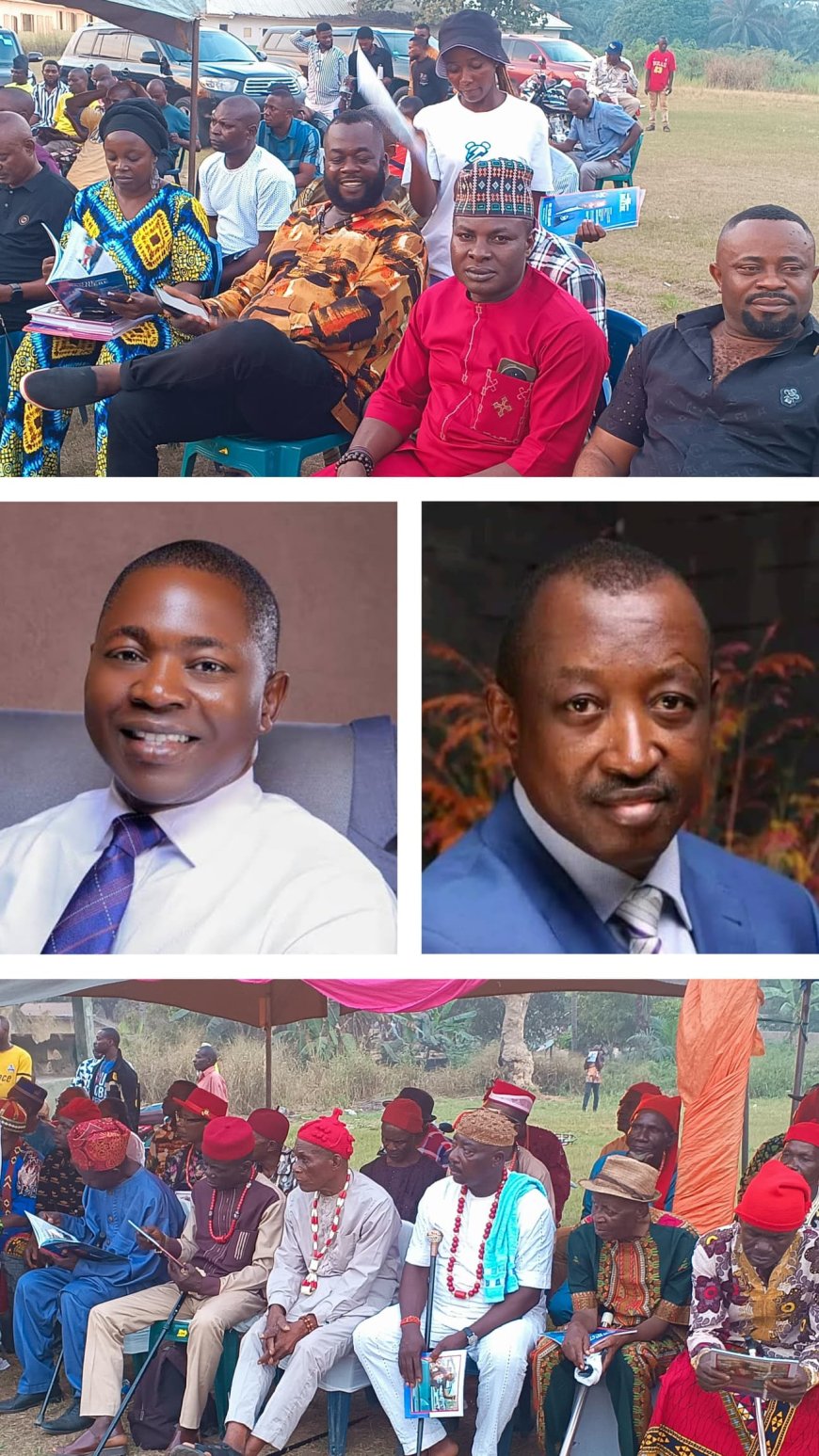
In an era when political promises often dissolve into distant echoes after elections, Hon Victor Abang appears determined to chart a different course in Boki Ikom Federal Constituency, one defined by accountability, presence and measurable impact. His midterm town hall meetings across Boki and Ikom were not staged spectacles but moments of sober reckoning with records, realities and results.
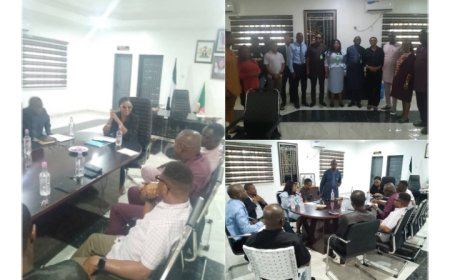
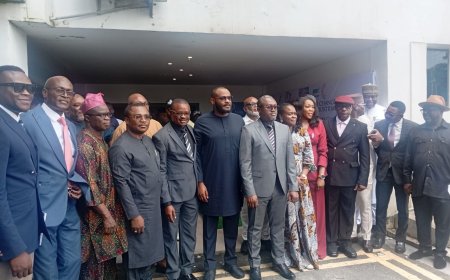
Before traditional rulers, party leaders, professionals, youths and market women, the federal lawmaker presented what he described as a scorecard of service. It was not offered as a document for applause but as one open to scrutiny. For Abang, leadership without verifiable outcomes is hollow, and in a political climate clouded by exaggeration and misinformation, representation must speak through evidence rather than rhetoric.
He was candid in acknowledging that governance often collides with campaign optimism. Some promises, he admitted, were constrained by institutional bottlenecks and fiscal realities. Yet, in a reversal of familiar political patterns, some of his most impactful interventions were initiatives never mentioned during the campaign.
Foremost among these is the expansion of telecommunications infrastructure across rural communities. Although not part of his campaign agenda, Abang moved swiftly after assuming office, recognising that connectivity is no longer a luxury but a catalyst for security, commerce and social inclusion. Today, several previously isolated communities are linked by functional network masts, with more installations ongoing, quietly reshaping daily life and economic prospects.
If connectivity speaks to development, land speaks to identity. Shortly after assuming office, Abang was confronted with disturbing reports that more than ten thousand hectares of Nigerian territory along the Nigeria Cameroon border were under threat of unlawful cession. What followed would become one of the defining moments of his legislative career.
On July 5, 2023, Abang sponsored a motion on the floor of the House of Representatives, drawing national attention to the boundary dispute affecting parts of Cross River State, including Biajua and Danare communities. The motion received overwhelming support, leading to the constitution of an ad hoc committee and the immediate suspension of the boundary demarcation exercise.
More troubling, Abang revealed, was the disregard for recognised colonial boundary markers, including Pillar 113A. The intervention of the National Assembly not only halted the exercise but restored confidence among border communities who feared the quiet erosion of their heritage. In Boki Ikom, that moment redefined representation as protection.
The lawmaker’s footprint is equally visible in the health sector. Through sustained advocacy, he facilitated the delivery of medical equipment valued at over three hundred million naira to the Primary Health Centre in Abo Ebam, significantly strengthening healthcare delivery at the grassroots. His continued engagements concerning the Federal Medical Centre serving the constituency further reflect a commitment to accessible and quality health services.
Education has also featured prominently in his interventions. Plans are underway for the renovation and construction of classroom blocks in selected primary schools, addressing years of infrastructural neglect and restoring dignity to learning environments.
Balancing conservation with community prosperity has been another hallmark of Abang’s legislative focus. His sponsorship of the National Park Service Amendment Bill, which seeks to establish the Okwangwo National Park Unit as an independent entity, is both strategic and symbolic. The proposed amendment aims to strengthen conservation efforts, create employment opportunities for locals and ensure that benefits derived from forest resources accrue directly to host communities.
In furtherance of economic inclusion, Abang has also engaged national and international stakeholders to secure approvals for critical infrastructure projects, including road access through the national park, designed to enhance connectivity and stimulate economic activity.
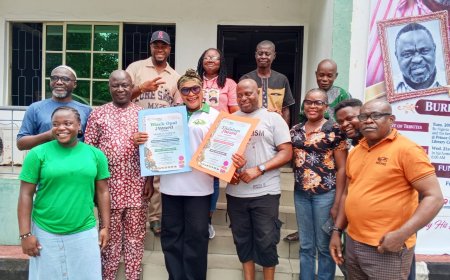
At the heart of the town hall engagement was the presentation of a compendium of achievements titled The Banjuere, detailing projects executed within just two years in office. These include a mini stadium project, the connection of thirty five communities to telecommunication networks and other constituency interventions that reflect a results driven approach to representation.
Beyond statistics and project lists, the true measure of Abang’s two years in the House of Representatives is perhaps best captured in the voices of those who have observed his stewardship closely. Across party lines, professional circles and traditional institutions, a recurring theme emerges that Boki Ikom has found in Abang a representative who listens, engages and acts.
Kate Anoka, ward coordinator for Ntasele Ward in Ikom, said Abang’s approach marks a sharp departure from the distant style that once defined representation in the area. She described the appointment of ward coordinators across all wards as the nerve centre of his grassroots engagement. According to her, the structure keeps the lawmaker constantly attuned to the needs, challenges and aspirations of the people, ensuring that his interventions in Abuja are firmly rooted in lived realities rather than assumptions. She added that this steady flow of grassroots feedback has become the backbone of his legislative agenda and the source of the positive outcomes now visible across the constituency.
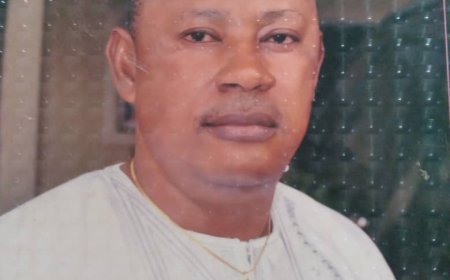
Former Commissioner for Justice and Attorney General of Cross River State, Attah Ochinke, placed Abang’s performance within a broader democratic context. He described the lawmaker’s insistence on accountability and open engagement as evidence of deep respect for the social contract between the electorate and their representative. By willingly submitting his record to public scrutiny, Ochinke said, Abang has restored a sense of ownership to the people, reminding them that representation is a trust renewed through performance, not propaganda.
From the traditional institution, the affirmation is equally strong. Chief Benedict Olom, a royal father in the constituency, said Abang’s leadership has rekindled confidence among community leaders who for years felt unheard. He recalled sustained consultations on sensitive issues of land, development and communal security, noting that the lawmaker’s readiness to listen and respond has strengthened harmony between the grassroots and government. For the royal fathers, he added, Abang’s presence is not symbolic but practical, felt in timely interventions and respectful engagement.
Within the engine room of his legislative work, those closest to the process speak of an unrelenting drive. Michael Asinja, a legislative aide, described Abang’s quest to place Boki Ikom firmly on the national and global agenda as legendary. According to him, the lawmaker has consistently pushed constituency issues to the front burner of national discourse, leveraging motions, advocacy and strategic engagements to attract federal attention and international interest. In doing so, Asinja noted, Abang has ensured that Boki Ikom is no longer a footnote in policy conversations but a constituency whose concerns command attention where decisions are made.
The high point of the town hall event was an interactive session with constituents, followed by the donation of forty eight million naira and bags of rice to support families during the Yuletide season. While the gesture was warmly received, Abang emphasised that welfare support complements but does not replace long term development initiatives.
He assured constituents that the midterm scorecard represents only part of his ongoing efforts, noting that more bills, motions and constituency focused projects would be pursued before the end of his tenure. Urging residents to remain engaged and supportive, Abang reaffirmed his commitment to transparent, inclusive and effective representation.
In Boki Ikom, where the distance between Abuja and the grassroots once felt immeasurable, Victor Abang is steadily narrowing that gap, redefining representation not as a title but as a duty fulfilled through action.