





EXECUTIVE INTERVIEW: Rep Akiba Embarks on Economic Revolution, Targets N500 Million Business Funding for Over 500 Cooperatives
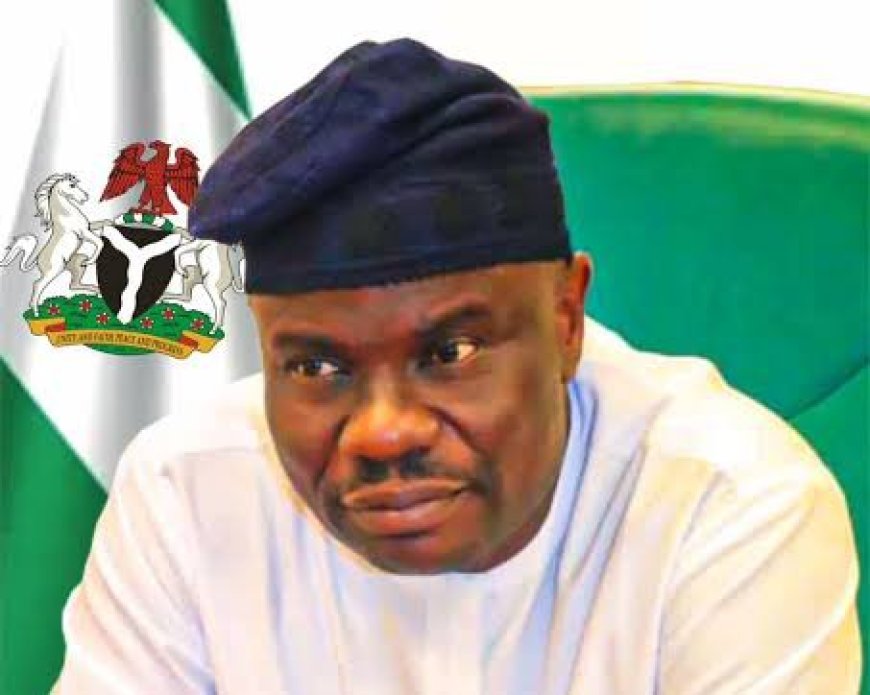
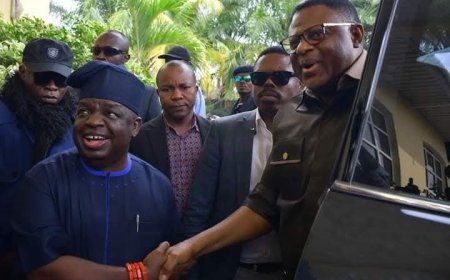
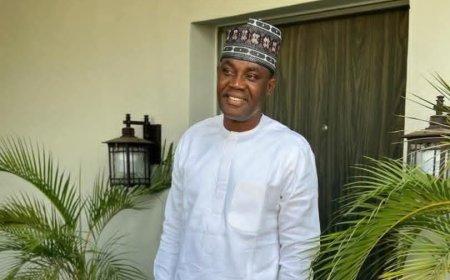
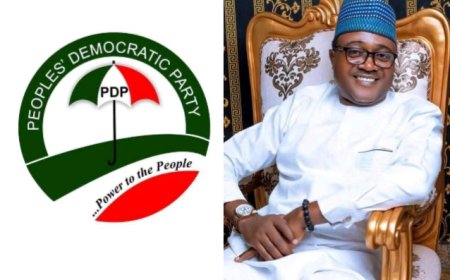
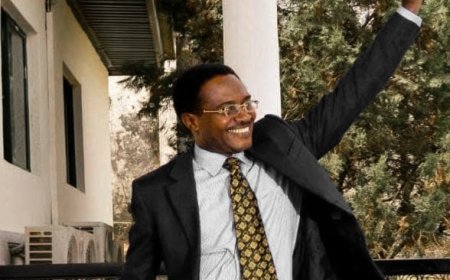
The member representing Calabar Municipality/Odukpani Federal Constituency in the House of Representatives, Hon. Bassey Akiba, recently had a media chat with some journalists at his residence in Calabar. In the interview, the former Odukpani local government chairman shed more light on his programmes at Lower Legislative Chamber of National Assembly including lawmaking, oversight, and representation and the "out-chamber’ involving communication and economic restructuring. Akiba’s tenure is defined by a rigorous balance between constitutional mandates and grassroots economic empowerment with the establishment of a cooperative-based economic structure in every polling unit across his constituency.
Excerpts :
During electioneering in 2023, you promised empowerment if elected. Could you say you have lived up to your promise so far?
Before stepping into the election that brought me to the National Assembly, I consistently spoke about five key priorities. Three of them are constitutional mandates: representation, oversight, and lawmaking. The other two are initiatives I added to help fulfill these mandate, Firstly, regular and effective communication with constituents, Secondly, establishing economic structures in every polling unit across my federal constituency. These five points have guided all my work since taking office.
Again, my mandate has two parts: the “in-chamber” responsibilities of lawmaking, oversight, and representation, and the “out-chamber” responsibilities of communication and constituency development. By combining these, I can ensure that government is responsive to the people, that laws are relevant and actionable, and that every constituent has access to economic, educational, and healthcare support. The work is continuous, structured, and aimed at creating long-term impact.
Can you elaborate on what you mean by communication as part of your mandate?
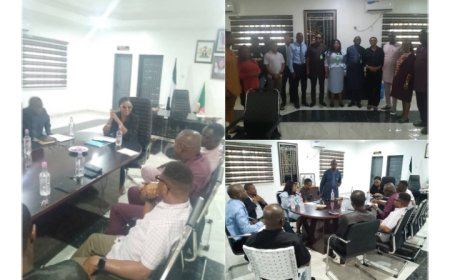
Absolutely, representation requires constant engagement. I compare it to a lawyer-client relationship. A lawyer can only defend a client if they understand their issues. Similarly, I can only represent my constituents effectively if I hear from them. That’s why I regularly engage with people through social media, physical town hall meetings, and interactions in churches, community halls, and even on the streets. This ensures a two-way flow: I bring their concerns to government, and I bring government responses back to them.
How have you executed your constitutional responsibilities in terms of lawmaking?
We’ve sponsored three bills so far: one establishing a School of Technology, another creating an institute for hospital personnel management, and a third related to data governance. But lawmaking is not the exclusive work of a representative. Constituents also play a role. They identify issues, and we translate those into bills or motions. I’ve raised up to 14 motions and 3 bills within the last one year, focusing on areas such as technology education, hospital personnel management, and data regulation. Some of these are based on constituent input.
Let me use this opportunity to clarify that the notion that lawmakers have abandoned their primary duty of lawmaking for welfare projects is as a result of immense pressure from the constituents. We have jettisoned primary responsibilities because of the pressure from constituent.
However, there is nothing wrong with Nigerians demanding good governance from their representatives. Project execution is a distraction from lawmaking even though constituency projects help address community needs, but many lawmakers see it as a distraction from lawmaking. I am not saying it is wrong, but most Nigerians do not know that it is not a primary responsibility of a lawmaker. We struggle hard to get these projects attracted to our constituencies and it is affecting our primary responsibility which is making laws
On oversight and accountability
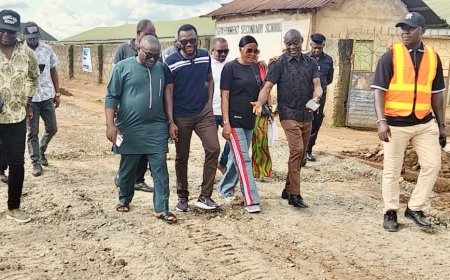
Oversight is a shared responsibility. Constituents should monitor whether budgetary provisions for their communities are implemented. I also personally conduct oversight visits. For example, I was active during the 76 Oil wells’ engagement, ensuring that government projects and services reach the people. The idea is to create a partnership between representative and constituents for effective governance.
More about the economic structures you mentioned and how do they function
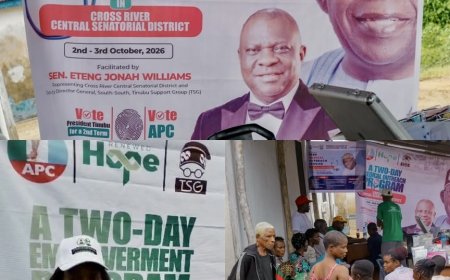
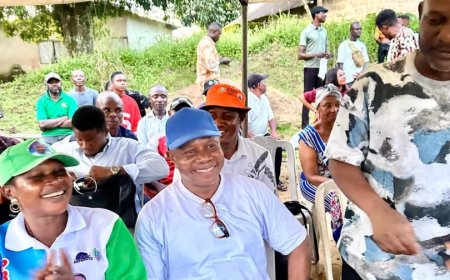
The out-chamber success is the establishment of a cooperative-based economic structure in every polling unit across his constituency. These cooperatives serve as both a social safety net and a logistical platform for distributing dividends of democracy. I understand the power of people coming together. We use that platform to activate participation. A cooperative-based empowerment programme was established across each ward in both Calabar Municipality and Odukpani local government areas with thousands of residents enrolled, and the initiative is supported annually with funding.
We have certified 500 cooperatives, paying the necessary government fees to ensure they remain viable and independent of his office. These cooperatives have a combined target of N500 million in business funding, with over N100 million already secured. This is in addition to N75 million distributed as "social funds" so far.
Our main focus is on agriculture and my constituency outreach operates across four value chains—cassava, oil palm, poultry, and fisheries, through which farmers receive inputs such as hybrid cassava stems and poultry feeds to boost productivity. Every polling unit has a cooperative or economic structure. These cooperatives help us mobilise communities efficiently for town halls, distribute resources, and implement development projects. We’ve supported cooperative farmers in oil palm, cassava, poultry, and fishery. We track their progress and provide support tailored to their cultivation cycles. This system allows us to reach people effectively, from the farm to the classroom and the hospital. Recently, ₦25 million was disbursed through the scheme in the most recent cycle to enable members access micro-support for agriculture and small-scale economic activities through the Bank of Agriculture,”
On why human capital over traditional stomach infrastructure.
My decision to prioritise human capital over traditional "stomach infrastructure" like car gifts is based on my conviction that the method is becoming outdated in the modern era where every nation is talking of human capital development rather than handouts. We rather focus on massive interventions in health and education. If I wanted to buy cars for people, I would have bought over 50 cars. However, that would only be for 50 people. Look at the numbers we are reaching in terms of education and health.
On education and healthcare
We set up teams to reach schools across the municipality and Odukpani axis. The first phase focused on exam-class students identified by heads of schools, and the second phase targets vulnerable students and tertiary learners. Last year, we supported 100 students with 100,000 Naira each. This year, we are expanding to 200 students and targeting over 3,000 beneficiaries, providing both financial and educational support.
Healthcare also uses the economic structures for mobilization. Last year, we conducted free medical outreaches reaching almost 4,000 people, with over 410 undergoing surgeries. This year, our goal is to provide services to 10,000 people. Additionally, we support access to hospitals via a special healthcare card for cooperative members, ensuring that even those in remote areas can receive care. Primary health centres are also being revitalized and equipped to improve local healthcare delivery.