





















C'River Begins Nigeria’s First State‑backed Farm Traceability System to Boost Premium Market Access, Income
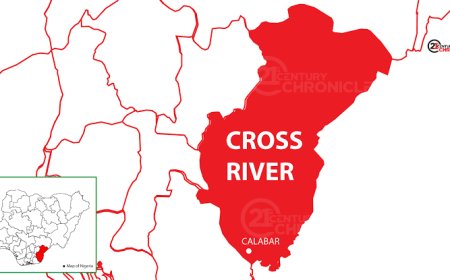
Cross River State has continued to reaffirm its position of being the foremost agricultural hub in Nigerian as well as a global competitor in the agricultural sector.
This is evident with Cross River becoming Nigeria’s first state to formally launch a government‑backed traceability system, creating a structured framework to certify cocoa, coffee and oil palm as internationally compliant.
The System, a digital framework that tracks cocoa, coffee and oil palm from farm to export market is geared towards building a digital record for each product through GPS farm mapping and geolocation, plus registration of every value‑chain actor into a secure database.
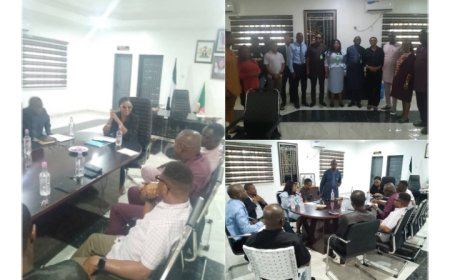
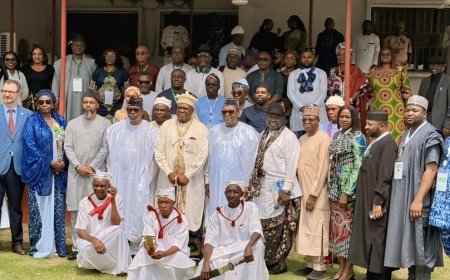
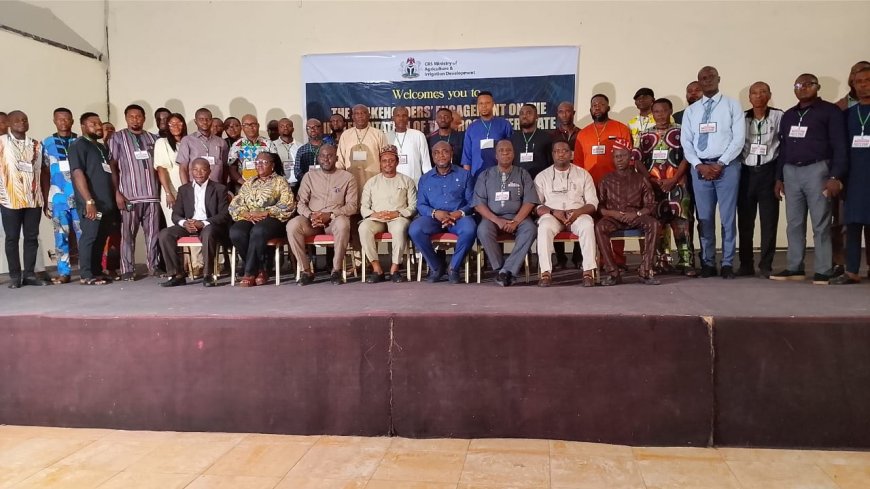
The state Commissioner for Agriculture and Irrigation Development Mr. Johnson Ebokpo while declaring open a stakeholders engagement on the implementation of the Cross River state Traceability System (CRSTS) said the state Ministry of Agriculture and Irrigation Development had earlier outlined a clear roadmap including stakeholder engagement, sensitization trials, technical consultation and phased implementation of the CRSTS across the state.
"As a state known for its forest reserves and rich agricultural heritage, this is not only about compliance but responsibility and opportunity, an opportunity to protect our forest and biodiversity, an opportunity to strengthen value chain transparency an opportunity to improve farmer credibility and income stability, an opportunity to secure and expand access to premium export markets".
"Our objective is to establish a credible, technology driven transparent traceability system which captures farm level data, integrates geo-location mapping, strengthens aggregation structures and positions" Ebokpo said.
He added that Cross River State with its trusted origin in the global agricultural market has the aspirations of becoming Nigeria's national Traceability Hub, a feat which can be achieved collectively.
Chairman of Cross River State Multi stakeholder Committee, Professor Susan Ohen in her remarks described the traceability launch a historic turning point for the state’s commodity sectors which will reshape the future.
She warned producers that global buyers now demand proof of origin, sustainability and deforestation‑free status while encouraging decisive action to hold onto premium markets.
She however framed the 2032 plan of 80% certified cocoa as an inclusive opportunity of higher farmer prices, stronger exporter access, and a deforestation‑free brand for Cross River.
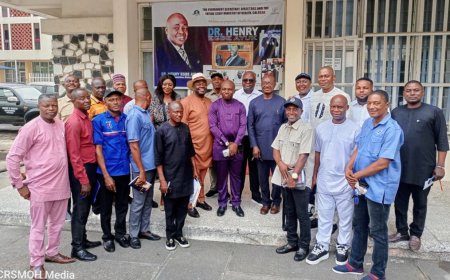
The multistakeholder engagement which drew participants from various commodity associations, All Farmers Association (AFAN), Cross River Geographic Information Agency (CRGIA), Cross River State Forestry Commission, the State Planning Commission, the Office of the Statistician-General, and the .
The active participation from government, private firms, farmer unions and development partners signals broad industry buy‑in and reinforces the reform’s collaborative framework—compliance.
In separate goodwill messages, the state commissioner for information Dr. Erasmus Ekpang and the Director General of the Cross River Geographic Agency (CRGIA) Mr. Williams Archibong hinted that the state’s agro friendly soil type and favourable climate are additional advantage while urging farmers to adopt best practices and make their farms traceable so as to boost food security and cement Cross River as a competitive agro hub.
They however applauded all partners involved while pledging their commitment to its actualisation.
The Country Field Team Lead of Pula Advisors, the lead consultants for the project, Dr Adewole Bello on his part said his team will gather EUDR traceability data from 17,000 farmers in 17 LGAs in the state, using Mavuno Tech and geocoordinates to pinpoint each farm.
He said the task is a collective one where farmers, aggregators, processors, exporters and government must work together to build a stronger, sustainable cocoa‑coffee‑palm sector.
The stakeholder engagement which began in Calabar in the southern senatorial district of the state will hold in all three senatorial districts in the state with the north and central billed to take their turns subsequently.