




























APC Dominates Almost All States in Nigeria: What It Means for 2027 General Elections

By Benjamin GBOR
As Nigeria moves steadily toward the 2027 general elections, the country’s political terrain is increasingly being shaped by the overwhelming territorial dominance of the All Progressives Congress (APC). Across the six geo-political zones, the ruling party has consolidated power in a manner rarely seen since the advent of the Fourth Republic, altering the balance of competition and raising critical questions about the future of electoral politics in the country.
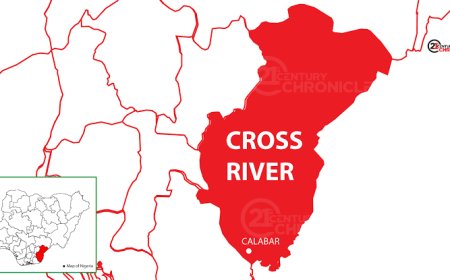
Recently, the political map of Nigeria has told a clear story. In the South-South, a region long regarded as an opposition stronghold, particularly for the Peoples Democratic Party (PDP), the APC now controls all six states—Delta, Akwa Ibom, Edo, Cross River, Rivers and Bayelsa. This total sweep represents a major realignment of political loyalties in an oil-rich zone that has historically played a decisive role in national elections. The collapse of opposition control in the region signals not just electoral losses, but a deeper weakening of opposition structures at the grassroots.
The South-East presents a more mixed picture, but one that still favours the ruling party. The APC governs Enugu, Ebonyi and Imo, while Abia remains under the Labour Party and Anambra under APGA. Although the zone is not fully under APC control, the party’s growing presence in a region where it once struggled for acceptance reflects changing political calculations, internal divisions among opposition parties and the erosion of regional consensus that once limited the APC’s influence.
In the South-West, the APC’s dominance remains largely intact. Lagos, Ekiti, Ogun and Ondo are firmly in its grip, reinforcing the party’s traditional strength in the zone. Oyo, governed by the PDP, and Osun, controlled by Accord, stand as exceptions rather than a counterweight. Even in these states, the APC retains strong political machinery, suggesting that the zone remains structurally favourable to the ruling party as 2027 approaches.
The pattern continues in the North-Central, where Benue, Niger, Kwara, Nasarawa and Kogi are all controlled by the APC, leaving Plateau as the only PDP-held state. This near-total control of the Middle Belt strengthens the party’s national spread and enhances its ability to mobilise across diverse ethnic and religious lines, a factor often critical in presidential contests.
In the North-East, the APC governs Borno, Yobe and Gombe, while the PDP holds Taraba, Adamawa and Bauchi. Though more competitive than other zones, the balance still tilts toward the APC, especially given the strategic importance of the region in recent national elections.
The North-West, Nigeria’s most vote-rich zone, also largely favours the ruling party, with Katsina, Jigawa, Sokoto, Kebbi and Kaduna under APC control.
Zamfara remains with the PDP, while Kano stands out as the only state governed by the NNPP, highlighting pockets of resistance rather than a coordinated opposition challenge.
Taken together, this widespread control gives the APC a significant structural advantage heading into 2027. State governments provide access to political networks, mobilisation platforms and institutional influence that can shape electoral outcomes long before campaigns officially begin. While Nigeria’s electoral laws and INEC are designed to ensure fairness, the reality of incumbency at both federal and state levels often confers advantages that are difficult for fragmented opposition parties to overcome.
Equally important is the state of the opposition itself. The PDP, Labour Party, NNPP and APGA are scattered across regions, often competing against one another rather than building a unified front.
This fragmentation weakens their collective capacity to challenge the APC’s dominance and reduces the likelihood of a strong, nationwide alternative emerging without significant realignment before 2027.
However, this level of dominance also presents its own risks.
With external competition weakened in many regions, the APC may face its fiercest battles internally, as factions and aspirants jostle for tickets and influence. History has shown that internal divisions can be just as destabilising as opposition pressure.
Moreover, prolonged dominance raises concerns about accountability, voter apathy and the health of democratic competition, especially in regions where electoral outcomes may begin to feel predetermined.
As the 2027 elections draw closer, the APC stands as the most territorially entrenched political party in Nigeria’s contemporary history. Yet Nigerian politics remains fluid, shaped by economic realities, public sentiment and shifting alliances. Whether this dominance translates into an easy victory or triggers a late but forceful opposition response will ultimately determine not just the outcome of 2027, but the direction of Nigeria’s democracy in the years ahead.
Benjamin GBOR is a final year student of Mass Communication, University of Calabar