





















OPINION: 16 Days of Activism: Advancing Cross River’s Fight Against GBV

By Isaac AQUA
Each year, the global commemoration of the 16 Days of Activism Against Gender Based Violence provides an opportunity for societies to confront uncomfortable realities and recommit to decisive action.
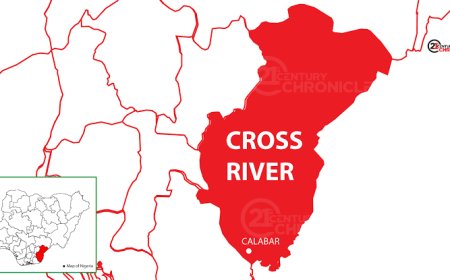
For Cross River, this year’s campaign arrives at a critical moment when gender based violence continues to manifest in disturbing forms, leaving women, girls and even young boys deeply vulnerable. Although progress has been made, it is increasingly evident that the fight against GBV in the state requires urgent intensification, stronger institutional commitment and more sustainable funding.
Civil society organisations, rights advocates, development agencies and community volunteers have long carried the heaviest burden of sustaining advocacy, providing psychosocial services, rescuing survivors and pushing for better laws.
Their contributions are invaluable and deserve immense commendation. Groups such as UN Women, Save the Children, Girls Power Initiative, Basic Rights Counsel Initiative, Heartland Alliance, Her Voice Foundation, Center for Clinical Care and Clinical Research Nigeria, CCCRN,United Nations Population Fund,UNFPA, faith based coalitions offering shelter and counselling, as well as international partners funding technical support and emergency response, have kept the movement alive and impactful.
Yet, despite their tireless commitment, these organisations cannot successfully confront GBV in the absence of robust and deliberate government leadership. External support is declining in many areas, and the state must avoid the temptation to depend solely on donor driven momentum.
One of the weakest links in the battle against GBV in Cross River is the chronic underfunding of institutions charged with prevention, case management and survivor support. Funding gaps continue to undermine the ability of social welfare officers, family courts, community surveillance structures and gender response units to provide timely and comprehensive services.
Many survivors navigate a long and painful path that stretches from police reporting to medical evaluation, legal representation and psychosocial care. Too often, that path is interrupted by logistical setbacks, untrained personnel or the absence of essential services.
It is unacceptable that survivors should struggle to access rape kits, safe shelters, counselling or follow up care simply because agencies are starved of operational funds.
This underfunding also affects family tracing, which is crucial for children who disappear from home due to violence, those forced into street survival and those trafficked for domestic servitude or farm labour. Without robust systems for tracing, reintegration and monitoring, vulnerable children remain invisible to institutions that should protect them. Their disappearance becomes another statistic lost in the haze of poverty, silence and impunity.
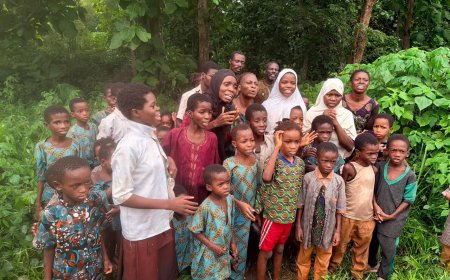
The situation is particularly worrying in cocoa producing communities where child labour is becoming increasingly normalised. Instead of being in school, many children of school age prefer to work on cocoa plantations because the promise of quick cash appears more attractive in the short term.
This choice is often driven by household poverty, but its implications are long lasting and devastating. Children immersed in labour at a young age are exposed to physical harm, sexual exploitation and psychological abuse. They lose the chance to acquire education, which limits their future earnings, stifles their aspirations and perpetuates generational poverty.
More importantly, girls in these communities are at heightened risk of sexual violence because they work in remote plantations, often unsupervised and without reporting structures. When violence occurs, they lack access to care and justice, and the silence becomes another layer of trauma they carry into adulthood.
The long term effects of this cycle cannot be overstated. A population of children deprived of education, shaped by hardship and scarred by violence grows into adults who struggle to contribute meaningfully to society. Communities where child labour thrives also tend to normalise violence because exploitation becomes an everyday experience.
The fight against GBV therefore cannot be divorced from the broader fight against poverty, inequality and exploitation. Cross River must recognise that ending GBV requires a comprehensive approach that protects childhood, secures schooling, strengthens community networks and ensures that violence is punished swiftly and consistently.
While the state has enacted important laws such as the Violence Against Persons Prohibition law, legal frameworks alone are insufficient. Implementation remains the Achilles heel. Effective enforcement requires trained officers, functional family courts, equipped social welfare departments and predictable funding for shelters.
A survivor centred approach must ensure that no victim is turned away from care because a centre lacks fuel for transportation, basic supplies or personnel to manage the case. The state must commit to routine budget releases for its gender response agencies and stop relying on ad hoc interventions triggered only when cases go viral on social media.
Moreover, government must move beyond ceremonial rhetoric during the 16 Days of Activism. Public statements must translate into measurable commitments, and those commitments must be tracked transparently.
Expanded training for community leaders, teachers, traditional rulers and religious organisations is essential because they remain the first line of defence. Strengthening safe school systems, funding social workers, expanding referral pathways and investing in digital reporting platforms will also make the protection ecosystem more resilient.
The 16 Days of Activism should therefore not end with the campaign. They should ignite a renewed, year round resolve to eliminate every form of violence that prevents women and girls from living fulfilled lives. Cross River has the human resources, community goodwill and civil society expertise needed to accelerate progress. What remains is stronger political will and consistent allocation of resources.
Ending gender based violence is not merely a moral duty. It is an economic imperative, a development necessity and a human rights obligation.
Cross River must rise to this challenge with clarity, courage and commitment, ensuring that every woman and child lives free from fear, exploitation and silence.
The 2025 theme, Unite to End Digital Violence Against All Women and Girls, reminds us that the battlefield now stretches from our homes and streets to our screens. To protect women and girls, Cross River must stand as one, strengthening laws, sharpening digital safeguards and nurturing communities that refuse to excuse any form of abuse.
When we unite in purpose and compassion, violence loses its power and every woman and girl can rise, unbroken, in every space she walks or clicks through.
Culled from Nigerian Chronicle of November 26, 2025