






























Eight DIGS For Compulsory Retirement As Egbetokun Exits
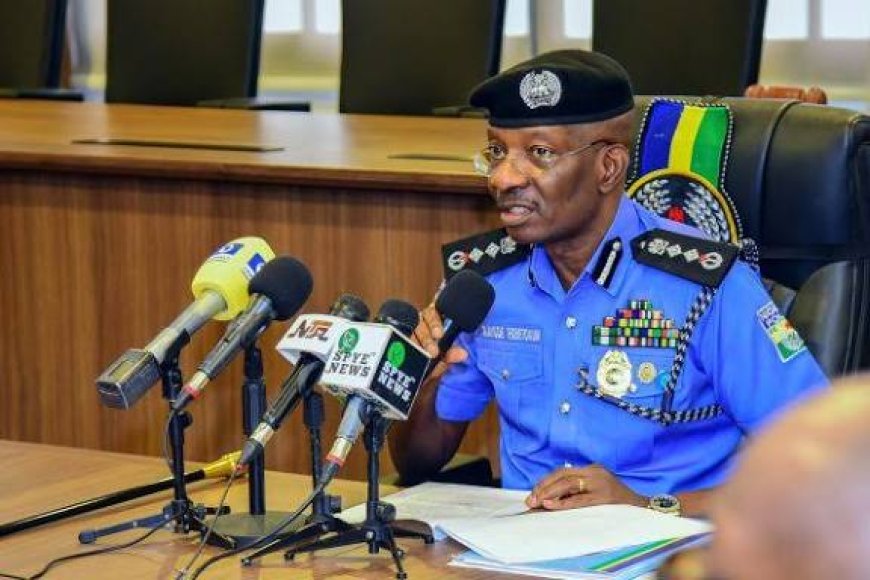
THE departure of Inspector-General of Police (IGP) Kayode Egbetokun has sparked diverse reactions at the Nigeria Police Force Headquarters, as it is expected to trigger the compulsory retirement of at least eight Deputy Inspectors-General (DIGs) following the appointment of Assistant Inspector-General Olatunji Disu as the new acting IGP.
This development signals a significant leadership reshuffle at the Force’s top ranks.
According to sources, at least four DIGs may retire alongside Egbetokun as part of the broader leadership transition. Police insiders explained that such top-level restructuring is standard practice whenever a new IGP assumes office, particularly affecting officers senior to the newly appointed IGP or those nearing statutory retirement age.
However, it remains uncertain if recently promoted DIGs; Fayoade Adegoke, Funsho Adegboye, and Mohammed Adamu Dankwara will also be required to retire.
An internal list circulating within the Force suggests that several DIGs heading critical departments could be impacted, including DIG Yahaya Abubakar (Finance and Administration), DIG Adebola Hamzat (Logistics and Supply), DIG Adebowale Williams (Information and Communication Technology), DIG Sadiq Idris Abubakar (Force Criminal Investigation Department), DIG Ben Nebolisa Okolo (Force Intelligence Department), DIG Basil Idegwu (Research and Planning), and DIG Training.
A serving Assistant Inspector-General, who requested anonymity, explained that the exit of senior DIGs is a normal outcome when a junior officer is elevated to IGP.
He noted, “The Nigeria Police operates a strict hierarchy. When a junior officer becomes IGP, senior officers above him often retire voluntarily or compulsorily to prevent chain-of-command conflicts and allow the new leadership to implement its strategic priorities.” He added that three of the recently promoted DIGs may also retire between June and July due to age and years of service.
Most of the affected officers have reached or are close to statutory retirement age. The shake-up offers the new IGP the chance to position trusted officers in key roles, enhance operational efficiency, and drive institutional reforms.
The AIG emphasized that these retirements are procedural rather than punitive and represent a generational shift at the Force’s top command, with potential implications for internal stability, operational focus, and policy implementation.
Source: VANGUARD