


















EDITORIAL: Honour Is Earned, Not Handed Out: Otu Must Weigh Legacy Against Sentiment

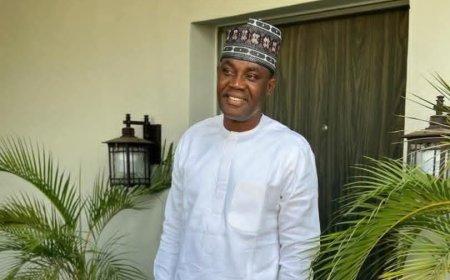
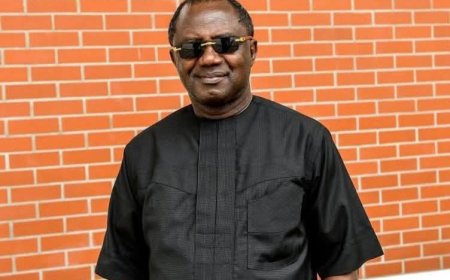
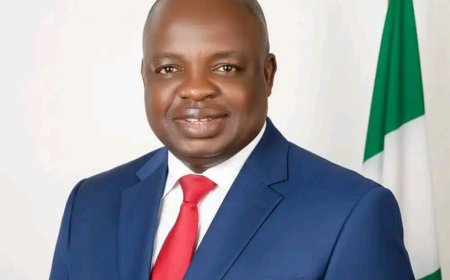
Governor Bassey Otu’s plan to confer the highest state honour on former democratically elected Governors Clement Ebri, Donald Duke, Liyel Imoke and Ben Ayade has stirred both nostalgia and unease across Cross River State. Honours are not ornamental tokens. They are solemn acknowledgements of leadership that transformed lives, strengthened institutions and advanced the public good.
As Cross River stands on the verge of this moment of recognition, one truth must remain inviolable: honour is earned, not handed out.
From January 1992 to the present, the state has witnessed dramatically different styles of leadership outside the military era. There were seasons of discipline and vision, years of stability and a troubling period of decline. To pretend these tenures carry equal weight is to dilute the very meaning of honour.
Clement David Ebri governed Cross River State from January 1992 to November 1993 after emerging from the 1991 election under the National Republican Convention. His brief tenure stood out for its focus on rural development, human capital, fiscal discipline and inclusive governance. Despite limited resources, he prioritised rural infrastructure.
His administration opened more than one thousand kilometres of rural roads, expanded water supply schemes and improved urban water systems with support from the African Development Bank.
He invested heavily in education, establishing about two hundred and twenty adult literacy centres, and championed civil service welfare through new housing initiatives and affordable mortgage schemes. Ebri was fiscally prudent.
He raised the state’s internally generated revenue from about three percent to roughly thirty percent without taking loans or overdrafts. His administration nurtured a new generation of leaders, elevating individuals such as Donald Duke, Liyel Imoke, Gershom Bassey, Ivara Esu and Usani Usani into public service. His tenure ended abruptly with the November 1993 military coup, but his legacy endures as a model of competence, clarity of purpose and visionary governance.
If honour is truly earned, Ebri deserves it for his foresight and sound economic agenda.
At a defining moment in Cross River’s history, Donald Duke reimagined what the state could become. His revival of the Obudu Ranch Resort, creation of the Tinapa Business Resort, establishment of the Calabar Carnival and modernisation of the capital city were bold, creative and transformative.
These initiatives placed Cross River on the global map and set a developmental tone rarely matched in the region. Though some of his projects struggled to survive political disinterest after his exit, Duke’s tenure remains the most coherent and imaginative attempt at modernisation in contemporary Cross River. If honour is the reward for vision, Duke earned his place.
Liyel Imoke may not be associated with flamboyant projects, yet he delivered something equally vital: stability. His focus on rural electrification, healthcare, road connectivity, education and civil service professionalism quietly reinforced the social backbone of the state.
He did not revive every mega-project he inherited, but he kept the state functional, humane and institutionally anchored. If honour is for steady, people-focused governance, Imoke merits recognition.
Honour, however, must never be politicised. If Cross River chooses to honour its former governors, it must do so with integrity and honesty. Ben Ayade’s tenure was marked by grand speeches, endless groundbreakings and industrial promises that seldom progressed beyond signboards.
Factories were launched with fanfare but delivered little. Health sector,and every segment nosedived to abysmal level.Public service discipline deteriorated. Calabar lost its shine. Insecurity became a menacing nightmare. Pensioners suffered due to irregular pension payments and the non-payment of gratuities.
The forests of Cross River endured unprecedented destruction through indiscriminate logging, justified in the name of a superhighway that never materialised.
To equate Ayade’s record with Ebri’s administrative blueprint, Duke’s vision or Imoke’s stabilising influence is to rewrite history in a way that insults the intelligence of Cross Riverians. If honour is for measurable impact, Ayade must be assessed by his performance, not his publicity.
State honours must not become tools of political convenience or instruments for appeasing elite networks. They must reflect merit, history and the truth of public service.
Though, Governor Otu may have good intentions, but honouring all former governors equally risks sending the wrong message: that governance outcomes do not matter, that all leadership is equal and that public service can be rewarded even when results are absent.
Cross River cannot move forward by flattening its past.
We state emphatically, If the governor proceeds, he must ensure that the citations accompanying these honours are honest and uncompromising. They must not be watered down, padded for political comfort or rendered vague for the sake of diplomacy.
Each governor’s legacy should be acknowledged exactly for what it was.
We opine that honour is meaningful only when it reflects the real arc of leadership: vision where there was vision, stability where there was stability and failure where there was undeniable failure. Anything less amounts to endorsing impunity, disregarding the norms of good governance and sending a dangerous signal.
Ultimately, it will erode the value of honour itself.