




























2027: 70 Percent of NASS Members May Lose Seats if Real-time Electronic Transmission of Polling Unit Results Fails, Igini
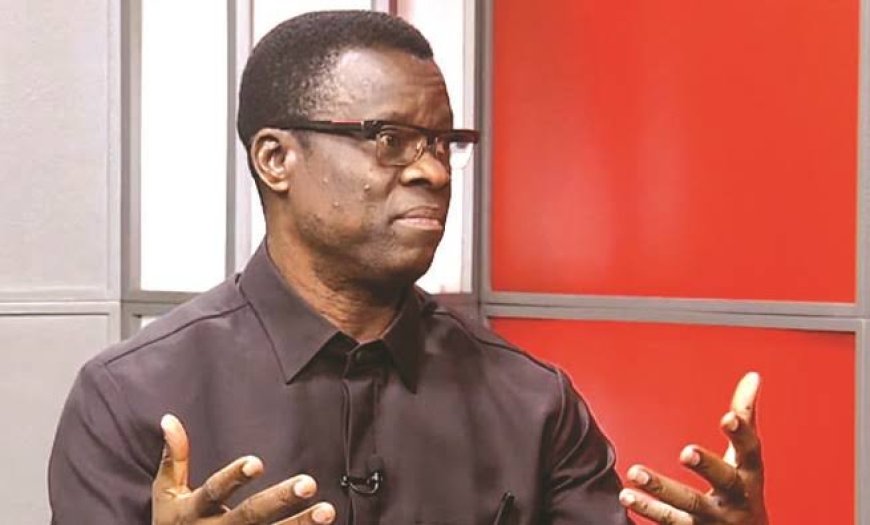
A Lawyer and former Resident Electoral Commissioner (REC) of the Independent National Electoral Commission (INEC), Mike Igini, has warned that a majority of serving federal lawmakers may lose their seats in 2027 if the National Assembly retains a controversial proviso seeking to remove real-time electronic transmission of polling unit results in the ongoing Electoral Act amendment.
In a press statement issued on Sunday, Igini cautioned senators and members of the House of Representatives against what he described as “institutional self-harm.”
He argued that any dilution of direct electronic transmission of results from polling units to INEC’s Result Viewing Portal (IReV) could expose legislators to the same electoral vulnerabilities that consumed their predecessors.
As the Senate and House move to harmonise their divergent versions of the Electoral Act Amendment Bill, Igini said lawmakers must heed “salutary lessons” from past Assemblies that allegedly failed to close loopholes exploited to overturn legitimate polling unit outcomes during collation.
He said, “Those earlier Assemblies, for reasons of convenience and party loyalty, refused to address well-documented election rigging vulnerabilities in our laws.
“Such lacunae were later exploited to subvert polling-unit outcomes, rendering many of them victims of the very defects they declined to remedy.”
Igini backed his warning with data spanning 2007 to 2023, showing persistently high turnover rates in both chambers of the National Assembly, a pattern he attributed in part to manipulable result collation processes where polling unit evidence could not be independently verified in real time.
Part of the statement read, “In the Senate, turnover has averaged well above 60 per cent over successive cycles. The Sixth Senate (2007–2011) returned only 23 of 109 members, recording a 79 per cent turnover.
“The Seventh Senate (2011–2015) saw 36 re-elected and 73 new entrants (67 per cent turnover), while the Eighth (2015–2019) recorded 64 per cent turnover.
“The Ninth Senate (2019–2023) improved slightly with 59 per cent turnover. However, the current Tenth Senate (2023–2027) has regressed sharply, returning only 25 senators and ushering in 84 newcomers, a staggering 77 per cent turnover rate.
The House of Representatives has followed a similar trajectory. From a 78 per cent turnover in the Sixth House to 72 per cent in the Seventh and 69.4 per cent in the Eighth, attrition fell to 57 per cent in the Ninth Assembly but has risen again to 70 per cent in the present Tenth House.
“Such chronic instability weakens legislative oversight, erodes continuity in law-making and drains public resources through repeated induction and retraining of new lawmakers.
“This chronic instability breeds institutional amnesia. Legislators, notwithstanding strong local backing, are reduced to supplicants rather than autonomous stakeholders, beholden to executive whims.”
He argued that the immediate political danger lies in party nomination processes, where governors and party leaders wield decisive influence over ticket allocation.
Lawmakers denied renomination, he said, often seek alternative platforms but are vulnerable to defeat at collation centres if polling unit results are not electronically secured and publicly viewable.
Igini stated, “Nigerians have insistently demanded real-time transmission precisely to forestall post-poll alterations at ward or local government collation centres,” Igini stated.
“Publicly viewable results deter tampering and make any manipulation manifest and actionable.”
He warned that the Senate’s newly introduced proviso qualifying direct electronic transmission “invites mischief,” potentially enabling collusion among influential actors, collation officials and even telecommunication providers to engineer deliberate network failures on election day.
Dismissing network coverage concerns as “specious,” Igini disclosed that before 2023, INEC and the Nigerian Communications Commission conducted a nationwide survey that found over 97 per cent 2G and 3G coverage.
He said the commission successfully deployed real-time electronic transmission in more than 105 off-cycle elections, including five governorship polls, prior to the 2023 general election.
Citing his personal experience, Igini recalled that as INEC Resident Commissioner in Cross River State in 2012 under then INEC Chairman, Professor
Attahiru Jega, the commission piloted a real-time transmission system during Governor Liyel Imoke’s second-term election, with results transmitted from all 18 local government areas to a central dashboard.
“The problem has never been technology. It has always been statute capture, statute sabotage and the strange refusal of the courts to give effect to clear provisions of the law,” he insisted.
He further anchored his argument on constitutional provisions, noting that Section 160 of the 1999 Constitution empowers INEC to regulate its procedures, while Section 148 of the Electoral Act authorises it to issue binding regulations and guidelines.
“The regulatory authority of INEC is unimpeachable,” he maintained, describing judicial reluctance to uphold these powers in previous disputes as “simply unbelievable.”
Igini urged the National Assembly to excise the contentious proviso and restore the original, unequivocal provision for mandatory real-time electronic transmission of polling unit results to IReV.
He also called on the judiciary not to become “the weakest link” in defending democracy and the rule of law.
He said, “The facts of alarming legislative turnover are incontrovertible. The imperatives are clear. Let wisdom prevail over expediency and party loyalty, lest history repeat its tragic verdict upon yet another Assembly.”
With reconciliation talks underway, Igini’s intervention sharpens the stakes in a debate that could define not only the integrity of Nigeria’s electoral system but also the political survival of hundreds of incumbent lawmakers heading into 2027