













Otu Restoring Hope Through Debt Repayment, Fiscal Discipline – Orok Duke
By Missang AKPET
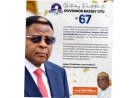
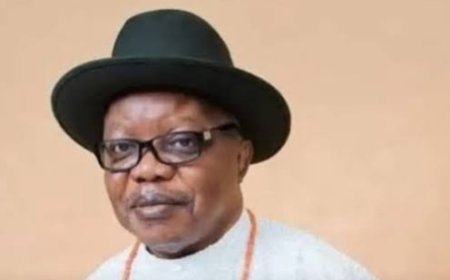
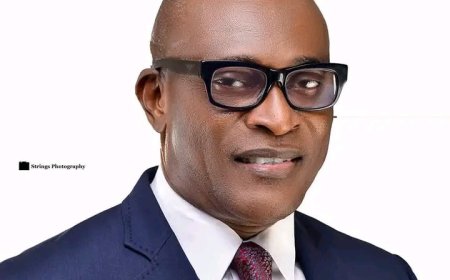
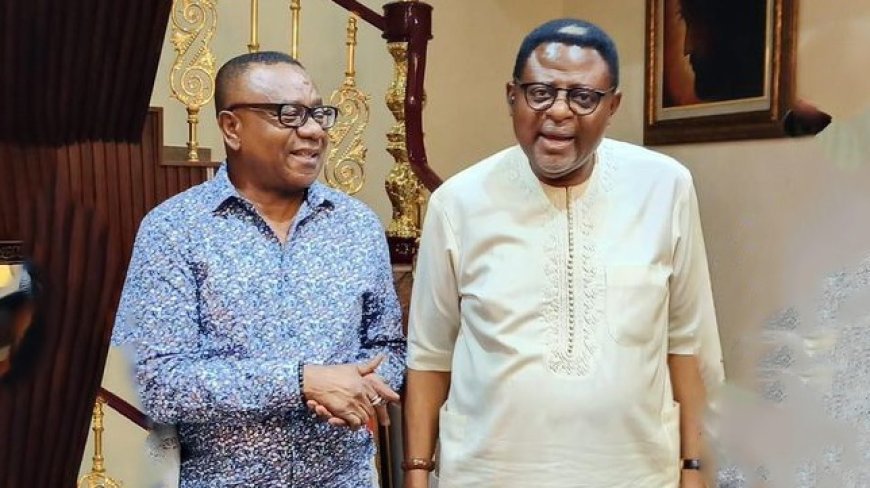
The Cross River State Representative on the Board of the Niger Delta Development Commission, NDDC, Rt. Hon. Orok O. Duke, has described Governor Bassey Edet Otu as a "restorer of hope" for his efforts to reposition the state through debt repayment and fiscal discipline.
Duke said the Governor's decision to prioritise repayment of inherited obligations instead of accumulating new debts is laying a stronger foundation for Cross River's economic recovery.
According to him, at the centre of Governor Otu's fiscal strategy is a deliberate effort to free the state from the shackles of debt while resisting the temptation to finance government through additional borrowing.
This position is supported by figures released by the State Government. In October 2024, the Commissioner for Finance, Michael Odere, disclosed that the Otu administration had paid about N70 billion of inherited debt without borrowing.
More recent figures cited by the Ministry of Information show that the state's domestic debt declined from approximately N204.05 billion in June 2023 to N132.30 billion by March 2026, representing a reduction of about N71.7 billion. The report however noted that the state still has substantial foreign denominated obligations, meaning the debt challenge has been reduced but not completely eliminated.
For years, debt servicing and accumulated liabilities have constrained the capacity of successive administrations to deploy resources to infrastructure, social services and economic development.
Duke noted that Governor Otu's approach has been to use available resources to meet existing obligations while seeking to expand the revenue base and create room for productive expenditure.
He explained that every debt obligation retired reduces future pressure on government revenue, freeing funds for infrastructure, education, healthcare, agriculture and security.
The state's fiscal direction has also coincided with an increase in Internally Generated Revenue. According to figures cited by the Ministry of Information, IGR rose from about N21.1 billion in 2022 to N31.56 billion in 2023, while fiscal records subsequently reported about N46.3 billion in independent revenue for 2024.
For Duke, the combination of debt reduction and improved revenue represents an important part of rebuilding confidence in the state's economy.
"A state that is gradually reducing its inherited liabilities has greater capacity to plan beyond immediate financial pressures. It can also improve its ability to meet obligations to contractors, workers and service providers, while creating a more predictable environment for private sector participation," he said.
He added that this is particularly important as the administration has identified agriculture, tourism, infrastructure and private sector development as priority areas.
The state government has said its development strategy is intended to make agriculture more productive, grow tourism, strengthen the private sector and improve infrastructure and social services.
A June 2026 analysis by TheCable similarly reported that the Otu administration had placed significant emphasis on reducing inherited debts, recovering state assets and improving fiscal discipline, while noting that the strategy had attracted debate over the balance between debt repayment and visible infrastructure spending.
The Otu administration has also continued to work with federal institutions, including the NDDC, on major infrastructure interventions. In April 2026, the NDDC reported ongoing collaboration with the state on the Calabar-Odukpani-Akamkpa-Ogoja road corridor, which is critical to the movement of agricultural produce, petroleum products and solid minerals.
Duke argued that Governor Otu's debt repayment programme should not be seen merely as an accounting exercise, but as part of a broader attempt to restore the financial capacity and economic prospects of Cross River State.
However, he noted that the ultimate test will remain whether the reduction in liabilities and improvement in fiscal capacity translate into sustained investment and measurable improvements in the living standards of Cross Riverians.