
















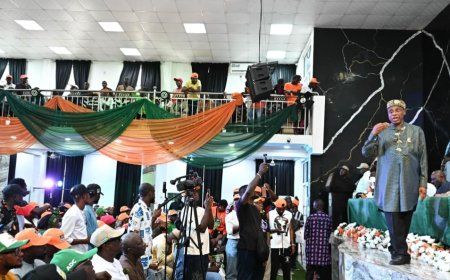

2027: APC Governors, Wike Set To Reach Alliance Ahead of Presidential Election
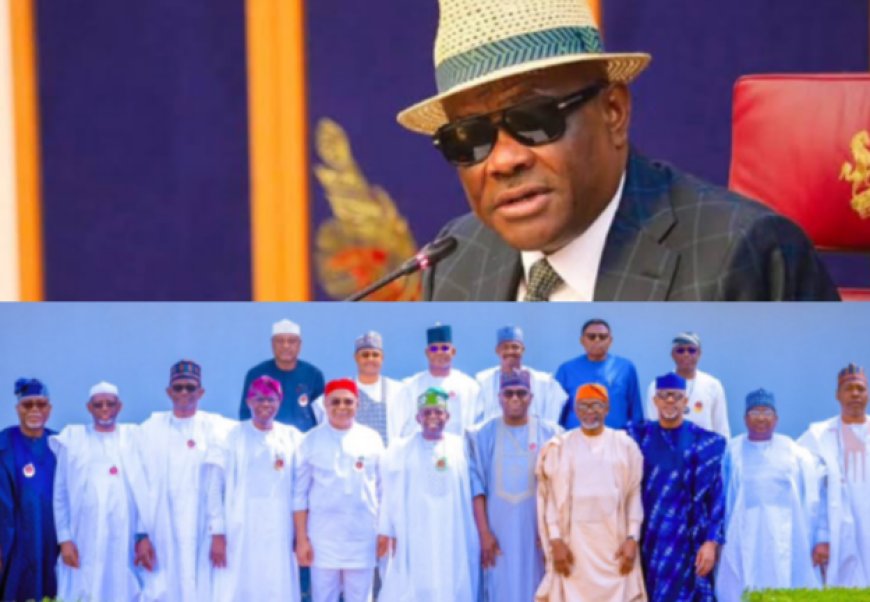
Political tensions is brewing within the All Progressives Congress (APC) as some APC governors are discreetly engaging with ADC Presidential candidate and former Vice President, Alh. Atiku Abubakar, over the emerging Rainbow Coalition.
Rainbow Coalition has created some divisions among the Governors Forum and some influential figures in the ruling party ahead of the 2027 general elections.
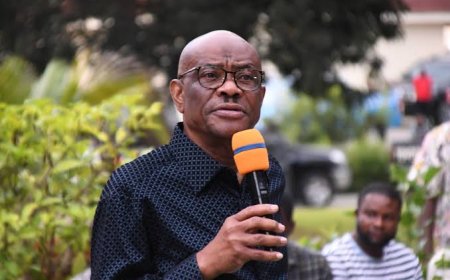
The Minister of the Federal Capital Territory, Nyesom Wike, who is the leader of Coalition, has continued to promote a broad-based platform designed to mobilise support for President Bola Tinubu’s bid for another term in office.
While Wike has repeatedly maintained that the coalition is primarily concerned with supporting Tinubu at the presidential level, some APC governors have expressed reservations about the arrangement, arguing that alliances involving politicians from outside the APC could create complications for the party's candidates in governorship and legislative contests.
The disagreement has increasingly brought Wike into confrontation with several APC governors, particularly Imo State Governor Hope Uzodimma, Kwara State Governor AbdulRahman AbdulRazaq and Ogun State Governor Dapo Abiodun.
Uzodimma, who chairs the Progressive Governors’ Forum, has publicly maintained that APC governors would not support political arrangements capable of weakening the ruling party or damaging the electoral prospects of its candidates. The position reflects a fundamental difference between the governors and Wike over how support for Tinubu should be organised ahead of the 2027 elections.
For Wike, politicians belonging to different parties can support the President's re-election while still maintaining their respective party structures and fielding candidates in other contests. The minister has argued that support for Tinubu at the presidential level should not automatically prevent opposition parties from contesting governorship and legislative seats.
In a statement issued earlier, Wike said, "What I said and stand for is that I will mobilise support for the re-election of the President. I never promised anyone that PDP will not field candidates to contest governorship, National Assembly and States House of Assembly elections."
That position has come under criticism from APC leaders who fear that a political structure supporting Tinubu while simultaneously backing candidates outside the APC could produce competing campaign interests at state and constituency levels.
The APC Governors Forum previously declared that its members would concentrate their campaign efforts on candidates officially sponsored by the party. Uzodimma said the forum would not participate in arrangements that could undermine Tinubu’s re-election, weaken the APC or adversely affect its candidates.
The governors' position has further complicated an already sensitive relationship between Wike and some members of the ruling party.
Wike has accused Uzodimma and AbdulRazaq of being among those driving opposition to his political activities. He has also suggested that political calculations surrounding the future leadership of the National Assembly may be contributing to the resistance against the Rainbow Coalition. Those allegations have been reported as claims by Wike and have not been established as fact.
The minister has also argued that the coalition should not be interpreted as an attempt to establish a parallel APC structure. According to him, its purpose is to bring together politicians from different political backgrounds who are willing to support Tinubu's second-term bid.
"The Rainbow Coalition has nothing to do with the APC. Rather, it is our own way of mobilising support across political parties for Mr President," Wike said in an earlier statement.
The disagreement has become particularly significant because of the potential effect of political alliances on elections taking place alongside the presidential contest.
The 2027 elections will involve contests for the presidency, governorships, the National Assembly and state Houses of Assembly. Consequently, political arrangements that unite groups at the presidential level while placing them on opposing sides in state or legislative races could create unusual alliances and rivalries. That possibility is at the heart of the APC governors' concerns.
Reports have indicated that political realignments associated with the Rainbow Coalition are being watched closely in several APC-controlled states. The concern among some party figures is that candidates supported through coalition arrangements could compete against APC nominees while the same political actors simultaneously campaign for Tinubu at the presidential level.
Wike, however, has rejected the argument that such an arrangement necessarily undermines Tinubu. He has pointed to examples of politicians who can support a presidential candidate while their parties continue to field candidates for other elective positions.
The disagreement has also generated competing interpretations of the political motivations behind the coalition.
Wike has suggested that some governors are worried about the influence the coalition could acquire, while his critics within the APC have presented their opposition as a defence of party discipline and electoral cohesion.
In September, an APC group also warned Wike against actions it said could deepen divisions within the ruling party, insisting that the Rainbow Coalition should not be portrayed as an extension of the APC.
The controversy has placed President Bola Tinubu in a politically delicate position. Wike remains a prominent figure within the federal administration despite his continued association with the Peoples Democratic Party, while APC governors constitute an important part of the party's nationwide political structure.
Wike's continued support for Tinubu therefore intersects with the interests of the ruling party's governors, even when the minister's political strategy differs from theirs.
Political analysts have consequently stressed the importance of managing the disagreement without allowing it to develop into a broader confrontation capable of affecting the ruling party's preparations for 2027.
The disagreement also has implications beyond the individuals directly involved. APC governors are responsible for party mobilisation in their respective states, while Wike has demonstrated an ability to build political relationships across party lines. The extent to which those competing networks cooperate or collide could influence campaign arrangements as the election approaches.
Wike's latest criticisms have kept the dispute in the public domain. On September 21, he said he would disclose what he described as the reasons behind the opposition to his coalition, particularly the positions taken by Uzodimma and AbdulRazaq.
A day later, reports said Wike had identified Uzodimma, AbdulRazaq and Abiodun as the governors he believed were most opposed to his political activities.
The governors, meanwhile, have continued to emphasise their commitment to the APC's official structures and candidates rather than to political arrangements operating outside the party.
The competing positions leave the APC facing an increasingly complicated political equation. On one side is a coalition strategy that Wike says is designed to secure support for Tinubu across party lines. On the other is the APC governors' insistence that the party must maintain a unified campaign structure and protect its candidates at every level of the election.
*Source: THE PUNCH*