























ALGON: Otu’s 2,000 Youth Oil Training Positions C'River For Blue Economy

By Judex OKORO
The Association of Local Governments of Nigeria (ALGON), Cross River Chapter has described the state government’s training of 2,000 youths in oil and gas skills as a strategic investment in the state’s blue economy.
The state Chairman of the association, Mr Yibala Inyang, who stated this in a statement issued in Calabar, said the state has embarked on a specialised training programme for 2,000 youths to equip them with the professional skills and knowledge required to take advantage of emerging opportunities in the oil and gas sector.
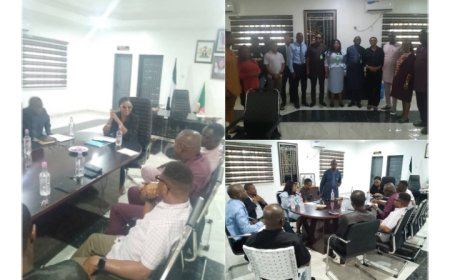
The programme, tagged “Skill Up in the Season of Sweetness (SUSOS)”, is being organised by the Office of the Special Adviser to the Governor on Oil and Gas in collaboration with the Research Gateway Professional Institute.
The programme, which was flagged off by the Governor, represented by the Speaker of the Cross River House of Assembly, Mr Elvert Ayambem provides professional training and certification for beneficiaries drawn from the 18 local government areas.
While commending the initiative, ALGON said it would prepare Cross River youths to take advantage of emerging opportunities in the oil, gas, and maritime sectors.
According to Inyang, who is also the Chairman of Yakurr Local Government Area, the training was coming at a critical time when Cross River was seeking to re-establish its position in the oil-producing and maritime economy.
He described the initiative as a “masterstroke”, saying it demonstrated that the state was preparing its human capital ahead of possible expansion of oil and gas activities.
“Governor Otu’s Oil and Gas Skills Revolution is proof that Cross River is not landlocked but ready for take-off,” he said.
The ALGON chairman argued that the state’s geographical location and maritime assets remained important to its economic prospects, regardless of previous legal and political setbacks over its offshore oil wells.
He recalled the 2012 Supreme Court judgment following the loss of Bakassi, which, according to him, resulted in the ceding of 76 offshore oil wells and affected the state’s expected revenue from derivation.
Inyang said the development also affected the state’s ambition to develop the Bakassi Deep Seaport.
He, however, argued that the legal setback did not erase Cross River’s coastline, estuaries, rivers, or maritime potential.
“What we missed is poignant. That judgment dealt with an administrative dispute; it did not erase our geography.
“It could not erase our estuaries, our direct discharge into the Bight of Bonny, our access to deep sea within a few nautical miles and our massive blue economy potential,” he said.
The ALGON chairman listed the strategic location of the Eastern Naval Command in Calabar, the Cross River Estuary and Calabar River system, as well as the state’s proximity to the deep sea, among its maritime advantages.
He also cited oil wellheads reportedly identified during technical mapping for the proposed deep seaport project.
Inyang said the state should focus on building the capacity of its citizens to participate meaningfully in the exploitation of its natural resources.
He said the training of 2,000 youths was, therefore, not merely an employment initiative but an investment in the state’s future workforce.
“Governor Otu has seen tomorrow. By training 2,000 youths today, he is ensuring that when our littoral and oil-producing status is fully restored, Cross Riverians will be the engineers, safety officers, and managers of their own resources,” he said.
Inyang urged relevant authorities to allow ongoing scientific verification of the state’s littoral status by the Revenue Mobilisation Allocation and Fiscal Commission (RMAFC) and the Nigerian Upstream Regulatory Commission (NUPRC) to proceed without prejudice.
He pledged the support of the 18 local government chairmen for the Otu administration’s People-First agenda.
THE BEAGLE NEWS