

























Funding, Manpower, Limiting Use of Technology by Nigeria Military, NCTC
The National Counter Terrorism Center (NCTC) has highlighted poor funding and manpower as challenges hindering the nation's armed forces from fully leveraging technology to enhance operational effectiveness.
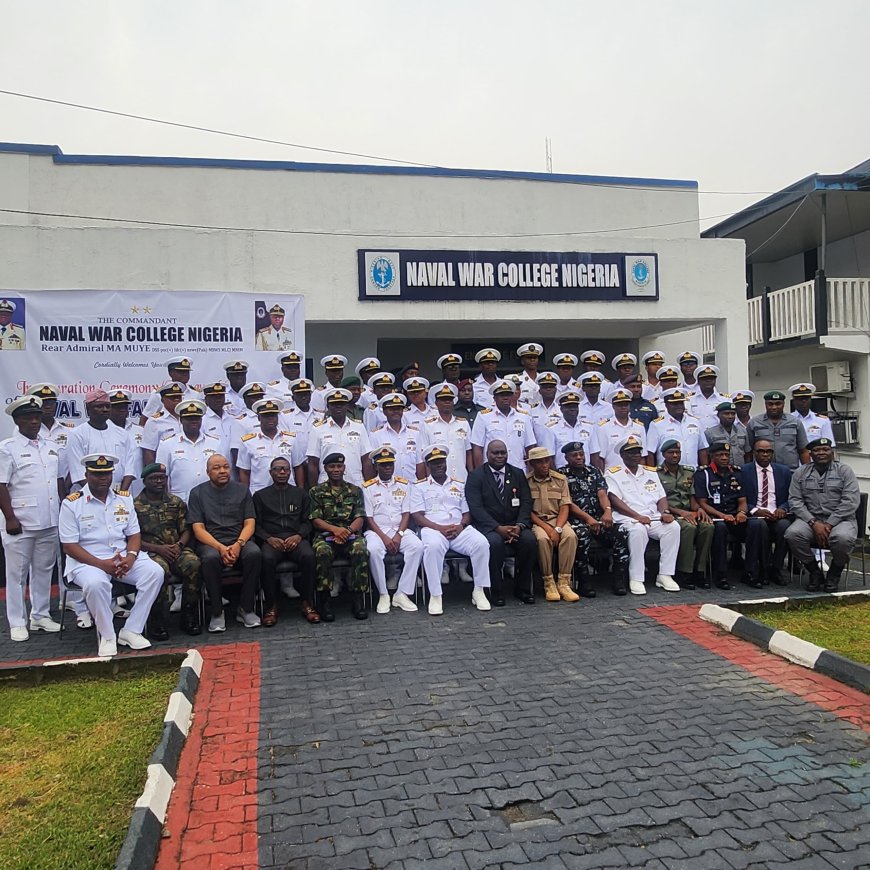
Maj.-Gen. Adamu Laka, Coordinator of the Center, stated this while delivering lecture during the inauguration of the Naval Warfare Course 10 in Calabar on Friday.
Laka, who spoke on the topic: Leveraging Technology Driven Intelligence for Effective Operations In The Military: AFN In Perspective, was represented by Brig.-Gen. Peter Gbor, Director of Intelligence in the NCTC.
Laka emphasised that emerging technologies, especially advanced Artificial Intelligence (AI) applications, have become a major tool in operational effectiveness among military forces in the western world.
He, however, noted that Nigeria is still grappling with making headway with the technology owing to lack of robust artificial intelligence infrastructure.
The coordinator explained that assessment of ongoing research and development initiatives indicates that advanced AI applications, remain underdeveloped and insufficiently integrated into core operational systems.
"Consequently, while institutional efforts have signaled growing recognition of AI importance, gaps in funding, technical expertise, coordination, and strategic focus
continue to dim the transformative impact of artificial intelligence on operational effectiveness.
"This infrastructure includes high-performance computing systems, data storage and processing platforms, secure networks, base transceiver stations,
fiber optic platforms, satellite lanes, and reliable broadband connectivity.
"The country needs 80,000 base stations for optimal speed required for 4G or 5G networks, but only has about 53,460 base stations, which are short of what is required.
"This has resulted in poor data quality and integration across services," he stated.
Laka pointed out that as a result, the lack of robust AI infrastructure constitutes a neutral impediment to the effective use of AI by the armed forces for enhanced operational effectiveness.
He noted that Nigeria is ranked 86 regarding digital well-being out of 117 countries with poor internet connectivity.
According to him, while Nigeria invested $4 billion in probation and communication technology infrastructure between 2010 and 2021, Rwanda invested over US$12 billion within the same period.
Additionally, the coordinator also said the shortage of AI trained specialists undermines the armed forces' ability to exploit large volumes of data generated from Intelligence Surveillance and Reconnaissance (ISR) platforms.
"Without sufficient expertise to design and train algorithms, validate outputs,
and integrate AI insights into decision-making processes,
commanders are unable to fully leverage AI for real-time threat detection, predictive analysis, and operational planning.
"Furthermore, AI development, being a relatively new field, is taught in a few tertiary institutions in Nigeria.
"Therefore, the shortage of AI trained specialists impedes the technical capacity of the armed forces, thereby undermining the ability to exploit large volumes of data generated from ISR platforms.
"This is undermining operational effectiveness," the coordinator explained.
However, he said efforts are being made to change this narrative beginning from the first quarter of 2027.
Laka said this would be achieved through dedicated funding and partnerships with local AI institutions, which would provide technical expertise, facilitate knowledge transfer, and support collaborative research projects.
Meanwhile, the Commander of the Naval War College, Rear Admiral Mohammed Muye, said that the Armed Forces of Nigeria (AFN) was progressively reorienting its focus towards the increasing use of technology to drive its operations
He said the strategic shift
is driven largely by the increasing exploitation of technologies by the nation's adversaries in
recent times.
According to him, this has compounded the complexity of countering multi-dimensional surface area and show-based threats within nigeria's maritime domain.
"These evolving security dynamics are further highlighted imperative
for accelerated decision-making processes heightened situational awareness and the
attainment of optimal mission outcomes.
"in response, the college curricula have been reviewed from nine
to eight modules to align with the prevalent realities," he said.
The commander said that participants for the Naval warfare course 10 were drawn from the Nigeria Navy, Army, Airforce, as well as participants from Liberia, Cameroon, and Ghana.
Similarly, Flag Officer Commanding (FOC) Eastern Naval Command, Rear Admiral Chiedozie Okehie, advised the participants to imbibe and reproduce what they will be taught in the operational effectiveness of their respective security agencies.
NAN