





























Ebola Alert: Cross River Among 10 High-Risk States as NCDC Intensifies Preparedness Measures

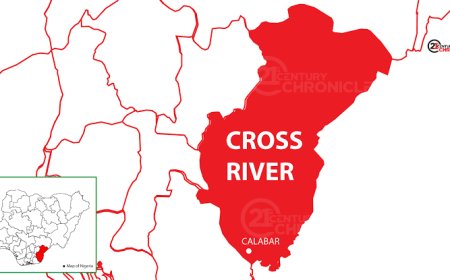
Cross River State has been listed among 10 states considered at high risk for the importation of Ebola Virus Disease (EVD) following the ongoing outbreak in the Democratic Republic of Congo (DRC) and Uganda, the Nigeria Centre for Disease Control and Prevention (NCDC) has announced.
The NCDC identified Cross River alongside Lagos, the Federal Capital Territory (FCT), Rivers, Kano, Enugu, Borno, Akwa Ibom, Taraba and Adamawa as states requiring heightened vigilance due to increased international travel, regional population movements, porous borders and uncertainty surrounding the full scale of the outbreak.
Speaking through a public health advisory issued on Thursday in Abuja, the Director-General of the NCDC, Jide Idris, said the classification was based on the strategic position of the affected states as major trade and travel corridors.
According to him, “the identified high-risk states are major trade and travel routes with international airports, seaports, porous borders and ground crossings, which increase the likelihood of disease importation.”
Idris disclosed that a total of 1,077 suspected Ebola cases and 247 deaths had been reported in the DRC and Uganda, representing a case fatality rate of up to 24.6 per cent. He noted that the most affected age group is between 14 and 45 years, adding that both regional and national risks remain high.
The NCDC also classified Ogun, Nasarawa, Kaduna, Plateau, Kogi, Niger, Jigawa, Katsina, Bauchi, Ebonyi, Abia and Bayelsa as states facing moderate risk. However, the agency stressed that all states and the FCT must sustain Ebola preparedness measures, regardless of their risk category.
“While all states and the FCT must maintain Ebola preparedness, the pace and level of readiness should reflect each state’s risk of importation and transmission,” Idris stated.
The NCDC boss further revealed that suspected cases associated with the outbreak had been reported in India, while Canada recently suspended travel applications from residents of the DRC, Uganda and South Sudan. He added that Uganda had also implemented border closure measures as part of efforts to contain the spread of the disease.
Raising concerns over available medical countermeasures, Idris warned that there are currently no approved vaccines or specific treatments for the Bundibugyo strain of the Ebola virus responsible for the current outbreak.
“The current Bundibugyo virus outbreak has no licensed vaccines or approved targeted therapeutics. Existing Ebola vaccines and monoclonal antibody treatments are primarily directed against the Zaire ebolavirus and should therefore not be relied upon as available countermeasures for this outbreak strain,” he said.
He emphasised that Nigeria has not recorded any confirmed case linked to the current outbreak, but urged states to strengthen surveillance, preparedness and rapid response mechanisms to prevent any possible importation of the disease.