


























A NATION TESTED BY THE BLOOD OF ITS BRAVEST
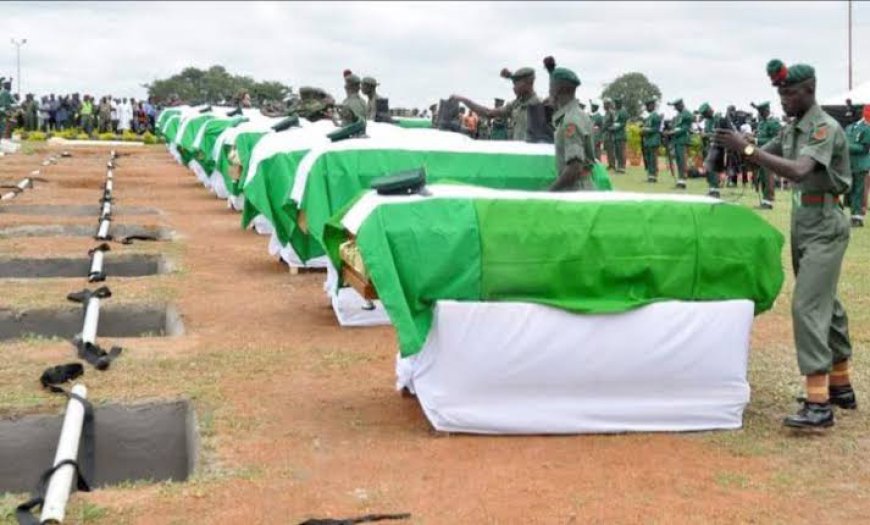
Today, at the quiet cemetery of Maimalari Cantonment in Maiduguri, Borno State, the nation once again performed a familiar ritual. Regrettably, one that has become too frequent to inspire the depth of reflection it demands.
Sadly and painfully, the remains of late Brigadier General Oseni Braimah, Captain Ishmail, and other officers and men who were killed on April 9, allegedly by suspected members of Boko Haram and ISWAP, were committed to the earth. The ceremony, dignified as always, was marked by solemn bugles, measured gun salutes, and the choreographed precision of military tradition. Yet beneath that order lay a troubling disorder of a country still struggling to justify the sacrifices of its finest.
These men were not casualties in the abstract sense of statistics. They were professionals in arms. They were individuals who had sworn to defend the territorial integrity of Nigeria, fully aware of the risks inherent in that oath. They represented the enduring ethos of the Nigerian military: duty, honour, and country.
Brigadier General Braimah belonged to that class of officers whose careers embodied discipline and commitment. Captain Ishmail, evidently in the early arc of his service, symbolised promise and continuity. The others, whose ranks may differ but whose courage does not, collectively remind us that the defence of the nation rests not on rhetoric but on real men who stand in harm’s way. Their deaths, therefore, cannot be treated as routine.
A nation at war with insecurity must, from time to time, pause to interrogate itself. Are these losses inevitable, or are they symptomatic of deeper structural deficiencies? It would be a disservice to the memory of these officers and men if we confined our response to ceremonial mourning without addressing the conditions that continue to produce such outcomes.
The adversaries responsible for their deaths, whether insurgents, bandits, or terrorists, operate with a brazenness that raises serious concerns about the state’s capacity to secure its domain. Their actions are not merely criminal, they are subversive of national stability and an affront to civil order. That they persist, and in some cases appear to thrive, is an indictment that cannot be ignored.
It is appropriate to condemn them in the strongest possible terms. They represent a rejection of the very idea of society governed by law. Their campaign of violence has inflicted immeasurable pain, not only on military families but on civilians across the country. Yet condemnation alone, however forceful, does not neutralise a threat. The responsibility for that lies squarely with the state.
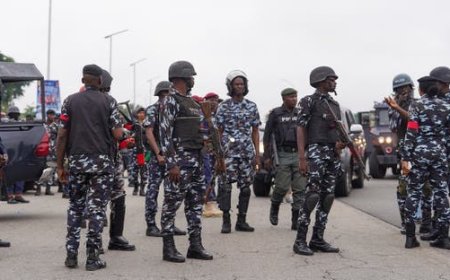
For once, Government must move beyond declaratory assurances to demonstrable action. Security is the primary obligation of any state, and its erosion undermines public confidence in governance itself. The rising incidence of kidnappings and killings across the country suggests a security architecture under considerable strain. From the highways to rural communities, the sense of vulnerability is palpable. This trajectory is neither sustainable nor acceptable.
To honour the memory of Brigadier General Braimah, Captain Ishmail, and their colleagues is to ensure that their sacrifices contribute to a recalibration of national security strategy. This entails not only better equipment and intelligence capabilities but also a coherent framework that integrates military efforts with policing, community engagement, and political will.
Equally important is the welfare of the armed forces. Morale is a critical factor in any military campaign, and it is shaped as much by conditions of service as by leadership. A soldier who feels valued is better positioned to confront the uncertainties of the battlefield. As the nation mourns, it must also reflect.
The families of the fallen deserve more than sympathy. They serve sustained support and recognition. Their loss is not private alone. It is national. When a soldier dies in the line of duty, the country inherits a moral obligation to those he leaves behind.
In the final analysis, the question that confronts Nigeria is a simple but profound one: can the state rise to meet the demands of its own preservation? The men laid to rest in Maiduguri have done their part. They have paid the supreme price. It remains for the living to ensure that such sacrifices are neither in vain nor in vainly repeated.
May their souls rest in peace.
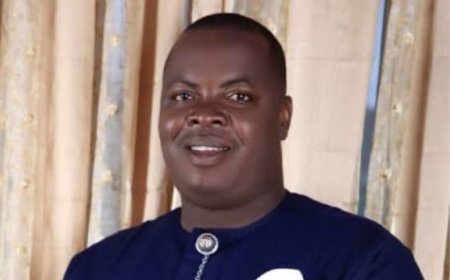
Anthony Ekpo Bassey, PhD, teaches Journalism at the University of Calabar.