




















OPINION: 2027: Abang Sets the Pace, Silences Critics
By Isaac AQUA
In every political cycle, there emerges a leader whose performance speaks louder than propaganda, whose footprints on the sands of public service become too visible to be erased by orchestrated criticism. In the politics of Ikom/Boki Federal Constituency, Hon. Victor Abang appears to be steadily occupying that space.
As conversations ahead of the 2027 elections gather momentum, political actors have predictably begun the familiar game of narratives, counter narratives and sponsored attacks. Yet, amid the noise and serial campaigns of calumny, one stubborn reality continues to confront both supporters and critics alike: development is difficult to hide.
For too long, representation in Ikom/Boki Federal Constituency was largely reduced to empty speeches, seasonal empowerment and vanishing campaign promises. Constituents often watched lawmakers disappear into Abuja only to resurface during elections with recycled rhetoric and token gestures. This culture bred cynicism among citizens who no longer expected tangible dividends from those elected to represent them.
Against this troubling background, the growing political profile of Hon. Victor Abang deserves critical reflection, not blind praise, but honest assessment rooted in visible outcomes.
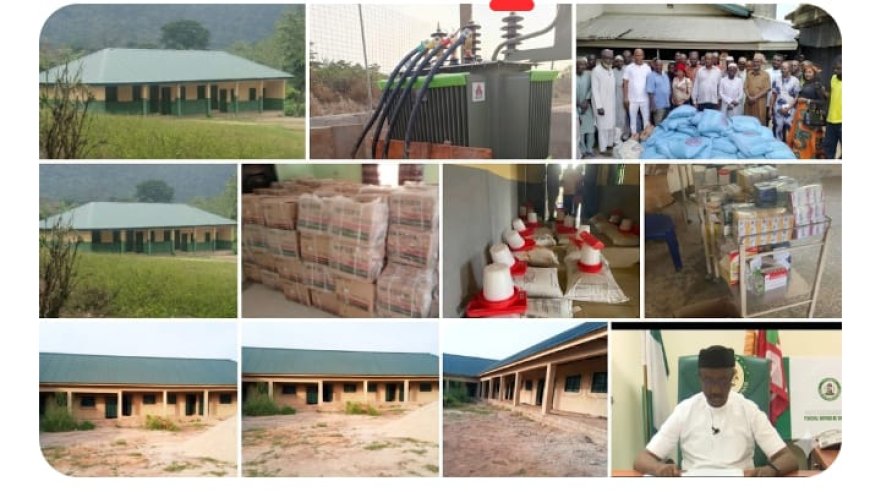
Within barely two and a half years in office, the lawmaker representing Ikom/Boki Federal Constituency has pursued a representation model anchored on infrastructure, empowerment, legislative advocacy and grassroots engagement. While no public office holder can claim perfection, the breadth of interventions credited to his office suggests a deliberate attempt to redefine constituency representation beyond ceremonial politics.
Particularly striking is the reconnection of rural communities to telecommunications networks. In many urban centres, access to mobile communication is taken for granted. Yet, for several rural communities in Boki and Ikom, years of digital isolation affected commerce, emergency response, security coordination and social interaction. Restoring connectivity to such areas may not generate sensational headlines, but for affected communities, it represents inclusion in the modern world.
Equally noteworthy are the educational and health related interventions. From classroom construction projects to medical outreaches and sanitary hygiene programmes for young girls, the interventions reflect an understanding that development must touch human lives directly. Leadership becomes meaningful only when ordinary people genuinely feel the impact.
In agriculture, which remains the economic backbone of the constituency, the distribution of cocoa chemicals, irrigation pumps, seedlings and farming support initiatives demonstrates attention to local economic realities. At a time when many rural farmers struggle with rising production costs and declining support systems, such interventions cannot simply be dismissed as politics. They respond to genuine needs.
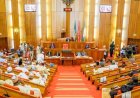
Beyond constituency projects, Abang’s legislative footprint also deserves attention. Motions addressing the Nigeria Cameroon boundary dispute, insecurity in border communities, the deplorable Calabar Itu road, Ikom -Obudu road, elephant invasions in Eastern Boki communities and the completion of the Ikom Specialist Hospital reveal an attempt to elevate constituency concerns to national discourse.
Importantly, some of these motions produced measurable outcomes, including troop deployment to threatened communities, renewed contractor mobilization to abandoned projects and relief interventions from relevant federal agencies. This underscores what representation should truly mean: not merely occupying a legislative seat, but using it effectively to attract solutions.
Critics may argue that these interventions are politically motivated as 2027 approaches. Perhaps they are. But politics itself ought to be a contest of performance, ideas and service delivery. If electoral calculations push politicians toward meaningful development, then democracy benefits from such competition.
What weakens the credibility of some attacks against the lawmaker is the growing disconnect between propaganda and observable realities on the ground. Citizens today are more politically aware than before. They judge not merely by social media narratives or sponsored commentary, but by roads constructed, hospitals revived, empowerment delivered and opportunities created.
This does not mean Abang’s administration should escape scrutiny. Public accountability remains essential in a democracy. Questions surrounding certain projects, including allegations regarding budgeted but allegedly missing projects, deserve transparent clarification. Democracy flourishes not when leaders are worshipped, but when they are held accountable while being fairly assessed.
However, fair assessment also demands acknowledging progress where it exists. Too often, Nigerian politics suffers from a destructive opposition culture where critics refuse to credit any achievement simply because of partisan interests. Such politics ultimately discourages performance and rewards bitterness over productivity.
The emerging political reality in Ikom/Boki appears increasingly shaped by comparative performance. Constituents are weighing visible interventions against past experiences. They are observing who merely speaks and who acts. In such an environment, propaganda naturally loses potency when confronted by evidence.
As 2027 gradually approaches, Hon. Victor Abang may still face political battles, opposition campaigns and heightened scrutiny. That is the nature of democratic politics. Yet, if governance remains focused on delivering tangible results rather than engaging in endless political theatrics, his impressive scorecard, which has positioned him as a political asset with visible evidence of performance, may prove decisive at the polls.
Ultimately, the strongest response to criticism in politics is not anger, media warfare or personal attacks. It is evidence based performance. And in the unfolding political narrative of Ikom/Boki Federal Constituency, performance appears to be giving Hon. Victor Abang an increasingly commanding voice over orchestrated rhetoric.