





























VC Urges Impact Driven Research in AI Era

By Judex Okoro
The Vice Chancellor of the University of Calabar, Prof. Offiong Efanga Offiong, has urged researchers to embrace purpose driven research that delivers measurable impact in an increasingly artificial intelligence driven academic environment.
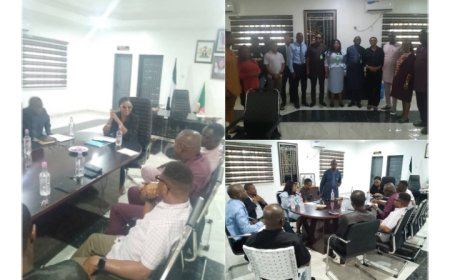
He made the call during a two day workshop organised by the Faculty of Vocational and Entrepreneurial Education with the theme “Simplifying Research and Academic Writing in the Artificial Intelligence Era,” held at the university’s Senate Chambers.
Represented by the Deputy Vice Chancellor Academic, Prof. Ekaette Enang, the Vice Chancellor noted that the responsibility of scholars goes beyond conducting studies, stressing that research must contribute meaningfully to knowledge and remain relevant beyond local contexts.
“Research must move beyond routine publication to achieve global visibility, relevance and meaningful contribution to the international body of knowledge,” he said.
He described the workshop as timely and well suited for its audience, urging postgraduate students to master the fundamentals of research writing in line with emerging global trends, particularly in the era of artificial intelligence.
Prof. Offiong commended the guest lecturer for what he described as a well delivered presentation and expressed confidence that participants would translate the knowledge gained into tangible academic progress.
He also emphasised the need to strike a balance between visibility, citations and lasting research impact, while praising the Faculty of Vocational and Entrepreneurial Education for its proactive role in advancing academic development through innovative initiatives.
In his remarks, the immediate past Provost of the College of Education, Prof. Anagbogu German Effa, highlighted the importance of the lecture in strengthening scholarly practice.
“Research is the lifeblood of any academic institution. In this era of artificial intelligence, researchers must understand the dos and donts of using AI in research,” he said, urging participants to pay close attention to the lecture.
Earlier in her welcome address, the Dean of the Faculty, Prof. Mrs. Love Asor, expressed delight at hosting the event, describing it as timely and impactful.
“This lecture has the potential to shape the future of emerging academics. The theme speaks directly to the core of academic growth and development,” she said.
She added that the session would equip participants with new insights and help them overcome challenges in research, particularly in the use of artificial intelligence.
Delivering the keynote lecture, a Senior Lecturer in the Department of Educational Technology, Dr. Johnson I. E., presented a practical approach to developing research topics, noting that every meaningful study begins with identifying a clear research problem or gap.
“Research ideas can be drawn from existing literature, conference proceedings, academic discussions and real life situations that require improvement,” he explained.
He added that research topics are often built around variables, making it essential for scholars to clearly define independent and dependent variables.
Dr. Johnson further outlined the structure of academic research, explaining that the second chapter focuses on the review of related literature, including conceptual and theoretical frameworks, empirical studies and critical appraisal of previous works.
He said the third chapter addresses research methodology, covering research design, study area, population, sampling techniques, data collection procedures, analysis and ethical considerations.
According to him, the fourth chapter presents results and discussion, while the fifth covers summary, conclusions, implications, recommendations and suggestions for further studies, alongside references and appendices.
He emphasised the ethical use of artificial intelligence, warning that misuse could lead to errors and abuse in research writing.
“AI must be used responsibly. When misused, it can compromise the integrity of research,” he cautioned.
Dr. Johnson also highlighted tools such as Elicit, Consensus, Scite AI and Scholarcy as valuable resources for discovering relevant literature, synthesising information and improving academic writing.
The event featured goodwill messages from participants and representatives of various faculties.