














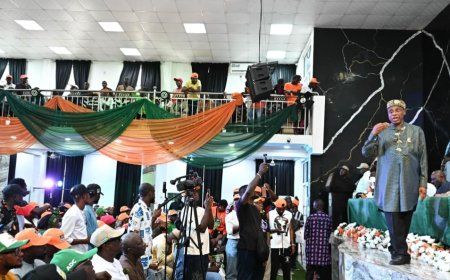

How LIFE-ND is transforming rural livelihoods in Edo
By Ehigimetor Igbaugba, News Agency of Nigeria (NAN)
Edo is emerging as a model for empowering rural women and youths through the Livelihood Improvement Family Enterprises in the Niger Delta (LIFE-ND) project.
The initiative, supported by the Federal Government, the Niger Delta Development Commission (NDDC), and the International Fund for Agricultural Development (IFAD), focuses on sustainable agriculture and rural enterprise development.
Across the Niger Delta, youth unemployment and declining agricultural productivity have continued to threaten rural livelihoods.
Consequently, development partners and governments are investing in programmes that promote agribusiness and climate-resilient farming.
LIFE-ND is one of such intervention designed to improve income, food security and employment opportunities for rural youths and women.
The project became effective on Feb. 21, 2019, while the state formally joined the initiative on July 1, 2020.
It is currently being implemented in nine Niger Delta states.
IFAD funds activities in Abia, Bayelsa, Cross River, Delta, Edo and Ondo, while NDDC supports implementation in Akwa Ibom, Imo and Rivers.
Overall, the project targets 38,250 beneficiaries engaged in agricultural value chains such as rice, cassava, poultry and fisheries.
In Edo, the project has recorded notable progress, especially in youth training and agribusiness incubation.
During the first phase, the programme supported 4,387 direct beneficiaries involved in production, processing and marketing activities.
Central to the initiative is the incubation model, which pairs trainees with experienced agribusiness farmers who serve as mentors.
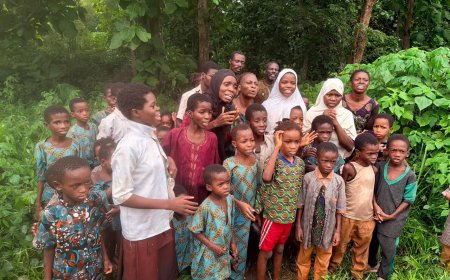
Under this arrangement, young farmers, including persons with disabilities, receive hands-on training and business support.
Mr John Omoruyi, Edo State Project Coordinator, said the successes recorded in the first phase encouraged the state government to expand the programme.
According to him, Gov. Monday Okpebholo approved farmland across several local governments to support cluster farming.
He added that the state government also appropriated N1.6 billion in the 2025 budget to extend the project to eight additional local governments.
Omoruyi said that within 100 days of the present administration, more than N500 million had been disbursed to support 1,797 youths and women.
He noted that the expansion could generate an additional 2,000 jobs once counterpart funding is fully released.
Similarly, Gov. Okpebholo said agriculture remains central to his administration’s strategy for economic growth and job creation.
According to him, expanding agricultural opportunities will help ensure food security while productively engaging youths and women.
He added that large-scale farming initiatives and farm settlements are being promoted across the state’s three senatorial districts.
Mr Jerry Uwangue, Edo Commissioner for Agriculture and Food Security, described LIFE-ND as a major step toward improving rural livelihoods.
He said the state government was also collaborating with partners on the proposed LIFE-ND Plus initiative to expand the programme’s impact.
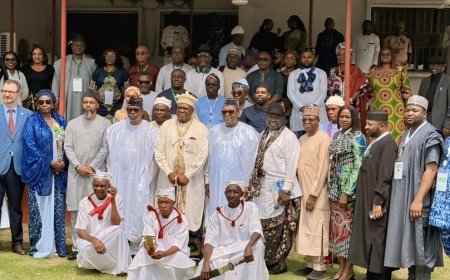
On her part, IFAD Country Director, Mrs Dede Ekoue, described the project as a transformative initiative for young Nigerians.
“From our field visits, LIFE-ND stands as a testimony of how targeted investments in youths and women can transform rural communities,” she said.
Ekoue reaffirmed IFAD’s commitment to scaling up the programme through additional financing.
Also speaking, Mrs Stella Manureh of the NDDC said the project contributes greatly to economic stability in the Niger Delta.
According to her, empowering rural youths through agribusiness can reduce poverty and stimulate regional development.
Beyond training and financial support, the project has also invested in rural infrastructure.
Omoruyi disclosed that more than 28 facilities, including processing centres and farm clusters, had been constructed across Edo communities.
For many beneficiaries, the project has translated into tangible improvements in their livelihoods.
Mrs Grace Nwaozuzu, a poultry farmer and project incubator, said the programme helped her establish and expand her business.
Nwaozuzu, who joined the project in 2022, now raises between 250 and 350 day-old chicks every production cycle.
According to her, the business generates between N180,000 and N200,000 profit after production costs.
“With the income, my husband and I were able to buy a small car used for distributing our products to customers,” she said.
She added that the enterprise also enabled her family to meet educational and household expenses.
Similarly, Mrs Efe Ehanire, a fish processor from Uteh community, said the project introduced modern fish processing technology.
She explained that the hybrid gas kiln provided by the project replaced traditional charcoal and firewood methods.
Ehanire said the facility is now used by more than 30 women in the community to process and package fish for sale.
“We now earn more income and contribute meaningfully to our households,” she said.
However, in spite of the progress recorded, stakeholders say the programme still faces several challenges.
Dr Abiodun Sanni, National Coordinator of LIFE-ND, identified access to finance, market linkages and climate resilience as key concerns.
He noted that climate variability continues to affect agricultural productivity across several participating states.
Nevertheless, he said the project had exceeded its initial targets, reaching more than 26,400 beneficiaries in the first phase.
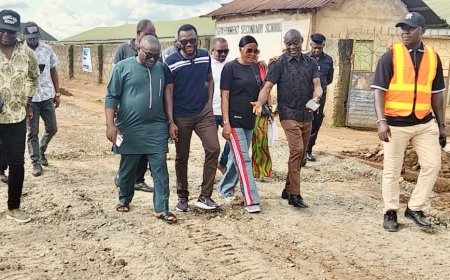
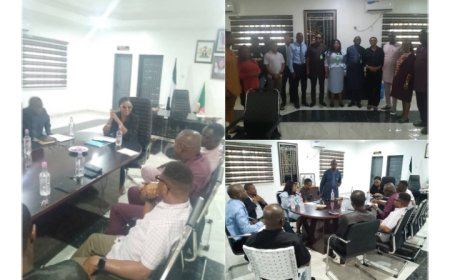
Sanni added that periodic supervision missions were conducted to review implementation progress and identify areas for improvement.
He expressed optimism that lessons learned would strengthen the programme’s sustainability.
Observers say initiatives like LIFE-ND demonstrate the potential of targeted investments in agriculture to transform rural economies.
If sustained and expanded, such interventions could play a major role in reducing youth unemployment and improving food security in the Niger Delta.
Indeed, for many beneficiaries, the project represents not just an intervention, but a pathway to economic independence and community development. (NANFeatures)