































GOOD NIGHT, TED TURNER
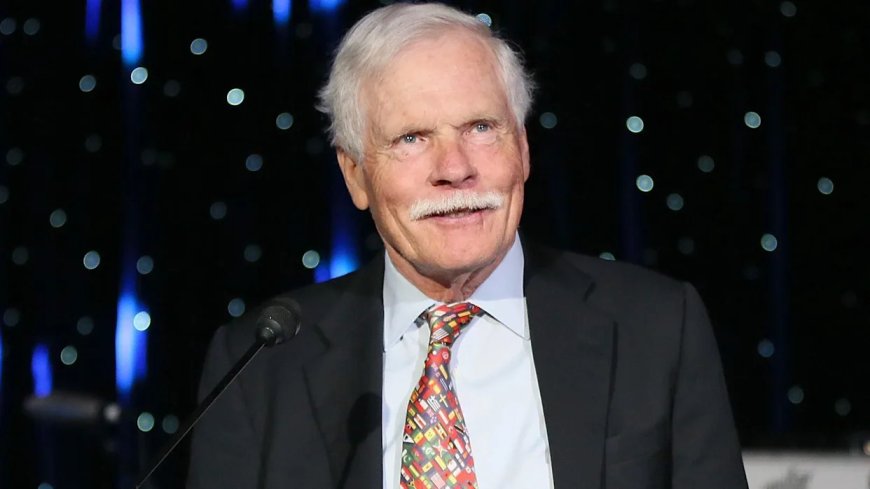
News of the demise of Ted Turner, CNN founder, who started the first 24 hours Television news, shook the broadcast waves around the world, yesterday. It was indeed, a sad day, for those of us who have lived and loved CNN Television news for a long time now.
The name Ted Turner evokes more than the memory of a businessman. It recalls an entire period in modern history when the globe appeared to shrink before our eyes and distant events suddenly acquired the intimacy of neighbourhood conversations.
There was a time when many households, including ours, measured international crises by the familiar glow of CNN on the television screen. From elections in powerful capitals to wars in troubled lands, from the fall of old political orders to moments of uncommon human triumph, CNN became, for millions across continents, not merely a channel but a daily companion in the education of global citizenship.
It is difficult now, in this age of digital abundance and restless social media commentary, to fully appreciate what Turner’s vision represented when it first emerged. A twenty-four-hour news channel sounded to many like an extravagant gamble. Yet it succeeded because it answered a need people did not even know they had, which was the desire to witness history in real time.
One remembers, with some nostalgia, the authority the network once carried in moments of uncertainty. In many parts of the world, especially in developing countries where international news sources were limited, CNN became the reference point for understanding the wider world. Students watched it to improve their grasp of global affairs. Diplomats monitored it carefully. Governments respected its reach, sometimes nervously. Even its critics could not ignore its influence.
It is gratifying to note that behind that formidable institution stood Ted Turner, who was unconventional, restless, ambitious and blessed with the rare courage to pursue an idea that wiser men might have abandoned as impractical.
He was not a perfect man, nor did he pretend to be one. Perhaps that was part of what made him interesting. There was an earthy candour about him that contrasted sharply with the polished corporate culture his success eventually helped create. He appeared driven less by the cold instincts of bureaucracy than by the impatience of a man convinced that the world could be connected more closely through information.
The remarkable thing, however, is that the institution he founded outlived the force of his own personality. Even long after his departure from its daily leadership, CNN retained the imprint of his original audacity. The network changed journalism itself. Governments learnt quickly that crises could no longer be hidden behind official silence. Wars entered living rooms instantly. Human suffering acquired faces and voices familiar to viewers thousands of miles away. The world became at once more informed and, perhaps, more emotionally burdened by its own interconnectedness.
Like every influential institution, CNN would later face criticism, competition and the changing tastes of audiences. Such is the fate of all pioneers. But none of that diminishes the scale of Turner’s contribution. He helped create the architecture of modern global news culture, and for better or worse, the world has never quite returned to what it was before.
This, then, is not a loud tribute, for loudness would seem inappropriate in reflecting upon a life whose significance already speaks for itself. It is simply an acknowledgment of a man whose idea changed how humanity watched itself.
Some founders establish companies. Ted Turner established a habit of global attention. And generations who sat before their television screens night after night, trying to make sense of a turbulent world through CNN’s rolling coverage, will understand exactly what that means.
Good night, Ted Turner.
Anthony Ekpo Bassey, teaches Journalism at the University of Calabar.