


























WHEN THE RAINS BECOME A TRAGEDY
Anthony EKPO BASSEY
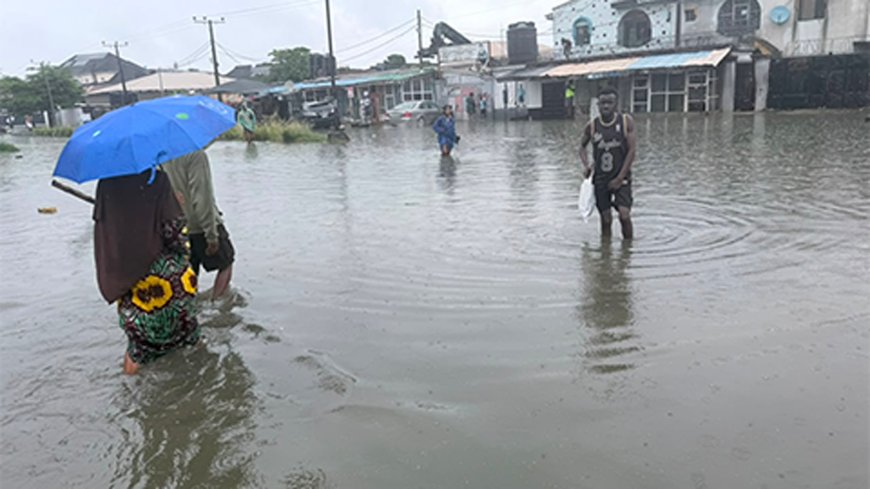
Travelling through some of the affected communities, one is confronted by the sight of submerged homes, damaged roads, silent grief etched on the faces of people who have lost much more than buildings. Floods do not only wash away walls, they erase memories, scatter livelihoods, separate families, and, in the most painful instances, claim precious lives. No statistics can truly capture the anguish of a mother searching for what remains of her home, the despair of a farmer standing helplessly before ruined farmlands, or the tears of children who suddenly have no place they can call home.
Sadly, to the families who have lost their loved ones, no words can adequately console. The pain of such loss is beyond public commentary. One can only pray that they find the strength to endure this difficult season. Equally deserving of compassion are those whose homes, businesses and farmlands have been destroyed. Their burden is not measured only by material losses but by the uncertainty of beginning again.
Flooding has become a recurring visitor across many parts of Nigeria, but recurrence should never make us comfortable with tragedy. Nature undoubtedly plays its part. Climate change has altered rainfall patterns, making storms heavier and more unpredictable than in years past. Yet it would be less than honest to attribute every flood entirely to nature. Human conduct has also contributed significantly to the disaster.
There is no gainsaying that across many communities, drainage channels are treated as refuse dumps. Plastic waste, household garbage and construction debris accumulate where water ought to flow freely. When the rains arrive, the blocked drains simply redirect the water into homes and streets. In other places, buildings have emerged on natural waterways, shrinking channels that once accommodated floodwaters. Wetlands that served as nature’s reservoirs have gradually disappeared under concrete. Deforestation has reduced the land’s ability to absorb rainfall, while poor urban planning has allowed settlements to expand into flood-prone areas without adequate protective infrastructure.
These are uncomfortable truths, but they deserve to be acknowledged if lasting solutions are to be found. Government alone cannot prevent flooding if citizens continue practices that invite disaster. Every resident has a responsibility to dispose of waste properly, respect environmental regulations and resist the temptation to obstruct natural drainage paths for personal convenience. Environmental responsibility begins with individual choices long before it becomes government policy.
Even so, the greater burden rests on public institutions. Governments exist, among other reasons, to anticipate danger before it becomes catastrophe. Emergency responses are necessary, but prevention is invariably less costly than recovery. The Cross River State Government deserves commendation for whatever immediate relief has reached affected communities. Yet the present circumstances call for measures that go beyond emergency interventions. A comprehensive flood management strategy has become imperative.
One practical step would be the establishment of a multidisciplinary Flood Risk Assessment and Mitigation Committee. Such a body should comprise engineers, environmental experts, urban planners, hydrologists, community leaders, trained communicators and emergency management professionals. Its assignment should be straightforward but thorough: identify communities most vulnerable to flooding, map high-risk zones with scientific precision, evaluate existing drainage infrastructure and recommend practical interventions before another rainy season arrives.
Moreover, where communities are found to be in locations that present persistent danger to life, government should, with sensitivity and adequate consultation, explore options for voluntary relocation. Such decisions must be guided by humanity rather than bureaucracy. Families asked to relocate should not be abandoned to their fate. Appropriate compensation, decent housing alternatives and opportunities to rebuild their livelihoods should accompany any relocation programme. Where relocation is neither feasible nor immediately necessary, remedial measures such as improved drainage systems, flood barriers, desilting of waterways and regular environmental sanitation should receive urgent attention.
Furthermore, public enlightenment is equally important. Many avoidable tragedies occur simply because warnings are ignored or never reach those most at risk. Continuous awareness campaigns, supported by reliable weather forecasts and early warning systems, can save lives before floodwaters begin to rise. In view of this, the challenge before Cross River is neither unique nor insurmountable. Around the world, communities have learned that floods cannot always be prevented, but their devastating impact can certainly be reduced through planning, discipline and collective responsibility.
As the floodwaters gradually recede, they leave behind more than damaged structures. They leave lessons that ought not to be forgotten. If those lessons inspire wiser environmental practices, better urban planning and stronger government preparedness, then perhaps some measure of hope can emerge from this painful experience.
For now, however, the thoughts of every compassionate citizen should remain with those whose lives have been turned upside down by this unfortunate disaster. Their recovery deserves more than sympathy expressed in passing. It deserves sustained support, thoughtful leadership and a collective determination that when the rains return, they will no longer bring the same measure of grief.
History reminds us that societies are judged not merely by how they celebrate prosperity but by how they respond to adversity. The floods in Cross River have tested both government and citizens alike. The response must therefore rise above routine official statements and become a genuine commitment to protecting lives, preserving communities and ensuring that the next season of rain becomes a blessing rather than a calamity.