

















OPINION: BATTLE FOR ABI/YAKURR: POLITICS OF OIL WELL AT CENTRE STAGE

By Comrade Joseph Bassey
Politics has a way of producing familiar contests. In Abi/Yakurr Federal Constituency of Cross River State, the political battle ahead of 2027 is beginning to look like a replay of a movie the people have watched before.
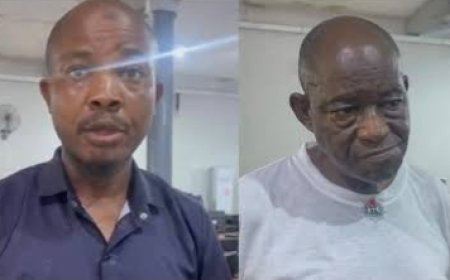
Former Speaker of the Cross River State House of Assembly, Hon. John Gaul Lebo has thrown his hat into the ring to challenge the incumbent member representing Abi/Yakurr Federal Constituency in the House of Representatives, Hon. Alex Egbona. It is a contest that immediately evokes memories of the 2019 election when both men squared off under very different political circumstances.
At that time, Hon. Lebo was not just any politician. He was the sitting Speaker of the Cross River State House of Assembly and arguably the third most powerful political office holder in the State. The People’s Democratic Party (PDP) controlled Cross River State from top to bottom.
The entire machinery of the government was firmly in the hand of PDP. On the other side stood Hon. Alex Egbona of the All Progressive Congress (APC) leading to what many considered an uphill battle against a dominant political establishment.
But when the votes were counted, the outcome stunned many observers. Hon. Egbona defeated the sitting Speaker with a comfortable margin and proved that electoral victories are not always determined by political titles or access to State power.
Four years later as the 2023 election approached, some interest groups within the Constituency reportedly approached Hon. Lebo and encouraged him to contest again. He declined.
His explanation was straightforward. As a sitting Speaker, he could not defeat Hon. Egbona and saw no reason to waste resources on a battle he considered unwinnable.
Today however, the political equation appears to have changed. Recent political developments have added a new dimension to the unfolding contest. Hon. Egbona recently defected to the PDP after reportedly concluding that the APC structure in the Constituency was being positioned in favour of Hon. John Gaul Lebo. The move came only a few days before the window for political defections provided under the Electoral Act 2026 closed.
Sources within the Constituency maintain that the decision was not taken in isolation.
It was strongly canvassed and endorsed by many of his supporters across Abi and Yakurr who believed that remaining in the APC under the prevailing circumstances would amount to conceding the contest before the first vote was cast. For them, the PDP offered a viable platform to continue the political engagement and preserve the right of the Constituency to make its choice at the ballot box.
Hon. Lebo is back in the race. This time, many political observers believe he is enjoying the support of Governor Prince Bassey Otu whose political camp appears determined to remove Hon. Egbona from the House of Representatives. In political circles, the mission is increasingly being discussed as a strategic project that must be carefully and clinically executed.
The challenge for Hon. Lebo, however is finding a compelling reason why the people of Abi and Yakurr should abandon a representative who has established himself in the National Assembly and return to a former Lawmaker whose previous stewardship continues to raise unanswered questions.
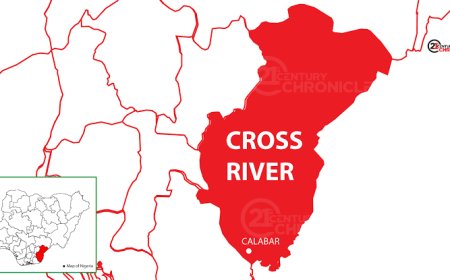
Unable to point to a fresh political narrative that resonates strongly with the electorate, the former Speaker has now seized upon the controversial issue of the 76 oil wells ceded to Akwa Ibom State following judicial decisions arising from the long standing boundary dispute between Cross River and Akwa Ibom States.
The matter remains an emotional subject for many Cross Riverians and understandably so. But many Constituents are asking a simple question: Is Hon. John Gaul Lebo only just discovering that Cross River had lost the 76 oil wells?
Where was this outrage when he served eight uninterrupted years in the House of Assembly? Where was this passion during the four years he occupied the position of a Speaker? What legislative actions did he initiate? What public campaigns did he lead? What pressure did he mount on relevant authorities to defend the interest of the State? The answers are difficult to find.
The dispute over the oil wells did not emerge yesterday. It evolved through years of litigation that involved maritime boundaries and ownership claims. Ultimately, decisions of the Courts including those influenced by the interpretation of maritime boundaries after the creation of Bakassi related adjustments left Cross River State in a disadvantaged position regarding ownership of the oil producing areas.
Throughout that period, there is little public record to suggest that the former Speaker stood at the forefront of the struggle. There is no evidence of sustained legislative activism, no memorable public crusade and no notable intervention that positioned him as a leading defender of the oil assets of the State.
Many Constituents and Cross River indigenes have therefore concluded that silence was convenient when power and privileges were available.
Now that those privileges are no longer available, the voice has suddenly returned.
The irony becomes even more pronounced when one considers recent claim by the former Speaker that he would amend several laws which he believes Akwa Ibom State have “mismanaged” to retain control of the disputed oil wells.
Such declarations may sound attractive on campaign platforms but voters are increasingly sophisticated and enlightened to fall for such antics. They understand the Constitutional limitations of a Member of the House of Representatives. They understand that complex Judicial and Constitutional questions cannot be resolved by mere political slogans. More importantly, they understand that promises made today must be measured against actions taken yesterday.
Before talking about changing laws, many voters want answers from him about his own record.
What exactly did Hon. Lebo accomplish for Abi Local Government Area during his eight years in the State House of Assembly?
As Speaker, what landmark projects did he attract to the Constituency?
What transformational initiatives can he point to as evidence of effective representation? These are questions that deserve answers.
The people also remember difficult moments in the history of the Constituency, particularly during periods of communal unrest and conflict. During those challenging times, Constituents expected leadership, courage and visible presence.
The former Speaker has also remained largely silent on the protracted conflict between his native Adadama Community and the Ikwo (Amagu) Community of Ebonyi State. This is a crisis that has claimed the lives of many of his kinsmen. His perceived indifference has fueled speculation among some residents with a section of the Community attributing his lukewarm attitude to the fact that his late mother was of Igbo extraction. Even if that perception is true or not, many believe that before seeking to champion the interests of Cross River State at the National Assembly, he should first demonstrate leadership by helping to bring lasting peace to his ancestral home. If he cannot effectively mobilize support to end a conflict at his doorstep, they argue that voters are entitled to question how effectively he can prosecute more complex State issues in Abuja.
Many still recall allegations that while ordinary citizens faced uncertainty and danger during the war, arrangements were allegedly made to move his family members to safety in Calabar. Whether fair or unfair, such perceptions remain part of the political conversation that cannot simply be wished away.
Then there is another uncomfortable contradiction. By making the oil wells the centrepiece of his campaign, Hon. Lebo may inadvertently be indicting the Governor Prince Bassey Otu, who is believed to be his political sponsor.
Governor Bassey Otu spent twelve years in the National Assembly serving in both the House of Representatives and the Senate. If the recovery of the 76 oil wells was such an urgent and achievable objective, why was no significant breakthrough recorded during those twelve years of federal legislative service?
This is not an attack on the Governor. It is simply a logical question arising from the arguement now being advanced by his political ally.
If those, who occupied federal legislative offices before could not return the oil wells, why should voters suddenly believe that the issue can now be solved with campaign rhetoric?
The people of Abi and Yakurr appear more interested in practical representation than emotional manipulation.
They want roads, healthcare facilities, educational opportunities, rural electrification, economic empowerment and visible federal presence. They want a representative who engages with their realities rather than a politician who suddenly rediscover old grievances whenever elections approach.
Beyond the immediate contest lies an even larger political calculation. There is a long standing understanding that the House of Representatives seat should rotate fairly between Abi and Yakurr Local Government Areas. Under that arrangement, Abi is expected to complete twelve years before the seat moves to Yakurr. Hon. Alex Egbona is currently serving within that cycle.
Removing him midway and replacing him with another politician from Abi would create a new complication. If Hon. Lebo were to win, few expect him to serve only one term.
Political history suggests that he would likely seek a second term and that will extend the hold of Abi on the seat to sixteen years before Yakurr gets its turn.
That raises a critical question for the people of Yakurr. Can they afford to wait sixteen years?
Can Yakurr leaders support a political arrangement that potentially delays their opportunity by another electoral cycle?
These are the realities that will shape the 2027 contest far more than recycled arguments about oil wells.
As campaigns gather momentum, voters in Abi and Yakurr must separate genuine leadership from political convenience. They must distinguish between those who fought when it mattered and those who discovered their voices only after leaving office.
The 2027 election is not merely a contest between Hon. Alex Egbona and Hon. John Gaul Lebo.
It is a referendum on performance, consistency, credibility and political memory. And in politics, memory can be a very powerful voter.
Comrade Bassey writes from Ugep in Cross River State