
























EDITORIAL Silencing Dissent: Nigeria’s Perilous Path to 2027?

In recent times, Nigeria’s political landscape has grown increasingly tense, marked by what appears to be a systematic onslaught and a pattern of underhand tactics by state actors aimed at stifling opposition political parties.
What should ordinarily be a vibrant arena of contesting ideas is steadily being constricted into a space where dissent is discouraged and, in some instances, deliberately suppressed. From subtle intimidation to outright disruption of opposition activities. These developments raise troubling questions about the trajectory of the nation’s democracy as the 2027 elections draw nearer.
Such a climate does more than weaken political rivals. It strikes at the very heart of democratic engagement. When opposition voices are muffled, the electorate are deprived of genuine choice, accountability is weakened, and governance risks becoming insulated from scrutiny. It is within this unfolding reality that the silencing of dissent must be urgently examined before Nigeria drifts further along a path where democratic ideals are traded for political dominance.
Silencing dissent is never a mark of strength. It is, in truth, a quiet admission of fear. Fear of scrutiny, fear of competition, and ultimately fear of the people. As the countdown to 2027 continues, a pattern is emerging that raises profound concerns about the nation’s democratic health and its commitment to political plurality.
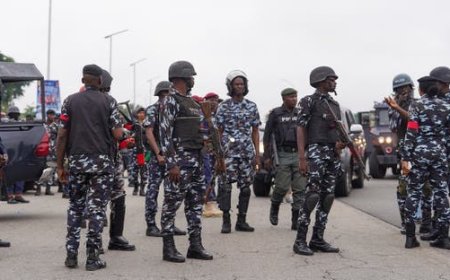
Across several states and within the Federal Capital Territory, there are alleged reports of opposition billboards being removed, political gatherings abruptly disrupted and sometimes cancelled by security operatives on flimsy excuses of not getting remit and event venues withdrawn at the last minute under questionable circumstances. These actions, often attributed to direct or indirect pressure from state actors, suggest a political environment that is becoming increasingly inhospitable to dissenting voices.
Equally troubling is the controversy surrounding the electoral umpire and internal crises within opposition parties. The growing perception that regulatory institutions may be entangled in partisan struggles further erodes public confidence. In any credible democracy, institutions must not only act impartially, they must also be seen to do so. Without that assurance, trust weakens and suspicion takes root.
Nigeria’s democratic journey has endured its share of trials. Yet even in difficult periods, there existed a measure of tolerance for opposition, grounded in the understanding that democracy thrives on the free exchange of ideas, not enforced consensus. Past administrations, despite their shortcomings, allowed space for opposition forces to organise, mobilise, and present alternatives to the electorate. That openness strengthened democratic culture and made possible peaceful political transitions.
Today, far more than partisan interests is at stake. The integrity of the democratic process itself hangs in the balance. When opposition is stifled, elections risk becoming hollow rituals rather than meaningful contests. When dissent is constrained, accountability fades and citizens are left with limited avenues to express legitimate concerns.
The gradual drift toward a one party- dominated system, whether by design or default, carries serious consequences and is highly condemnable. It weakens checks and balances, concentrates authority, and undermines institutions meant to protect the public interest. Experience has shown that such concentration of power rarely produces stability. More often, it breeds stagnation and deepens public discontent.
We posit that the journey to 2027 should represent an opportunity for democratic renewal, not regression. Those entrusted with power must resist the impulse to equate control with leadership. True leadership lies in the capacity to accommodate opposing views, to engage criticism, and to remain accountable to the people.
Nigeria stands at a defining moment. The decisions made in this period will shape not only the outcome of the next election but the future of its democracy. To silence dissent is to dim the guiding light of progress. In that dimming light, the promise of 2027 risks being overshadowed by the looming shadow of democratic decline.
It is both troubling and unacceptable that a party which once rose from the ranks of opposition, benefitting from an enabling democratic space, now appears inclined to constrain that very space for others. Having leveraged the freedom to organise, mobilise, and ultimately ascend to power, the expectation is that such a party would safeguard, not suffocate, the principles that made its rise possible.
The All Progressives Congress (APC) must rise to the demands of governance and redirect its focus to the pressing challenges confronting the nation. From economic strain to security concerns and widening social pressures, Nigerians are in urgent need of thoughtful, decisive, and people-centred solutions. This was the promise that accompanied its ascent, a promise anchored on the claim of possessing the capacity to deliver transformative leadership.
We advise that energy, strategy, and political will should, therefore, be channelled toward addressing these realities rather than expended on efforts that appear designed to weaken opposition voices. Democracy thrives on competition, accountability, and the free exchange of ideas. To undermine these principles is to deepen the very crises that continue to weigh heavily on the electorate. The moment calls not for suppression, but for performance, not for intimidation, but for leadership that inspires confidence and delivers results.