





























SECTORIAL STRIDES Otu, Effiwatt: Rejigging Cross River Civil Service for Peak Efficiency

By Isaac Aqua
Globally, the strength of any government is measured not merely by the eloquence of its policies or the grandeur of its promises, but by the capacity of its institutions to translate vision into reality. At the heart of this institutional framework lies the civil service, the enduring machinery of governance that outlives administrations and sustains the continuity of the state. It is the engine room where policies are refined, implemented, monitored, and evaluated. When the civil service is efficient, governance thrives. When it is weakened by corruption and inefficiency, development suffers.
For years, the Cross River State Civil Service struggled under the weight of systemic decay. What should have been a respected institution driven by merit, professionalism, and integrity gradually became a theatre of administrative abuse. The service was plagued by corruption, employment racketeering, certificate forgery, manipulation of promotion processes, and a culture that rewarded connections over competence.
Promotions, which ought to have reflected diligence, qualification, experience, and performance, became commodities allegedly available to the highest bidder. Appointment and promotion letters were reportedly procured through backdoor channels, while forged academic credentials were used to secure undeserved advantages. Nepotism flourished and merit took a back seat. Consequently, competence was undermined and morale within the service steadily declined.
The consequences were predictable. Commitment waned as many officers became disillusioned by a system that appeared to reward misconduct while punishing integrity. A weakened civil service inevitably translated into poor policy implementation, administrative bottlenecks, and declining public confidence in government institutions.
It is against this backdrop that recent reforms under the administration of Governor Senator Bassey Otu and the leadership of the Chairman of the Cross River State Civil Service Commission, Sir Maurice Dominic Effiwatt, deserve commendation.
One of the most significant achievements of the ongoing reforms is the restoration of due process. Institutions function best when rules are respected and procedures are followed. By insisting on compliance with established regulations, the Civil Service Commission has begun the difficult but necessary task of rebuilding credibility within the system.
Particularly noteworthy is the establishment of an Information and Communication Technology unit dedicated to the authentication of credentials and verification of personnel records. This initiative directly addresses one of the most troubling challenges of the past, namely the use of forged certificates and falsified documents to gain unfair advantage.
In an era where technology is central to modern governance, digital verification represents a major step towards transparency and accountability. By subjecting credentials to rigorous scrutiny, the Commission is not merely detecting fraud; it is sending a clear signal that dishonesty will no longer enjoy institutional protection.
Equally significant is the renewed commitment to fairness in promotions and career advancement. Officers who were previously overlooked are reportedly receiving their due entitlements, while promotion processes have become more transparent and timely. Such measures are critical in restoring confidence among workers and reinforcing the principle that hard work and competence will be rewarded.
The ongoing transformation has also extended to the work environment. Although infrastructure alone cannot guarantee efficiency, a conducive workplace contributes significantly to staff morale, professionalism, and productivity.
Driven by the need to replenish a workforce depleted by retirements and years of employment restrictions, the Commission embarked on strategic recruitment exercises aimed at strengthening service delivery across the state. With the approval of Governor Otu, vacancies have been filled through the recruitment of qualified personnel, injecting fresh skills, ideas, and energy into the public service.
This intervention is particularly important at a time of rising youth unemployment and increasing demands on government institutions. Every effective civil service requires periodic renewal if it is to remain responsive to contemporary challenges.
Another commendable intervention is the regularization of long serving contract workers in key state institutions, including the Cross River Broadcasting Corporation, the State Cultural Centre, and the Forestry Commission.
For more than a decade, many of these workers reportedly rendered essential services under uncertain conditions and with limited remuneration. Their conversion to permanent staff represents both an act of justice and recognition of their contributions to the state.
No institution can achieve optimum efficiency when a significant segment of its workforce operates under conditions of uncertainty. By improving welfare and providing job security, government has taken an important step towards enhancing productivity and institutional stability.
While these achievements are encouraging, they should not mark the end of the reform journey. Civil service transformation is a continuous process that requires consistency, vigilance, and sustained political will.
The fight against corruption must remain relentless. Digitalisation should be expanded across ministries, departments, and agencies. Performance evaluation systems must be strengthened, while training and capacity building should remain permanent features of the service. Recruitment and promotion processes must continue to be guided strictly by merit.
Most importantly, the civil service must never again become a playground for patronage and manipulation. The painful lessons of the past should serve as a constant reminder of the dangers of institutional neglect.
Cross River State possesses immense human and natural resources. Harnessing these assets effectively requires a professional, disciplined, and efficient public service capable of translating government policies into measurable outcomes. Roads, schools, hospitals, agricultural programmes, tourism initiatives, and economic reforms all depend on the competence of the civil servants entrusted with their implementation.
Governor Otu's decision to appoint Sir Maurice Dominic Effiwatt, a seasoned technocrat with extensive administrative experience, has proved timely. The appointment came at a critical moment when the civil service required urgent reform and repositioning. Under his leadership, the Commission has helped steer the service away from decline and towards recovery, with the objective of restoring the prestige it once enjoyed as one of Nigeria's most efficient civil services.
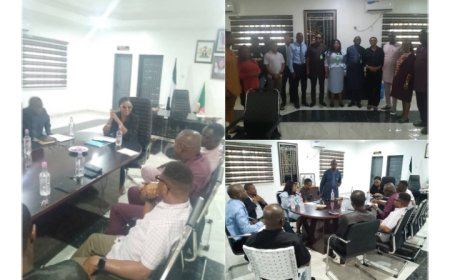
As the present Commission marks its second anniversary, the milestone reflects two years of deliberate efforts to revive a struggling institution. Through innovative reforms and modern management strategies anchored on staff welfare, motivation, professionalism, and productivity, the Commission has injected new life into the service.
The reforms championed by Governor Bassey Otu and Sir Maurice Dominic Effiwatt represent a determined effort to restore integrity, professionalism, and efficiency to the Cross River State Civil Service. The early results are encouraging. The task now is to consolidate these gains and institutionalise a culture where merit triumphs over patronage, competence over connections, and service over self interest.
Only then can the civil service fully reclaim its position as the backbone of governance and the driving force behind Cross River's development aspirations, while remaining firmly aligned with the administration's vision of a revitalised and prosperous state.



-
 EkpenyongOver decades now I haven't see a robust growth in the civil service sector like the one visible in this current administration. I am pleased with the serenity, a high rate of proliferation in creditability and pedestal leadership of such magnitudes....I give yours the flower.