






















One Night That Left Calabar South Counting Its Losses
By Ebi COLLINS
By 1:00 a.m. on Thursday, the rain was just another familiar sound against the rooftops of Calabar South. A few hours later, it had become a nightmare.
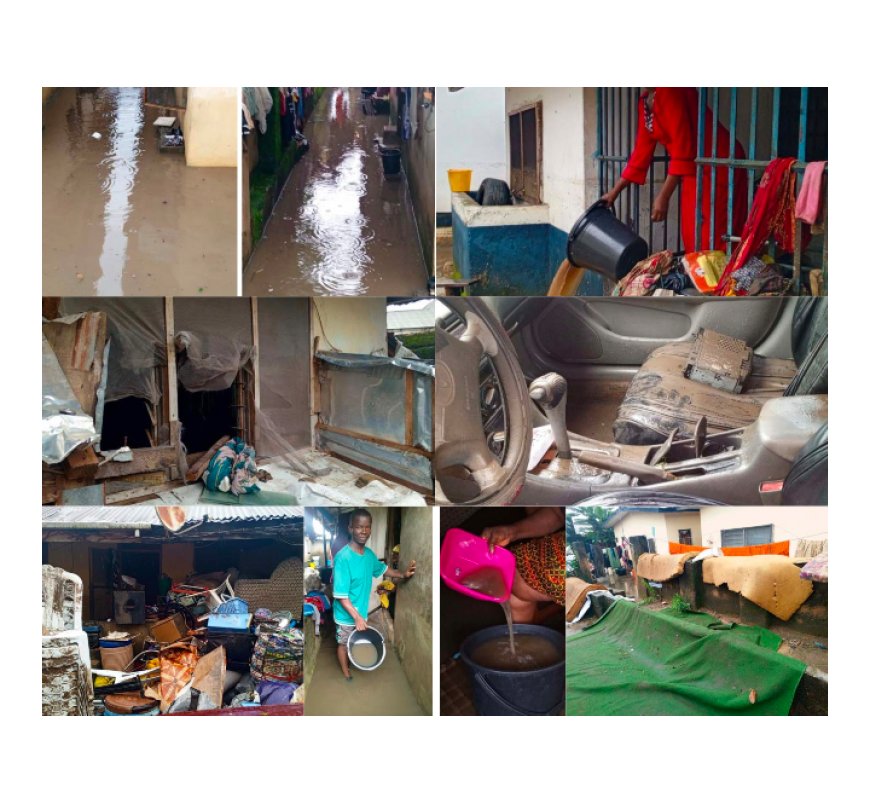
As floodwaters surged through streets and homes with frightening speed, hundreds of families awoke to cries for help, collapsing fences, submerged vehicles and livelihoods swept away in the darkness. By dawn, Mayne Avenue, Webber Street, Atu Street, Target Street and Ebito Street had been transformed into scenes of devastation.
For Mrs. Glory Udeme Asuquo, survival came down to the courage of her neighbours.
“The water blocked my exit, and I couldn’t open the door. I started screaming for help,” she recalled, her voice trembling as she relived the terrifying moments.
With floodwaters rising around her in the darkness, neighbours raced to her home, forced the door open and pulled her to safety moments before the situation became fatal.
“I am only alive today because my neighbours heard my cries and came for me. I lost my clothes, furniture and household property, but I thank God and those who saved my life.”
Across Calabar South, countless families have similar stories, not all ending with such relief.
The torrential downpour, which began in the early hours of July 9 and lasted for several hours, left homes submerged, businesses destroyed and roads badly damaged. At the busy Mayne Avenue–Atakpa Street intersection, floodwaters ripped away sections of the road, leaving deep craters that complicated rescue efforts and brought traffic to a standstill.
For many residents, however, the greatest losses cannot be measured in damaged roads or ruined buildings.
At a student apartment, the flood washed away months of sacrifice.
“We had just received foodstuffs from home to sustain us throughout the semester,” said Miss Agba Theresa, a 400-level student of the University of Calabar, speaking on behalf of her roommates. “Everything has been soaked. But what hurts the most is that our academic certificates and important documents were destroyed. We are completely devastated.”
The flood also dealt a crushing blow to small business owners already struggling under Nigeria’s difficult economic conditions.
Standing inside what remained of her flooded shop on Webber Street, a foodstuff trader fought back tears as she looked at bags of rice, beans, garri, flour and sugar ruined beyond recovery.
“I woke up to find my entire shop floating in water,” she said. “Most of us built these businesses with microfinance loans, and the banks still expect repayment. We don’t know where to begin.”
Nearby, local baker Mrs. Helen Eyo Nsa surveyed the wreckage of her baking business after floodwaters destroyed her commercial freezers, baking ingredients and equipment accumulated over years of hard work.
At Number 48 Webber Street, the disaster extended beyond homes and shops. Poultry farmer Mrs. Igwe lost every bird on her farm after raging floodwaters breached the pens, drowning all her chickens and turkeys in what she described as a total loss.
For Mr. Henry Igwe, the flood arrived with frightening force when the fence separating his home from the nearby “Big Gutter” gave way under the pressure of the water.
“My house and my car were completely submerged within an hour,” he said. “Three of my neighbours also lost their vehicles and property. We had no choice but to swim to safety.”
Yet amid the destruction, stories of humanity emerged.
Neighbours rescued neighbours. Families opened their doors to the displaced. Young people waded through chest-high water to help elderly residents escape. In a night marked by loss, ordinary acts of courage became lifelines.
Now, as residents shovel mud from their homes and salvage whatever little remains, attention is turning from survival to recovery.
Victims are appealing to the Cross River State Government and the State Emergency Management Agency (SEMA) for emergency relief, financial support and urgent intervention. Traders fear loan repayments they can no longer meet. Students wonder how they will replace destroyed certificates and continue their education. Families who escaped with their lives must now rebuild them from scratch.
Beyond immediate assistance, residents are calling for lasting solutions to the perennial flooding that has repeatedly threatened lives and livelihoods in Calabar South. They want damaged roads repaired, drainage systems comprehensively upgraded and engineering measures put in place to prevent another disaster.
As the floodwaters recede, they leave behind more than damaged buildings and washed-out roads. They leave behind stories of courage, heartbreak and resilience, stories of people who survived the longest night of their lives, but now face the even greater challenge of starting over.