





















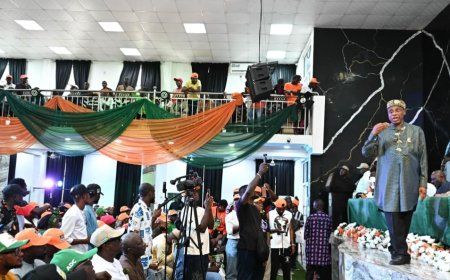

GOOD GOVERNANCE, PEACE AND DEVELOPMENT IN IKOT EKPENE LGA — HON. ANIEFIOK NKOM DESERVES COMMENDATION

By Imoh Essien (Uyo)
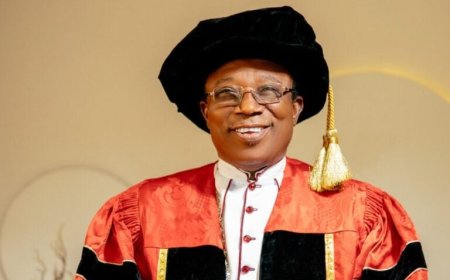
It has become obvious, why the Akwa Ibom State Executive Governor, Pastor Umo Bassey Eno, Ph.D., in 2024 State's Local Government poll emphatically suggested that Ikot Ekpene people should see the need to give Hon. Aniefiok Nkom their mandates to serve them as Local Government Chairman. The recommendation by the Governor is not far fetched.
There is this saying that 'Peace is the bedrock of any development', and development is the most convincing evidence of purposeful leadership. In Ikot Ekpene Local Government Area, these two critical elements have found practical expression under the stewardship of the Chairman, Hon. Aniefiok Nkom, whose leadership has continued to earn the respect of stakeholders and residents alike.
Ikot Ekpene, historically known as a commercial and cultural hub in Akwa Ibom State, has in the past contended with familiar local government challenges—political rivalries, communal disagreements, youth restiveness, and uneven development.
However, the current administration led by Hon. Nkom has demonstrated that with inclusive governance, dialogue, and strategic planning, peace can be sustained and development accelerated.
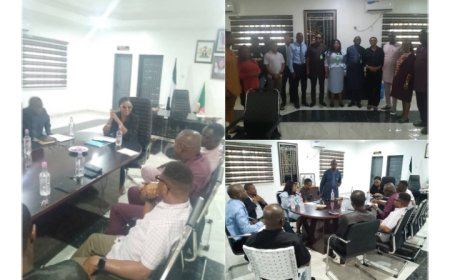
One of the most commendable achievements of Aniefiok Nkom’s leadership is the deliberate prioritization of peacebuilding. Rather than governing through force or political exclusion, his administration has embraced consultation, stakeholder engagement, and consensus-building.
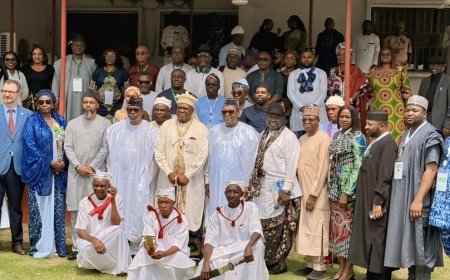
Traditional rulers, youth leaders, women groups, political actors, and community-based organizations have been given a sense of belonging in the governance process. This inclusive approach has significantly reduced tension and created a climate of mutual trust—an essential condition for any meaningful development to thrive.
Beyond peace, tangible development initiatives across Ikot Ekpene LGA speak loudly.
Infrastructure improvements, particularly in road rehabilitation, environmental sanitation, and public facilities, have enhanced mobility, safety, and aesthetics within communities. Markets and public spaces are better organized, contributing to increased economic activities and improved livelihoods for traders and artisans.
These interventions may appear modest to critics, but at the grassroots level, they represent real progress that directly impacts daily life.
Equally noteworthy is the administration’s attention to youth engagement and empowerment.
In a region where idle youth can easily become tools for conflict, Aniefiok Nkom’s government has supported skills acquisition, youth inclusion in decision-making, and constructive civic participation. This proactive stance has not only curbed restiveness but has also redirected youthful energy toward productivity and community development.
Fiscal responsibility and transparency have also played a role in sustaining peace in the LGA. By ensuring that resources are judiciously managed and projects are visibly executed, the administration has reduced suspicion and political bitterness often associated with local governance. When people see their commonwealth translated into visible benefits, confidence in leadership grows, and conflict diminishes.
Importantly, the Chairman has shown maturity in handling political differences. Ikot Ekpene is politically vibrant, and disagreements are inevitable. However, the ability to manage opposition without intimidation, to disagree without chaos, and to place community interest above partisan considerations is a leadership quality deserving of commendation.
While challenges remain—as they do in every local government—what distinguishes Aniefiok Nkom’s tenure is the clear direction and steady commitment to unity, progress, and service. Peace has not been treated as an abstract slogan, and development has not been reduced to mere promises. Both have been pursued as deliberate policy outcomes.
As Ikot Ekpene continues on this path, it is important for residents, political actors, and stakeholders to support initiatives that promote harmony and growth. Constructive criticism should be encouraged, but it must be guided by fairness and the collective interest of the people.
In summary, the strides made in peace and development under Aniefiok Nkom’s leadership deserve recognition. His approach reinforces an enduring lesson: when leadership is inclusive, responsive, and development-focused, peace is not only possible—it becomes sustainable.