
























Cross River Government Issues Early Planting Guidelines for 2026 Amid Forecasted Heavy Rains
By Missang AKPET
In response to evolving climatic conditions and in a bid to safeguard agricultural productivity, the Cross River State Government has set out comprehensive Early Planting Guidelines for the 2026 farming season.
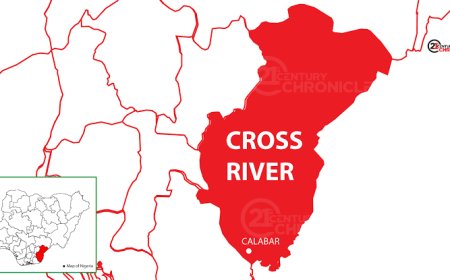
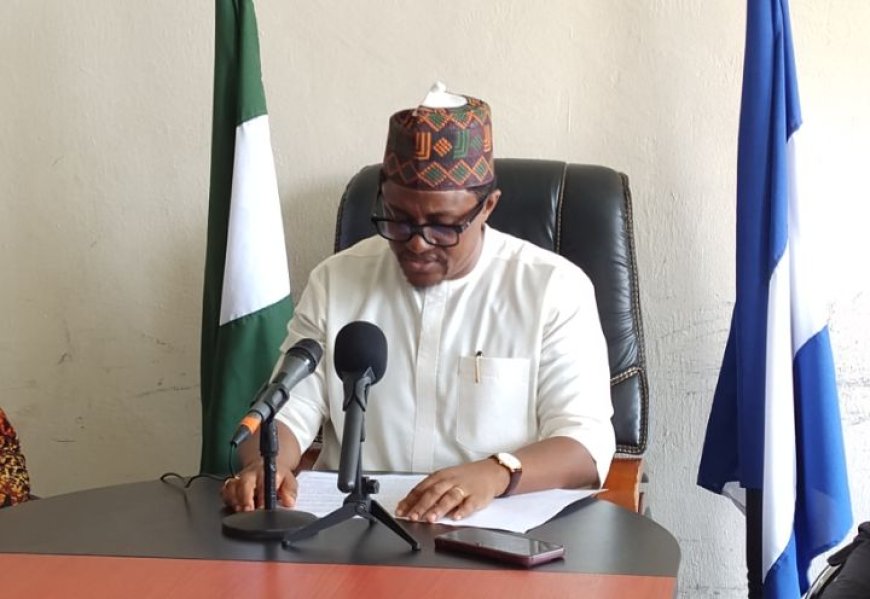
Commissioner for Agriculture and Irrigation Development, Mr. Johnson Ebokpo, who announced this while briefing newsmen in Calabar, cited the 2026 Nigerian Meteorological Agency, NiMet, forecast as the basis for urgent action. The forecast projects above-average rainfall in Cross River in 2026 — 1,800–2,200 mm in coastal areas and 1,500–1,800 mm inland.
He said farmers had earlier been briefed and warned to adopt early cultivation measures to enable them to harvest before the peak flood period, as the projected climatic changes will affect the farming calendar.
“These projected changes will affect our farming calendar. It is important for farmers to prepare for early cultivation to enable harvesting before the peak flood period,” he said.
“Farmers are encouraged to use integrated pest management and intercrop cowpea and soya bean with staples such as maize, cassava, rice, yam, cocoa, coffee, plantain, and oil palm at early growth stages,” he added.
The commissioner linked the crop initiative to findings from the 2025 Cowpea Baseline Survey, which revealed high carbohydrate consumption and low protein intake due to the cost of animal protein.
He said the state is scaling up drought-resistant, early-maturing, and nitrogen-fixing cowpea and soya bean, noting that the crops have stable markets and growing demand, offering farmers new income while improving nutrition.
“Early childhood development is directly linked to proper nutrition,” he said. “Recent data from the National Bureau of Statistics shows malnutrition levels should be treated as a crisis.”
“If Nigeria is to achieve high-income status, the most important investment to make will be in early childhood, particularly in nutrition,” he added.
“Through Project Grow, the state has secured a supply deal with Flour Mills for large volumes of the TGX 1951 soya bean variety, guaranteeing a market for commercial farmers. Under the Cowpea Programme, 3,600 one-kilogram packs of Sampea 20-T seeds were shared in 2025. Distribution of improved cowpea and soya bean seeds for 2026 will start this April. Soya bean will be promoted mainly in the Central and Northern Senatorial Districts of the state.”
“To expand cultivated acreage, a second batch of 108 mini-tractors will be distributed in April under the state’s subsidized hiring scheme. Farmers can access the service through Directors of Agriculture in their LGAs,” Ebokpo said.
On agroforestry, the commissioner stated that the state government is supporting agroforestry and sustainable farming. He urged cocoa farmers especially to desist from cutting down plantations and instead plant economic fruit trees like orange, bush mango, bitter kola, native kola, and avocado.
He said the state, in partnership with FAO under the FOLUR-IP project, is raising improved fruit seedlings for distribution, including improved tenera oil palm sprouted nuts from NIFOR, which are available at ₦100 per nut.
Moreover, the state is also addressing recurring flood problems through the Sustainable Power and Irrigation for Nigeria, SPIN, Project.
The project, which is backed by the Federal Government and the World Bank, will develop irrigation and flood-control infrastructure across 630 hectares of the Bansara–Ogoja rice belt.
According to the commissioner, the initiative is designed to curb flood damage while enabling year-round farming in areas prone to flooding.
Ebokpo highlighted gains under the FGN/NDDC/IFAD-assisted LIFE-ND Project, which he said has delivered 20,460 metric tonnes of cassava, rice, fish, and poultry valued at ₦5.55 billion since 2019.
The project, according to him, has created 4,370 jobs, with 3,626 more projected in 2026. It has also constructed 27.7 km of rural roads, developed 1,102 hectares of farmland, and completed 27 markets and processing facilities.
The commissioner called on farmers to key into the initiatives and urged them to contact the Ministry’s headquarters in Calabar, agricultural offices in the 18 LGAs, or CRADP offices in Ikom, Calabar, and Ogoja for seeds, inputs, and technical services.
He thanked Governor Bassey Otu for his “visionary agricultural initiatives,” which he said are aimed at improving livelihoods and ensuring food security.