















Commentary: Unbroken Democracy @27: Resilient but troubled
By Isaac AQUA
In May 1999, Nigeria emerged from the suffocating grip of military dictatorship into the uncertain embrace of civilian rule. The atmosphere was electric with hope. Citizens long denied political freedom believed democracy would usher in accountable leadership, economic prosperity, social justice, and national rebirth. Twenty seven years later, Nigeria’s democratic journey remains one of Africa’s most enduring political experiments, remarkable for its survival yet deeply troubling in its outcomes.
The Fourth Republic has undoubtedly recorded significant milestones. For the longest period in the nation’s history, power has remained in civilian hands without interruption. Nigeria has conducted successive national elections and witnessed peaceful transfers of power between political parties, including the historic 2015 transition from the Peoples Democratic Party to the All Progressives Congress. In a continent where military coups once defined political transitions, this continuity deserves recognition.
Democracy has also expanded civic consciousness. The media space is more vibrant than it was during military rule. Civil society organizations, advocacy groups, and digital activism have continued to shape national conversations and challenge government excesses. Young Nigerians have become more politically aware and vocal. The Not Too Young To Run law opened new pathways for youth participation in governance, while social media has amplified public engagement in political discourse.
Economically, democratic governance has witnessed periods of growth. The telecommunications revolution transformed communication and business operations across the country. Nigeria’s entertainment industry gained global prominence, while reforms in banking and debt management under previous administrations positioned the economy for expansion at different periods. Infrastructure development, though uneven, has improved in some sectors through roads, rail, and digital investments.
Yet beneath these gains lies a democracy burdened by contradictions, weakened institutions, and broken promises.
At the center of Nigeria’s democratic crisis is the cancer of godfatherism. Politics has increasingly become the preserve of powerful individuals who determine candidates, manipulate party structures, and influence governance from behind the scenes. Merit is routinely sacrificed on the altar of loyalty and patronage. Elections are often shaped not by competence, ideology, or service, but by financial muscle and political influence. This dangerous culture has produced leaders more accountable to political benefactors than to the citizens they govern.
Even more troubling is the brazen corruption that continues to define public life. Despite the establishment of anti corruption agencies and repeated promises of reform, corruption has remained deeply entrenched across different levels of government. Public funds meant for healthcare, education, infrastructure, and social welfare are routinely diverted into private pockets while millions of Nigerians struggle under crushing economic hardship. Scandals involving billions of naira surface with disturbing regularity, yet convictions remain rare and accountability selective. Corruption has gradually evolved from an exception into an accepted culture within the political elite, eroding public trust in governance.
The posture of the judiciary, once revered as the last hope of the common man, has also become a source of national anxiety. Increasingly, judicial pronouncements on electoral disputes and political matters are viewed through partisan lenses, fueling concerns about compromise, external influence, and selective justice. Conflicting judgments, prolonged litigation, and controversial rulings have weakened public confidence in the courts. In a democracy, the judiciary must remain fearless, impartial, and insulated from political interference. Without a truly independent judiciary, the rule of law becomes vulnerable and democracy itself endangered.
Equally alarming is the glaring absence of internal democracy within political parties. Recent primaries conducted by many political parties exposed the deep flaws in Nigeria’s democratic culture. Candidate imposition, consensus arrangements manipulated by party elites, intimidation of delegates, and monetization of the process have become recurring features of party politics. In many cases, aspirants complained openly about exclusion, lack of transparency, and predetermined outcomes. Political parties that cannot practice democracy internally can hardly deliver democratic governance nationally.
This lack of internal democracy has weakened ideological politics and transformed parties into mere platforms for power acquisition. Loyalty to individuals now outweighs loyalty to principles or programs. Frequent defections among politicians further expose the absence of clear ideological direction within the political system. Women and young people remain marginalized in leadership positions despite constituting a significant portion of the population.
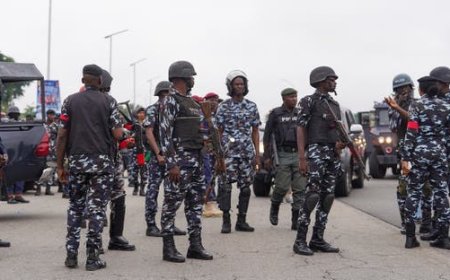
Institutional weakness further compounds the crisis. Nigeria’s bureaucracy remains largely inefficient, while many state institutions struggle under the weight of political interference and poor funding. Law enforcement agencies remain overstretched and under equipped, limiting their ability to effectively tackle insecurity and enforce accountability.
Perhaps nowhere is democratic failure more visible than in the area of security. Across different parts of the country, citizens live under the constant threat of terrorism, kidnapping, armed banditry, communal violence, and separatist unrest. Boko Haram insurgency devastated communities in the northeast, while banditry and mass abductions continue to terrorize parts of the northwest and north central regions. Insecurity has disrupted farming, displaced millions, and weakened investor confidence. Democracy loses meaning when citizens cannot safely travel, work, or sleep peacefully in their homes.
The electricity sector stands as another painful symbol of unrealized democratic dividends. Despite repeated reforms and privatization efforts, power supply remains grossly inadequate. Frequent grid collapses, poor transmission infrastructure, and unstable electricity continue to cripple industries and small businesses. Millions of Nigerians still depend on generators for survival, making energy poverty one of the clearest indicators of governance failure.
Electoral integrity has also suffered persistent setbacks. Although technological innovations such as BVAS and electronic accreditation represented progress, elections continue to be marred by violence, vote buying, logistical failures, and allegations of manipulation. Public confidence in the Independent National Electoral Commission has weakened considerably, particularly after controversies surrounding recent elections. Declining voter turnout reflects growing disillusionment among citizens who increasingly question whether their votes truly count.
As Nigeria marks 27 years of uninterrupted democracy, the moment calls not merely for celebration but for sober reflection. Democracy must move beyond periodic elections and political slogans to become a genuine vehicle for justice, development, and accountability.
The urgent task before the nation is the strengthening of institutions. Nigeria needs stronger anti corruption agencies capable of operating without political interference. The judiciary must be truly independent and courageous enough to uphold justice without fear or favour. The electoral umpire must inspire confidence through transparency, neutrality, and professionalism. Political parties must embrace genuine internal democracy and allow merit, competence, and popular choice to prevail over imposition and patronage.
Strong institutions remain the backbone of every successful democracy. They guarantee accountability, promote transparency, enforce checks and balances, and protect the collective interest above personal ambition. Without them, democracy becomes vulnerable to abuse by powerful interests.
Nigeria’s democratic journey may be resilient, but it remains deeply troubled. The promise of 1999 still survives in the hearts of millions of citizens who continue to hope for a better nation. Realizing that promise will require courageous leadership, institutional reforms, and a citizenry determined to defend democracy beyond election day. Only then can Nigeria’s democracy evolve from mere survival into genuine national progress.