






















Assessing Navy’s response to insecurity on Cross River waterways
By Ehigimetor Igbaugba, News Agency of Nigeria (NAN)
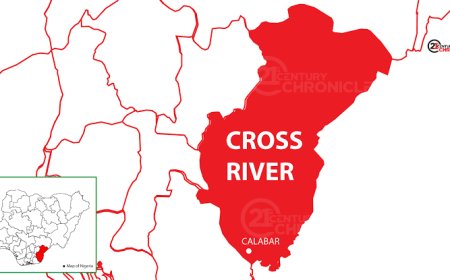
For residents of Cross River’s coastal communities, the waterways are more than channels connecting the state to the Atlantic Ocean.
They are routes to fishing grounds, farms and markets and, for many communities, an indispensable part of everyday life.
In recent years, however, the same waterways have become a source of fear, with kidnapping, militancy and other forms of maritime criminality threatening residents and economic activities.
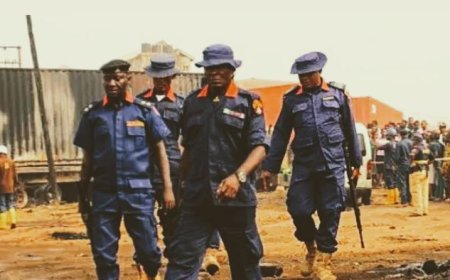
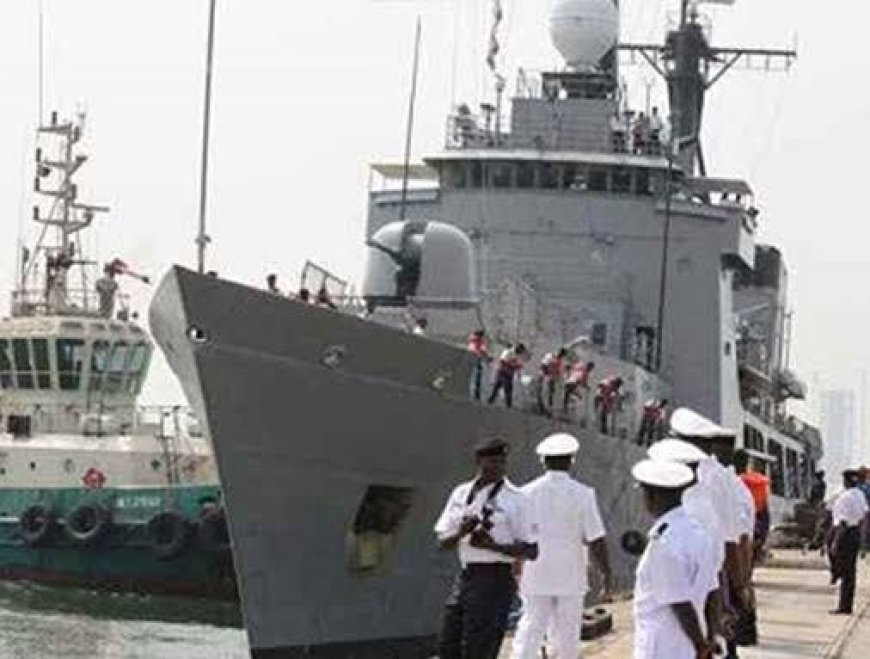
The situation has consequently placed the Nigerian Navy at the centre of efforts to secure the state’s maritime environment, with the Nigerian Navy Ship (NNS) VICTORY, under the Eastern Naval Command, leading operations in the area.
Cross River has a long coastline and an intricate network of rivers, creeks and channels, some providing access to remote communities that are difficult to reach by land.
While the waterways serve legitimate economic purposes, their difficult terrain also provides opportunities for criminals to move, hide and launch attacks.
For residents of Ine-Utang Day Spring Peninsula in Bakassi Local Government Area, for instance, the insecurity has become part of their daily reality.
They allege that militants regularly harass and assault residents, while taking away food items, money and other valuables.
Mr Happiness Asuquo, a resident, said the activities of the attackers had made life difficult for people in the community.
“These people also take money from us and have made our lives miserable,” he said.
Beyond the reported attacks on communities, the security challenges have also affected passengers using the Calabar-Oron water channel, which links Cross River with neighbouring Akwa Ibom.
Kidnappers have reportedly exploited the route, especially as commuters turn to waterways because of the poor condition of the Calabar-Itu Federal Highway.
Indeed, according to available accounts, no fewer than 52 passengers were abducted in three separate incidents along the route.
In April 2026, gunmen reportedly ambushed a commercial boat operated by a ferry service company and abducted 15 passengers.
Many of the victims were students travelling to write the Unified Tertiary Matriculation Examination (UTME).
Similarly, in September 2025, another commercial ferry was intercepted along the same route, with 17 passengers abducted.
The attackers reportedly forced some of the passengers into the creeks after their getaway boat could no longer accommodate them.
Earlier, in April 2025, gunmen intercepted a transit vessel along the waterway and abducted 20 passengers.
Taken together, the incidents have heightened concerns over the safety of commuters and other legitimate users of the waterways.
The Cross River experience, however, is part of a wider maritime-security challenge confronting the Gulf of Guinea.
According to the International Maritime Bureau (IMB), 21 piracy and armed-robbery incidents were reported in the Gulf of Guinea in 2025, compared with 18 in 2024 and 22 in 2023.
The IMB also recorded the kidnapping of 23 crew members in four separate incidents in the region in 2025, alongside three hostages and one injured crew member.
Globally, meanwhile, 137 piracy and armed-robbery incidents against ships were recorded in 2025, compared with 116 in 2024, although most were classified as lower-level incidents.
The IMB also reported that 25 crew members were kidnapped globally in 2025, compared with 12 in 2024, underscoring the continuing threat to people operating on waterways and at sea.
Nevertheless, the broader picture suggests that sustained maritime-security cooperation and naval presence can produce significant results.
The IMB has continued to point to active patrolling and robust naval responses as important deterrents, while urging authorities to maintain their presence in areas vulnerable to maritime crime.
For the Gulf of Guinea, regional cooperation has consequently become an important part of the response.
A major framework is the Yaoundé Code of Conduct, adopted in 2013 by 25 West and Central African countries to combat piracy, armed robbery against ships and other illicit maritime activities.
The framework provides for greater cooperation, information sharing, capacity building and coordination among countries and regional institutions.
In addition, the International Maritime Organisation (IMO) and the Republic of Korea launched a $3 million SMART-C Maritime Security and Counter-Piracy Project in November 2025.
The project is designed to strengthen the capacity of Gulf of Guinea coastal states to combat piracy and other maritime crimes through enhanced maritime-security capabilities and regional cooperation.
At the same time, regional stakeholders are also turning to technology to complement traditional naval operations.
The IMO says recent maritime-security discussions in the region have highlighted satellite and drone surveillance, artificial-intelligence-based risk mapping, improved incident reporting and public-private partnerships as tools for strengthening maritime-domain awareness and operational response.
Beyond technology and patrols, the regional approach also recognises the importance of cooperation with coastal communities.
This is particularly relevant to Cross River, where fishermen, traders, passengers and residents often have first-hand knowledge of movements along isolated creeks and channels.
For such communities, insecurity on the waterways goes beyond the immediate danger of an attack.
In practical terms, fear can discourage people from travelling, reduce fishing activities and disrupt the movement of goods between coastal communities.
Against this backdrop, the Nigerian Navy established a forward security outpost at Dayspring Island, also known as Idung I/Peacock Crossing, in Akpabuyo Local Government Area.
The outpost, established in May 2026, is intended to strengthen security along the Calabar-Oron water channel and curb kidnapping, militant activities and other maritime crimes.
Commodore Shuaib Ahmed, Commander, NNS VICTORY, said the Navy remained committed to sustaining pressure on criminal elements and their collaborators.
According to him, the objective is to create a maritime environment where fishermen can safely access their fishing grounds, traders can move their goods and residents can travel between communities without fear.
“Cross River waterways represent an important economic asset. If effectively secured, they can support livelihoods, facilitate commerce and contribute to the development of the state’s maritime economy,” he said.
Ahmed said sustained intelligence-driven operations and the Navy’s presence in the area had helped to degrade criminal activities and disrupt the support networks of criminals.
At the same time, maritime insecurity in Cross River extends beyond kidnapping and militancy.
Rear Adm. Chiekezie Okehie said crude oil theft, illegal bunkering and other activities associated with the petroleum industry remained concerns requiring sustained attention.
In this regard, he said the vast network of waterways and creeks in the Niger Delta made it impossible for security personnel to physically monitor every channel at all times.
Consequently, information from communities, surveillance and intelligence networks are critical to identifying threats before they escalate.
Okehie said the Navy had continued to intensify operations against crude oil theft and other maritime crimes.
More importantly, he stressed that the complexity of the threats meant that no single security agency could tackle them alone.
“Kidnapping, militancy and crude oil theft often involve networks that cross geographical and operational boundaries.
“This requires collaboration among the Navy, police, other security agencies, local authorities and host communities.
“Such cooperation is particularly important because criminals can exploit gaps between agencies.
“A suspect who escapes from one operational area can move into another. Information sharing can help close such gaps,” he said.
Okehie said recent Navy operations had combined patrols, intelligence gathering and targeted raids to confront criminal activities in the waterways.
Nevertheless, he said sustained pressure was necessary to prevent criminal groups from establishing alternative bases after their camps were dismantled.
To achieve this, he said, regular patrols, improved intelligence gathering, stronger community relations and effective coordination among security agencies would be required.
Equally important, he stressed the need to ensure that legitimate users of the waterways were not unnecessarily disrupted by security operations.
Dr Judex Okoro, Department of Mass Communication, University of Calabar, commended the Navy for its efforts and appealed for greater collaboration among all stakeholders, including sister security agencies.
“For the Navy and its partners, the challenge now is to sustain that pressure until security becomes a permanent feature of Cross River’s maritime environment rather than an occasional response to emerging threats”.
Ultimately, for Cross River’s coastal residents, safer waterways mean safer journeys, more secure livelihoods and greater confidence to return to the waters that sustain their communities.
Stakeholders say restoring safety requires more than stopping criminal attacks, but protecting fishing, transportation, trade and access to essential services.
They call for closer intelligence sharing among security agencies, regular patrols, stronger surveillance of vulnerable routes and timely response to distress calls.
They also stress the need for coastal communities to provide credible information to security agencies, while government authorities address infrastructure gaps that push more commuters towards vulnerable waterways.
(NANFeatures)