












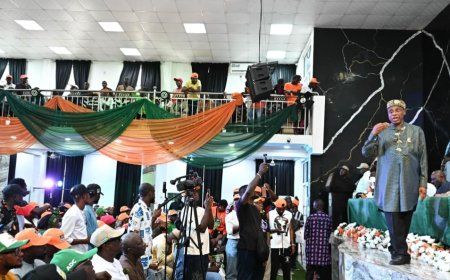

OPINION: Beyond Projects: Rebuilding the Foundations of Cross River State — The Enduring Legacy of Governor Bassey Edet Otu
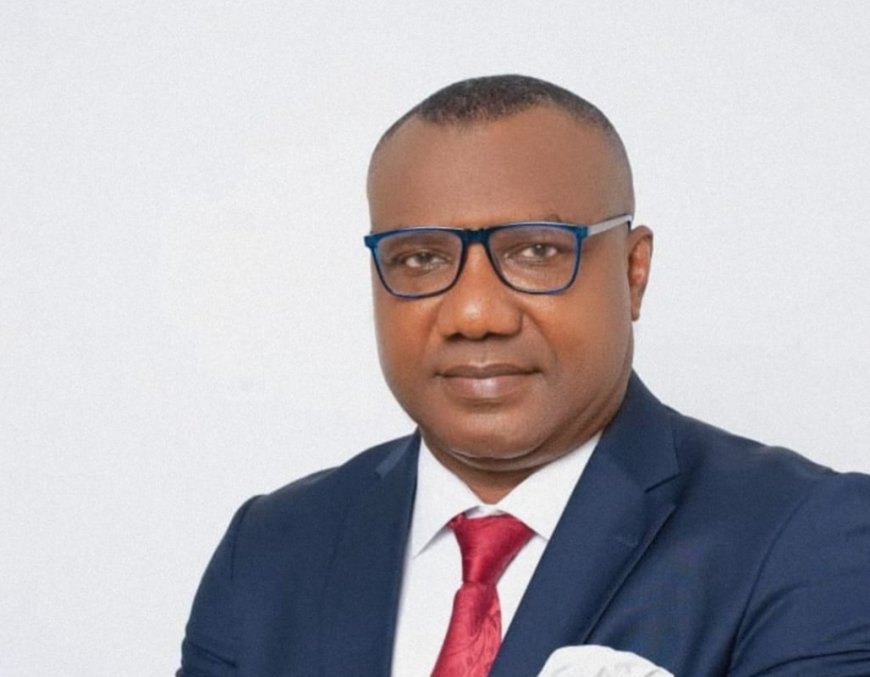
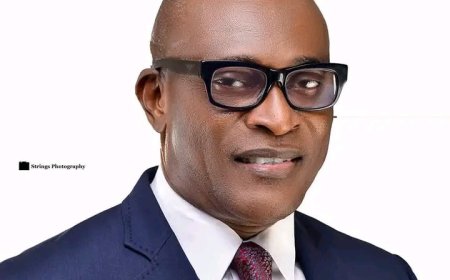
By Dr Bobby Ekpenyong
Great leaders are not remembered merely for the monuments they commissioned, but for the institutions they restored, the systems they strengthened, and the foundations they leave for future generations to build upon.
History often celebrates governments by counting the number of roads they constructed, bridges they commissioned or buildings they unveiled. While these visible achievements are undeniably important, they tell only part of the story. The deeper measure of leadership lies elsewhere—in the ability to restore confidence in public institutions, revive dormant assets, strengthen governance systems and create structures capable of serving the people long after a single administration has ended.
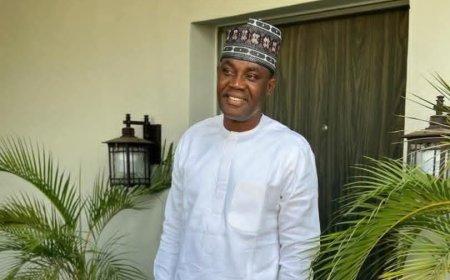
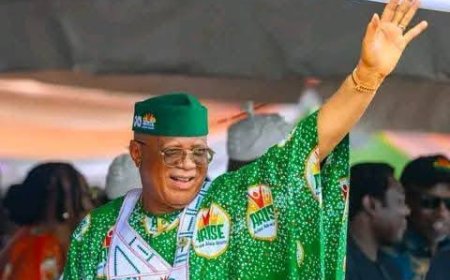
This, perhaps more than anything else, is the defining lens through which the leadership of His Excellency, Senator Prince Bassey Edet Otu, Governor of Cross River State, should be viewed.
Across Cross River State, public discourse has rightly acknowledged the administration’s investments in roads, healthcare, tourism, security and public utilities. Yet beneath these visible accomplishments lies a quieter transformation that may ultimately become Governor Otu’s greatest legacy—the deliberate rebuilding of institutions and the restoration of strategic state assets that had long fallen into neglect. This is, in my view, Governor Prince Bassey Edet Otu’s deepest legacy when viewed from a governance perspective.
Unlike projects that are completed once and eventually require replacement, institutional renewal continues to benefit a state long after a governor has left office. Roads may wear out, buildings may require renovation, but strong institutions continue to serve the people for generations. They preserve continuity, improve efficiency and provide every succeeding administration with a stronger foundation upon which to build.
What I find particularly remarkable about Governor Otu’s leadership is that he has not limited his focus to commissioning new projects alone. He has deliberately pursued the revival of dormant institutions, the completion of abandoned public investments and the restoration of government capacity.
To me, this reflects a deeper understanding of governance—that lasting development is not measured only by what is newly built, but also by what is restored, strengthened and positioned to continue serving the people long into the future. Governor Prince Bassey Otu appears to understand this distinction
Rather than allowing valuable public assets to remain symbols of abandoned ambition, his administration has pursued the restoration of institutions and facilities that hold lasting economic and social value. One of the clearest examples is the successful effort to return Tinapa Business and Leisure Resort to the ownership of Cross River State after years of uncertainty.
Tinapa has always represented more than a collection of buildings. It embodies Cross River’s aspiration to become a destination for commerce, tourism, investment and regional economic activity. By restoring this strategic asset to state ownership, Governor Otu has sought to reposition an important symbol of the state’s economic vision and create fresh opportunities for future growth.
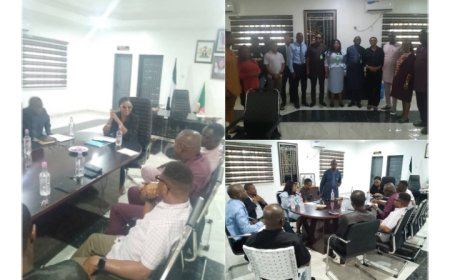
The completion and reopening of the Local Government Service Commission Complex tells a similar story. For years, the project reportedly stood as a reminder of unfinished public investment. Governor Otu’s decision to complete and reopen the facility demonstrates a governance philosophy that refuses to allow public assets to become permanent monuments to abandonment.
The remodelling of the Cross River State Library further reflects this commitment to institutional renewal. Libraries are not merely buildings; they are centres of learning, innovation and civic development. By investing in such an institution, Governor Otu has reinforced the principle that sustainable development depends not only on physical infrastructure but also on knowledge, education and human capital.
The redesigning and renovation of the governor's office and residence is worthy of mention. Perhaps the most significant aspect of Governor Otu’s approach is that institutional rebuilding extends beyond physical structures.
Governor Otu’s commitment to restoring the foundations of governance is perhaps most evident in the civil service—the engine room of government. Recognising that no administration can deliver sustainable development without a motivated and efficient public workforce, his government has taken deliberate steps to strengthen the state’s administrative machinery.
The implementation of a new minimum wage for civil servants, the recruitment of additional personnel into the state and local government workforce, the payment of substantial gratuity arrears to retired public servants and sustained efforts to identify and eliminate ghost workers all reflect a broader commitment to restoring integrity, efficiency and professionalism within the public service.
Beyond these interventions, the administration has consistently emphasised productivity, discipline, accountability and administrative efficiency, signalling a governance philosophy that seeks not merely to manage government institutions but to rebuild them into stronger and more responsive engines of public service.
His administration has pursued reforms aimed at improving the effectiveness of public institutions through administrative strengthening, investment in the public workforce and the gradual modernisation of government systems. The introduction of digital health records, improvements in medicine distribution and efforts to enhance public service delivery reflect a broader understanding that lasting development depends on efficient institutions as much as it depends on visible projects. This philosophy is evident across multiple sectors.
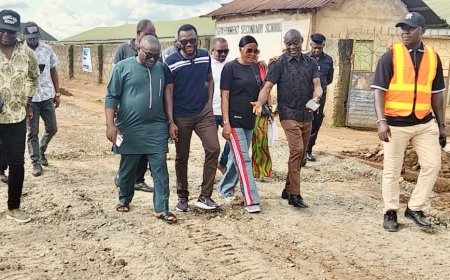
Governor Otu’s investment in road construction and rehabilitation has improved mobility across Cross River State, but equally important is the institutional planning required to ensure those roads remain productive assets for years to come.
Healthcare has equally benefited from Governor Otu’s people-centred reforms. The recruitment of more than 200 health professionals, the upgrading of hospitals and primary healthcare centres, the establishment of a specialised Fistula Centre, the commissioning of oxygen plants, the upgrade of Schools of Nursing into accredited Colleges of Nursing Sciences and the expansion of free healthcare services for pregnant women, children under five and elderly citizens all point to an administration seeking to strengthen both healthcare infrastructure and the institutions that sustain it.
Security has received similar attention. Through support for police infrastructure, patrol logistics and community security initiatives, Governor Otu has contributed to creating a more secure environment in which businesses can grow, children can learn and communities can prosper.
Taken individually, each of these achievements represents meaningful progress. Taken together, however, they reveal something far more significant. They illustrate a Governor who has sought not only to execute projects but to rebuild the very institutions upon which those projects depend.
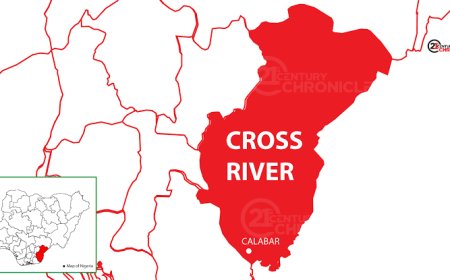
Gov Otu pursuit of the restoration of Cross River State as a littoral State and reclaim lost oil-wells is a masterstroke. An effort no past government in CRS dares to try. This may well become Governor Bassey Edet Otu’s most enduring contribution to Cross River State.
Infrastructure can deteriorate. Buildings can age.Administrations eventually change. But institutions that are rebuilt, strengthened and properly managed continue to serve generations long after political tenures have ended.
History repeatedly shows that societies achieve lasting prosperity not simply because they build more projects, but because they revive abandoned assets, strengthen public institutions and sustain the systems that support long-term development.
That is why the restoration of dormant state assets deserves greater recognition within the broader story of Cross River’s development.
Gov. Otu's administration's peoples first vision necessitated his taking over the construction of Adiabo road with bridges which was completely abandoned by the federal government for decades.
Every abandoned public project carries an economic cost, weakens public confidence and diminishes the value of public investment. Every restored institution sends the opposite message—that government can renew public trust, recover lost opportunities and preserve strategic assets for the benefit of future generations.
Governor Bassey Otu’s approach reflects this philosophy of renewal. As Cross River continues its development journey, future assessments of this administration are likely to consider not only the roads constructed, hospitals upgraded or water projects completed, but also the strength of the institutions left behind. That may ultimately prove to be the defining legacy of this period in the state’s history.
Years from now, citizens may not remember every ceremony or every public address. They will remember whether public institutions became stronger, whether dormant assets were restored and returned to productive use, whether government systems became more effective and whether development became more sustainable.
If those questions continue to attract positive answers, then Governor Prince Bassey Edet Otu’s administration will be remembered not only for what it built, but for what it restored.
For when history renders its final verdict, it rarely remembers the loudest politics of an era; it remembers the leaders who rebuilt the foundations upon which future generations continued to prosper.
Bobby Ekpenyong, Ph.D, is a Lecturer at Dept of Criminology And Security Studies UNICAL, and also a Fellow National Association Of Criminologists and Security Practitioners of Nigeria and.Cross River State Coordinator