






















Colonialism in Nigeria: Duration, Character and the Road to Independence
By Okoi Obono-Obla
Colonialism in Nigeria lasted for a relatively shorter period than in some other countries, such as Ghana, East African countries like Kenya, North African countries like Algeria, and Southern African countries like Mozambique and South Africa itself.
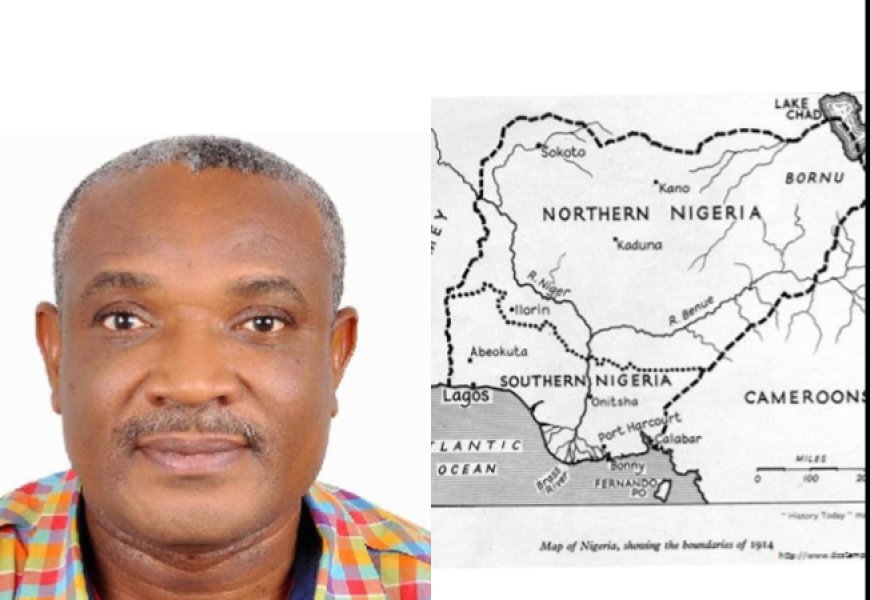
It came in three waves. The first area to be impacted was Lagos, which came under British rule in 1861 when Lagos Island was ceded to the British Crown under the Lagos Treaty of Cession signed by Oba Dosunmu, and was officially declared the Colony of Lagos in 1862.
The second wave was in the Niger Delta. The area was first administered as the Oil Rivers Protectorate in 1885, renamed the Niger Coast Protectorate in 1893, and became the Protectorate of Southern Nigeria on 1 January 1900 after the charter of the Royal Niger Company was revoked.
The third wave was in the North. The territories of the Royal Niger Company north of the Niger-Benue confluence became the Protectorate of Northern Nigeria, also established on 1 January 1900 and proclaimed at Lokoja by High Commissioner Frederick Lugard.
The three entities — the Colony of Lagos and the Protectorates of Northern and Southern Nigeria — experienced colonialism in different ways and in different epochs. One could therefore argue that colonialism impacted Lagos more deeply than the Northern and Southern Protectorates.
The capital of the Protectorate of Southern Nigeria, which itself evolved from the Oil Rivers and Niger Coast Protectorates, was Calabar from 1900 to 1906. In February 1906, the Colony of Lagos was amalgamated with the Protectorate of Southern Nigeria to form the Colony and Protectorate of Southern Nigeria, and the capital was moved to Lagos.
The capital of the Protectorate of Northern Nigeria was Lokoja from 1900 to 1902, then Zungeru from 1902 to 1916 — today a quiet town in Niger State in the North Central geopolitical zone — before the capital was moved to Kaduna in 1916.
On 1 January 1914, the Colony and Protectorate of Southern Nigeria and the Protectorate of Northern Nigeria were amalgamated to form the Colony and Protectorate of Nigeria. It would later become a Federation in 1954.
In terms of duration, Lagos was under British rule from 1861 to 1960, a period of 99 years, while the Protectorates of Northern and Southern Nigeria were both under formal British rule from 1900 to 1960, a period of 60 years each. The continuous timeline of British presence in what is today the Federal Republic of Nigeria therefore runs from 1861 to 1960. The difference in impact was also administrative: Lagos experienced direct Crown rule with English law and municipal institutions, while the South saw a mix of direct and indirect rule and the North was governed almost entirely through Lugard's system of Indirect Rule, which preserved the authority of the Emirs.
This rather short period that Nigeria experienced colonialism was partly due to the resilience and tenacity of its people, coupled with the fervour of nationalism that developed among them. This nationalism was triggered by two major events.
The first was the Second World War. Nigerian troops recruited into the British Army as part of the Royal West African Frontier Force were deployed to India and Burma (present-day Myanmar). More than half of the 90,000 West African soldiers who served in South-East Asia after 1943 were Nigerians, serving in the 81st and 82nd (West Africa) Divisions of the British 14th Army in campaigns in the Arakan and Kaladan Valley. There they were exposed to new ideas about freedom and equality. When they returned home after the war, they imparted these ideas to the emerging indigenous elite and precipitated a new movement for change.
The second was the new international legal order that emerged after the war. The Atlantic Charter of 1941 proclaimed by the victorious Allied powers, the United Nations Charter of 1945, and the Universal Declaration of Human Rights proclaimed by the United Nations in 1948, with its strong espousal of the right to self-determination as a peremptory norm of the new international law, provided a powerful legal and moral impetus for decolonization.
These were the factors that quickened the independence of Nigeria, which came into being on 1st October 1960, when the Union Jack of Imperial Great Britain was lowered and replaced with the Green-White-Green flag of the new country, Nigeria.
*Conclusion*
As Nigeria marks 66 years of independence, we wish her a hearty Independence Day. We salute the resilience of her people, who, despite the pull and push of fissiparous, centripetal and centrifugal forces that are normally present in a country of such mosaic complexity, have survived a tragic civil war and remained standing strong. To have endured, held together, and continued to forge a nation out of such diversity is one of the greatest achievements of Nigeria in these 66 years.
Obla was an aide to President Buhari