




















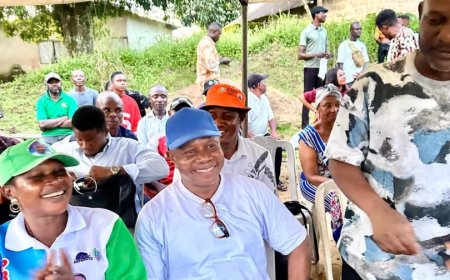


WORKER’S DAY: WHAT IS WORKING FOR THE NIGERIAN WORKER?
As of today, the pump price of Premium Motor Spirit, also known as fuel, has climbed to an alarming N1,440 per litre. This is not merely a statistic, it is a quiet earthquake that is gradually shaking the foundation of everyday life. Transportation costs have soared beyond the reach of many Nigerian workers. The worker who once managed a modest commute now calculates each journey with painful precision. In some cases, he simply stays at home, not out of choice, but for sake of necessity.
Moreover, the prices of basic commodities continue their upward march with little resistance. Food items, once considered staples, are fast becoming luxuries. For instance, a bag of rice, a loaf of bread, a crate of eggs, each now demands a disproportionate share of the worker’s earnings. Also, rent has not remained static. Neither have school fees, medical bills, or the countless incidental costs that punctuate daily living. Yet, wages have remained stubbornly still, like a clock that has refused to acknowledge the passage of time.
The Nigerian worker, therefore, finds himself trapped in a widening gap between income and survival. It is a gap filled with quiet sacrifices such as meals skipped, plans postponed, aspirations deferred indefinitely. The celebrated resilience of the Nigerian spirit, often romanticised, is in reality a coping mechanism for systemic neglect.
One might ask: where, then, lies the promise of labour in Nigeria? What incentives exist for productivity when effort no longer guarantees stability? The social contract between the state and its workers appears increasingly fragile, if not altogether broken. This is not to deny the efforts, however modest, being made in certain quarters. But such efforts, when weighed against the scale of hardship, resemble drops in an ever-expanding ocean.
Worker’s Day should not merely be about speeches, parades, or symbolic gestures. It should be about confronting uncomfortable truths. It should compel policymakers to move beyond rhetoric and address the structural issues that continue to erode the value of work. For the Nigerian worker does not ask for extravagance. He asks for fairness. For a wage that can sustain, not merely survive. For policies that protect rather than punish. For a system that recognises that the strength of any nation lies, ultimately, in the well-being of its workforce.
Until these conditions are met, Worker’s Day will remain what it has quietly become, a reminder not of progress, but of promises yet to be fulfilled.