







Nigeria: NFF Probe Uncovers Deep-Seated Rot, Calls for Sweeping Reforms in Nigerian Football
By Akpo Esco
The Nigeria Football Federation's fact-finding committee set up to investigate the country's recent decline in international football has uncovered a raft of administrative, technical and structural weaknesses, warning that urgent reforms are required to restore confidence and competitiveness.
The committee, chaired by former NFF General Secretary Ambassador Fanny Amun, made the recommendations in its report dated August 21, 2026, following the Super Falcons' disappointing campaign at the 2026 Women's Africa Cup of Nations in Morocco, where Nigeria failed to retain the continental title and subsequently missed qualification for the 2027 FIFA Women's World Cup in Brazil.
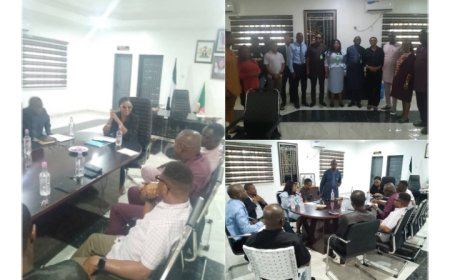
The six-member committee, which included former internationals Desire Oparanozie and Mutiu Adepoju, as well as Dr Alex Mana, Ladan Bosso and secretary Nasiru Jibril, examined governance, financing, technical development, grassroots football, league administration and national-team management.
Among its most striking findings were allegations of interference in national-team player invitations and claims that some NFF board members, officials and coaches could influence selections for financial benefit.
The report also raised allegations that incentives were sometimes demanded or accepted by officials in exchange for favourable decisions concerning national-team camp invitations.
It further highlighted concerns over the unequal treatment of players and officials, noting claims that NFF board members and management staff receive payments while players and their officials in national-team delegations are sometimes left unpaid.
The committee, however, found no evidence that individual players exercised undue influence over team selection during the Morocco campaign. It also established that the players generally cooperated with one another and that Ashleigh Plumptre's absence was medically justified after surgery, with her condition corroborated by medical personnel in Nigeria and at her foreign club.
The committee criticised the manner in which some officials gained access to the team's camp, insisting that camp management must be properly controlled and structured.
It also called for national teams to have early, coordinated preparations, with player selection based on current fitness levels, objective performance indices and proper medical assessments.
On the broader football structure, the committee recommended a comprehensive overhaul of the NPFL, NNL, NLO and NWFL, alongside improved coaching education, certification, scouting and player-development systems.
It urged the NFF to deploy modern data and verification technology to address discrepancies in player records and age verification, while leveraging technology to attract greater corporate and commercial investment.
The report also recommended stronger oversight of social media and external influences capable of undermining team cohesion.
On governance, the committee called for NFF Congress members to be credible, knowledgeable and experienced, with a maximum of two terms in office. It also raised concerns about officials remaining in lucrative positions for too long, warning that this could fuel rivalry and weaken institutional efficiency.
The committee further urged the federation to establish a deliberate development template for both male and female football, including continuous training and retraining of administrative, technical and secretariat staff.
It said the Super Six competition could play a crucial role in national-team development and scouting, while insisting that improved league structures and funding were essential to producing players capable of competing at the highest international level.
On the controversy surrounding missing money in Morocco, the committee said such incidents must be handled decisively and transparently at the highest level of leadership.
Concluding its report, the committee urged the NFF to verify all allegations through its internal mechanisms and implement practical reforms backed by genuine political will.
It also commended the Super Falcons and the wider team delegation for their efforts in Morocco, stressing that the priority must now be to learn from the failures and rebuild Nigerian football on a more professional, transparent and sustainable foundation.
Culled from African football new