




























CRISSAA - DG Sets 72-Hour Deadline for Billboard Safety Compliance in Calabar
By Hannah Arikpo
In Calabar, Advertisers have been given seventy-two hours to remove advertising materials from billboard structures identified as requiring urgent repairs, as the Cross River State Signage and Advertising Agency (CRISSAA) steps up enforcement of safety standards in the outdoor advertising sector.
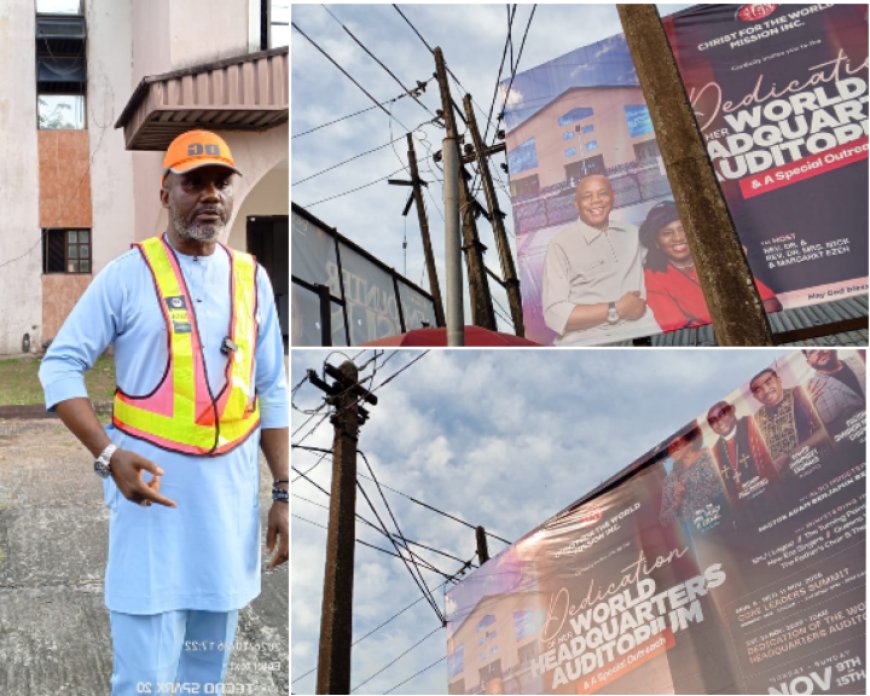
The Director-General of the agency, Mr. Ubong Sam, who announced the measure during an inspection of billboard installations across the metropolis explained that the removal of advertising materials would enable their owners to repair and restore defective structures to the required safety standards in collaboration with the Agency.
He lamented, despite the agency's earlier directive to the affected operators through its Commercial Department, some are yet to comply. He warned, "Advertisers who fail to repair defective structures to meet the agency’s safety requirements after the removal of their advertising materials would risk having their billboards permanently removed from those locations." Sam further urged operators to cooperate with CRISSAA throughout the process, emphasising that commercial considerations could not take precedence over public safety.
According to him, the condition of billboard structures must take precedence over the financial returns they generate for the government. “Whatever a client pays as remittance to government coffers is nothing compared to the lives and property of the citizenry,” he stated.
ALSO READ: "No Restriction of Movement During October Environmental Sanitation"
The CRISSAA Boss identified rusted metal components, weak joints, inadequate bracing and deteriorating foundations as some of the problems observed during the exercise. He explained that prolonged exposure to rain, moisture and other environmental elements could undermine structural stability, leaving poorly maintained billboards vulnerable to collapse and posing risks to people and property around them.
He advised advertisers to undertake periodic structural assessments, noting that installations generally require comprehensive revalidation after about ten years, depending on their construction quality and condition. However, billboards in locations exposed to more corrosive conditions, particularly salty environments, may require assessment and revalidation every five years. He said, such exercises should include integrity tests, appropriate welding, joint reinforcement, rust treatment, protective coatings and replacement of damaged components where necessary.
The Director-General also faulted construction methods that fail to provide adequate support for the weight and dimensions of billboard structures. He warned that poorly reinforced joints and defective foundations could become points of failure during strong winds and thunderstorms, with potentially serious consequences for nearby residents, businesses and road users.
Another major concern, he said, was the presence of billboard structures touching or dangerously close to electricity cables. Sam described improvised insulation and makeshift protective arrangements as inadequate safeguards against electrical hazards, stressing the need for professional intervention wherever installations pose a risk of contact with power lines.
To address this concern, he disclosed that CRISSAA had contacted the relevant power distribution company to provide technical personnel for operations involving billboards in contact with electricity lines and cables. The personnel would assist the agency in ensuring that appropriate precautions, including disconnection of electricity where necessary, were taken before work proceeded on the affected installations.
The D-G further raised concerns about billboard structures suspected of lacking the required Environmental Impact Assessment (EIA). What he refers to as an installation whose foundation had reportedly developed serious defects, explaining that the concerns raised by residents reinforced the need for prompt regulatory intervention. He cautioned that structural failures could lead to injuries, fatalities and destruction of property if identified defects were ignored.
The CRISSAA Chief clarified that the billboard structures belonged to private advertising operators, while the agency’s responsibility was to regulate their operations and ensure compliance with applicable safety requirements.
The enforcement exercise was intended to give advertisers an opportunity to correct deficiencies rather than expose members of the public to preventable hazards.
The inspection revealed several installations requiring attention, as the agency would no longer tolerate delays in addressing defects capable of endangering the public.