


























UNICAL VC Vows to Produce New Breed of Nigerians Free From Corruption
By Benjamin GBOR
The Vice Chancellor of the University of Calabar, Prof. Offiong Efanga Offiong, has reaffirmed his administration’s commitment to producing a new breed of Nigerians who will uphold integrity, accountability and ethical values.
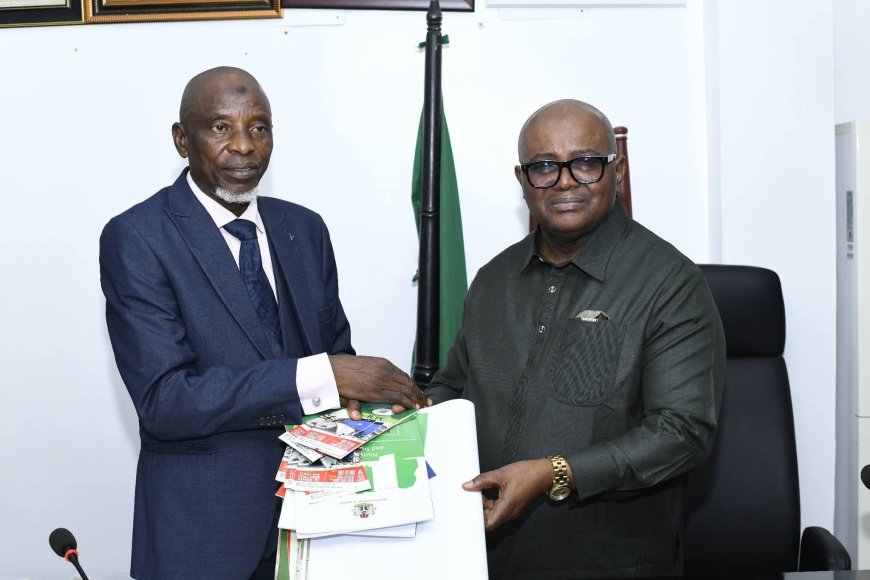
Offiong made the commitment during the inauguration of the reconstituted Anti-Corruption and Transparency Unit (ACTU) of the University, held at the Council Chamber.
The Vice Chancellor said the University had a critical role to play in the fight against corruption, stressing that it must serve as a model of integrity, accountability and responsible leadership.
He said his administration remained committed to repositioning the University of Calabar as a 21st-century institution operated in line with global standards and best practices while preserving its institutional values.
“As for this administration in the University of Calabar, we are committed to ensuring that we not only produce a new breed of Nigerians, but that we also become very critical partners in the fight against corruption,” he said.
Offiong clarified that the ACTU was not established to witch-hunt or sack staff indiscriminately, but to ensure that the University’s activities were conducted properly and in accordance with the standards expected of a modern institution.
He charged members of the committee to uphold honesty, accountability and service to humanity, assuring them of the university management’s full support in carrying out their responsibilities.
In his goodwill message, the ICPC Resident Anti-Corruption Commissioner for Akwa Ibom and Cross River states, Mr Baba Alaro Shuaib, said the commission plays an important role in strengthening ACTUs across public institutions.
Shuaib said the ICPC provides oversight, guidance, capacity building and performance evaluation to ensure that ACTUs effectively carry out their mandates.
He described ACTU members as agents of change responsible for promoting transparency, accountability and ethical conduct in their institutions.
He added that the fight against corruption was a collective responsibility, noting that the effectiveness of ACTUs depends on their independence, institutional support, capacity and commitment.
Also speaking, the Head of the System Study and Review Unit, ICPC Akwa Ibom State Office, Mr Nsuhoridem E. Akpan, outlined the operational guidelines for ACTUs in a paper titled, “Standing Orders for the Operation of ACTUs in MDAs.”
Akpan said the standing orders provide a uniform framework for corruption prevention, integrity and transparency, with ACTUs expected to undertake activities including corruption risk assessment, preliminary investigations, public enlightenment and monitoring compliance with rules and budget implementation.
The newly inaugurated ACTU Chairman, Prof. Grace Etuk, thanked the university management for entrusting the members with the responsibility and pledged the committee’s commitment to carrying out its duties diligently.
Other members of the reconstituted ACTU include Dr Eunice Ajuluchukwu of the Department of Vocational Education, Dr John Otalor of the Department of Accounting, Dr Emmanuel Duke of the Department of Pure and Industrial Chemistry, Dr Gabriel Inyang of the Faculty of Law, Mr Joseph Okoh of the Audit Unit, Dr Victor Iton of the Procurement Unit and Mr Bassey Nyong of the Vice-Chancellor’s Office, who will serve as secretary.