





























Reviving The Nigerian Chronicle in the digital news era
By Ehigimetor Igbaugba
News Agency of Nigeria (NAN)
For Gov. Bassey Otu, the commissioning of the remodelled Cross River State Newspaper Corporation and the new Government Printing Press was more than another government project.
It was an attempt to restore a piece of Cross River’s institutional memory and give an old media organisation a place in a rapidly changing industry.
On Thursday, Sept. 3, the gates of the old newspaper house on Barracks Road, Calabar, opened to politicians, journalists, former employees and other stakeholders as The Nigerian Chronicle was formally reactivated.
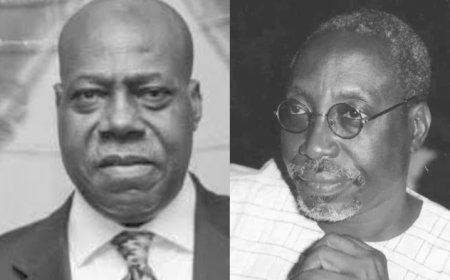
The occasion brought together people whose personal histories are tied to the newspaper, including veteran journalist and former Chronicle editor, Chief Ray Ekpu, and former Cross River Governor, Chief Clement Ebri.
Yet, beyond the nostalgia was a question that confronts newspapers everywhere.
How does an institution born in the age of typewriters remain relevant when readers now consume news through smartphones, social media and digital platforms?
For Otu, the answer lies in giving the institution a new lease of life.
Since assuming office, the governor has promised to reposition the state’s information sector and restore some of its moribund assets.
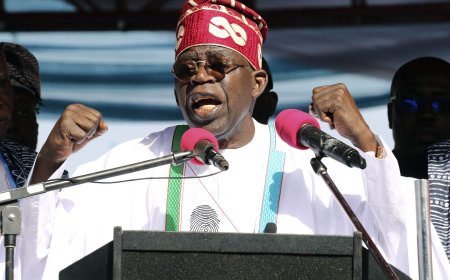
At the commissioning, he said the revival of the Chronicle and establishment of the Information Hub were part of efforts to improve communication between government and citizens.
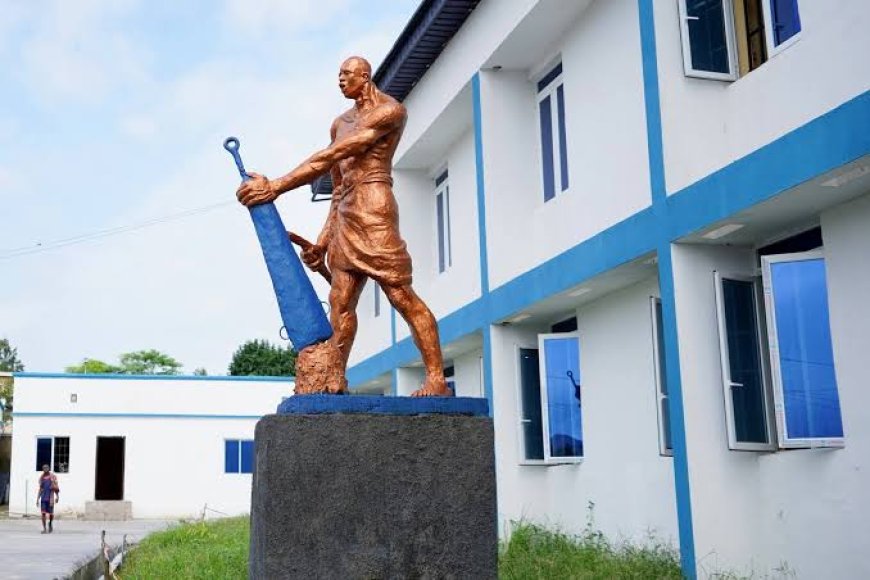
The remodelled complex has been renamed the Cross River Information Hub, bringing the newspaper corporation and government printing facilities under one roof.
Otu also charged the staff to uphold professionalism, verify information before publication and protect the facilities from vandalism.
That emphasis on accuracy is significant in an industry where the pressure to publish quickly has grown with the rise of digital platforms.
Nigeria now has one of Africa’s largest internet audiences.
DataReportal estimated that the country had about 109 million internet users and 47.8 million social-media user identities in January 2025, underscoring the scale of the digital audience competing for news and information.
For traditional newspapers, therefore, returning to print alone is unlikely to be enough.
Perhaps no speech at the commissioning captured the emotional side of the revival more clearly than that of Ekpu.
For the veteran journalist, the event was a homecoming.
“This is like coming back home for me. I worked in this building for six years. I rose from being a Features Writer to Editor,” Ekpu recalled.
He remembered an era when reporters worked with typewriters rather than computers, yet still covered some of the country’s most important political and social issues.
“We fought many battles from here with our typewriters; we didn’t have computers at that time,” he said.
His recollection offered a glimpse into how much journalism has changed.
Then, producing a newspaper involved reporters, typewriters, editing desks, printing presses and physical distribution networks.
Today, a story can move from a reporter’s phone to thousands of readers within minutes.
Even so, Ekpu argued that technological change had not made newspapers irrelevant.
“Even with the advancement in technology, the print media remains supreme,” he said, adding that there were still “many battles to fight for Nigeria.”
For him, the Chronicle’s revival was therefore not simply about reopening an office, but about restoring a platform where journalists could engage with society and contribute to national discourse.
“I feel like dancing,” he said, expressing excitement that the governor’s intervention would return people to work and provide journalists with tools to operate.
The Federal Government also viewed the intervention as part of efforts to preserve an important media institution.
Minister of Information and National Orientation, Mohammed Idris, commended Otu for reviving the 56-year-old institution rather than allowing it to disappear into history.
At the same time, the minister reminded journalists that a modern building and new equipment would not, by themselves, guarantee the newspaper’s survival.
In an environment marked by misinformation and political polarisation, Idris urged political actors and the media to reject misinformation and hate speech and put national unity above partisan interests.
His message to journalists was brief; “Be fast, but be accurate.”
Media stakeholders say that balance could prove crucial for the Chronicle as it returns to an industry where speed is no longer the preserve of newsrooms.
Indeed, the Reuters Institute Digital News Report 2025 showed that social media and video platforms continue to play a growing role in how people discover news, while audiences’ reliance on traditional news outlets has declined in many markets.
For the Chronicle, the implication is straightforward; credibility may bring readers to a news brand, but relevance and accessibility will help keep them.
Former Governor Ebri brought another layer of history to the occasion.
For him, the Chronicle was not simply a newspaper. It was where his professional journey began.
Ebri recalled joining the newspaper in the 1970s and described the Chronicle of that era as an influential institution.
He remembered a period when the newspaper had a print run running into hundreds of thousands and operated under the philosophy, “TRUTH AND SERVICE.”
However, he lamented the destruction of parts of the newspaper’s records and materials during the 2020 #EndSARS crisis.
For Ebri, the loss was more than damage to old papers.
“When a people lose their records, they lose part of their collective memory,” he said.
He appealed to Cross Riverians who still possess old editions, photographs and other materials relating to the newspaper to donate them towards rebuilding its archives.
The appeal raises another question about the restoration; can the new Chronicle preserve the history that the old Chronicle helped document?
For the state government, the answer appears to lie partly in giving the institution a wider role.
The complex is no longer being presented simply as a newspaper office. It is now the Cross River Information Hub.
That broader identity reflects the changing nature of public communication.
According to the Commissioner for Information and Orientation, Pastor Ekpenyong Cobham, the Government Printing Press is expected to reduce the government’s reliance on third-party printers and cut printing costs.
He said it would also help protect sensitive documents and generate revenue through commercial printing.
Similarly, the immediate past Commissioner for Information and Orientation, Dr Erasmus Ekpang, said the intervention had an employment component.
Ekpang disclosed that approval had been given for the engagement of 30 ad-hoc workers for the printing press and 25 permanent employees for the Nigerian Chronicle.
Thus, the project combines several objectives in reviving a newspaper, preserving institutional history, creating jobs, improving government printing capacity and strengthening public communication.
Still, the celebration of the Chronicle’s return comes at a difficult time for traditional journalism.
Newspapers face competition not only from online publications but also from social-media platforms, search engines, video services and creators who can publish directly to audiences.
At the same time, the economics of journalism have changed.
The global advertising market has shifted heavily towards digital platforms, reducing the advertising pool that traditionally supported newspapers.
This means that a newspaper returning to print must also think carefully about subscriptions, digital advertising, events, partnerships and other sources of revenue.
For the Chronicle, the challenge is therefore not simply how to print a newspaper. It is how to build an audience that wants to read it.
Its history can provide a foundation, but history alone cannot guarantee readership.
Its new printing press can produce newspapers, but equipment cannot replace strong reporting.
Government ownership can provide institutional backing, but professional credibility will depend on editorial standards.
That may explain why the speeches at the commissioning repeatedly returned to truth, professionalism, accuracy and responsibility.
For Dr Ike Neliaku, President of the Nigerian Institute of Public Relations, the intervention also reflected his assessment of Otu’s leadership.
He described Otu as “a good man” who was managing resources well and relating with the people.
Neliaku also disclosed that he had made a deliberate effort to attend the commissioning in spite of other engagements.
“I had to insist on being in Cross River today,” he said, explaining that he had been outside Nigeria when the invitation came but decided to attend.
His comments added professional recognition to an occasion otherwise deeply rooted in Cross River’s history.
The more important chapter of the Chronicle’s revival, however, may not have been written at the commissioning. It begins after the speeches, photographs and ceremonies.
The newspaper will have to build a sustainable readership, develop its digital presence, attract advertising, maintain professional standards and produce journalism capable of earning public confidence.
It will also have to rebuild its archives and create space for a new generation of journalists to document Cross River and Nigeria in ways that future generations can access.
For Otu, the stakes are also significant.
He has not merely renovated an abandoned building. He has attached his administration’s name to the revival of an institution with a long history in the state.
The outcome will depend less on the appearance of the new complex than on what happens inside it.
Can the Chronicle produce journalism that readers find useful? Can it compete for attention without sacrificing accuracy? Can it preserve its heritage while adapting to digital audiences?
Those questions will take time to answer. (NANFeatures)
***If used, credit the writer and the News Agency of Nigeria.
(NAN)