









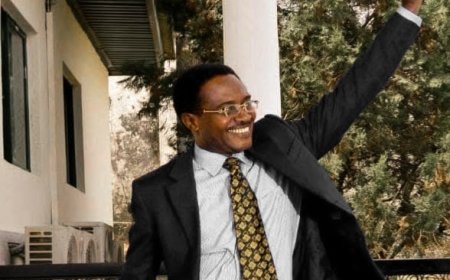


PIONEERING A RESILIENT TOMORROW: FROM VISIONARY FOUNDATIONS TO THE CROSS RIVER STATE CLIMATE TRANSITION BY ODEN EWA, APC CANDIDATE FOR CROSS RIVER CENTRAL SENATORIAL DISTRICT

Your Excellencies, distinguished ladies and gentlemen,
The future of Cross River State will be determined not merely by the natural wealth we inherit, but by how wisely we transform that wealth into prosperity for our people.
Today marks a defining milestone in that journey—the development of our maiden Climate Transition Plan.
For me, this occasion carries particular significance. It represents the advancement of a vision we pursued through the conceptualisation and passage of the state’s Climate Change and Green Economy laws, which provided the statutory foundation for the establishment of the Cross River State Council on Climate Change and the Green Economy Commission.
I am deeply encouraged to see these institutions advancing under the leadership of His Excellency, Senator Prince Bassey Edet Otu, whose People First philosophy provides the right framework for ensuring that environmental protection translates into tangible improvements in people's lives.
Our institutional foundations are now in place. The task before us is to translate them into measurable economic, social and environmental outcomes.
This Climate Transition Plan must be more than a policy document; it must become an instrument of development, investment and prosperity.
Cross River State is blessed with globally significant biodiversity and some of Nigeria’s most important remaining tropical rainforests. Yet this natural advantage must deliver more than international recognition. It must create jobs, strengthen livelihoods, attract investment and build resilient communities.
Consider the farmer in Yakurr whose harvest is threatened by unpredictable rainfall, or the rural community in Boki that could benefit from sustainable forest enterprise and ecotourism. For these citizens, climate action must mean more secure livelihoods, improved incomes and greater opportunities.
That is the essence of a People First climate transition.
Four baseline studies: Building an investment-ready future
Distinguished ladies and gentlemen,
Our immediate task includes four critical baseline studies across all 18 Local Government Areas:
1. Greenhouse Gas (GHG) Inventory Assessment.
2. Climate Risk and Vulnerability Assessment.
3. Climate Finance Landscape Assessment.
4. State Mitigation Strategy Assessment.
These studies will establish the evidence required to identify our emissions profile, understand our vulnerabilities, prioritise interventions and determine how best to finance our transition.
My experience representing Cross River State on international climate missions has reinforced one important lesson: global climate finance follows credible evidence, bankable projects and accountable institutions—not ambition alone.
With reliable data and sound project preparation, we can strengthen our case for climate finance, responsible carbon-market opportunities, green investment and development partnerships.
This workshop will also advance the first-order drafts of the State Climate Change Policy and Action Plan and the Green Economy Policy and Action Plan. Together, these instruments must provide a coherent framework for turning our climate ambitions into practical programmes across government and the economy.
Aligning climate action with government priorities
Your Excellency, our Climate Transition Plan must complement the development priorities of the Cross River State Government. Climate action should strengthen agriculture, infrastructure, healthcare, energy access, tourism and employment—not operate as a disconnected agenda.
A climate-resilient road protects public investment. Solar-powered facilities improve essential services. Climate-smart agriculture protects farmers’ incomes. Sustainable forest management creates economic opportunities while preserving our natural heritage.
These are practical expressions of the People First agenda
I therefore call on all MDAs and the 18 Local Government Councils to participate actively in this process and ensure that agreed priorities are integrated into sector plans, annual budgets and development programmes.
The Council on Climate Change and the Green Economy Commission must provide strategic coordination, while relevant ministries, agencies and local governments take ownership of implementation, with clear responsibilities, measurable targets and regular performance reviews.
If climate priorities are absent from our budgets, they will remain on paper. If they are embedded in our development plans, they can transform our economy.
A shared responsiblity and a call to action
To our developmnt partners, particularly Future Funds, the Under2 Coalition and the Climate Group, we express our sincere appreciation for the seed grant supporting this process. We also acknowledge the invaluable contributions of FAO and UNDP to the state's agricultural, environmental and development priorities. We invite all our partners to deepen this collaboration as we move from planning to implementation and investment.
To the private sector and financial institutions, we invite you to help unlock opportunities in renewable energy, sustainable agriculture, ecotourism, waste management and nature-based solutions. Government must provide the enabling environment, while private capital, technical expertise and innovation help deliver projects at scale.
To civil society, traditional institutions and our communities, your participation is essential to ensuring that this transition is inclusive, equitable and responsive to local realities.
As State Special Envoy on Climate Missions and a candidate for the Senate, I remain committed to championing subnational climate action, stronger environmental governance and improved access to federal and international support for sustainable development. This commitment transcends political office; it is a responsibility to the future of our state and our country.
Conclusion: Three commitments, one Future
Distinguished ladies and gentlemen, let us leave this workshop united around three commitments:
That our natural heritage will be protected, not merely celebrated.
That our climate ambitions will be financed, not merely announced.
And that the lives of our people will be improved, not merely promised.
Let us build a Climate Transition Plan that connects government policy to budgets, credible projects to investment, and environmental protection to jobs, livelihoods and measurable public benefit.
The foundation has been laid. The opportunity is before us. Now is the time for coordinated action, institutional accountability and sustained commitment.
Together, let us make Cross River State a model of climate resilience, green economic growth and People First development for Nigeria and Africa.
Thank you, and may God bless the State Council on Climate Change.
~_Delivered by Hon. Oden Ewa State Special Envoy on Climate Missions. He is the Cross River Central Senatorial Candidate; Former Commissioner for Special Duties and Intergovernmental Relations; Former Chairman, Green Economy Commission & Member, Cross River State Council on Climate Change.
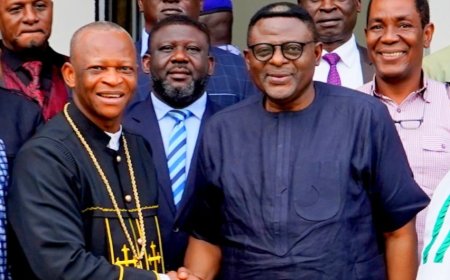
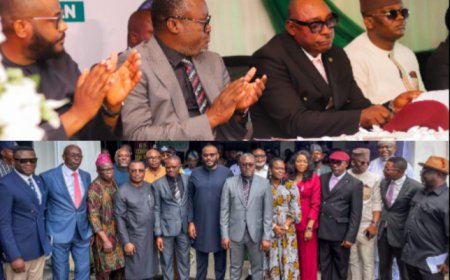
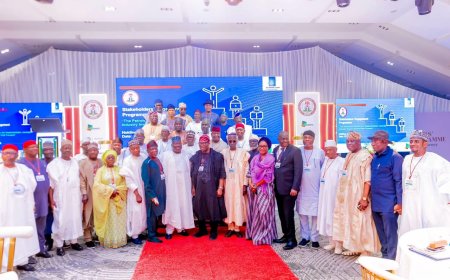
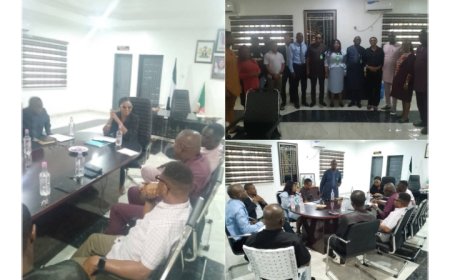
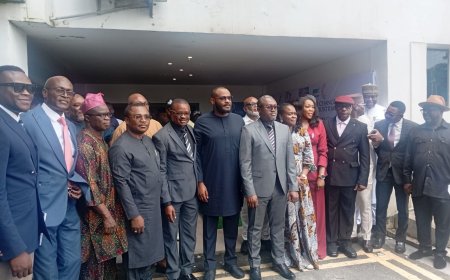
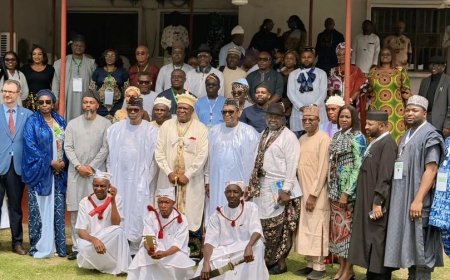
The Workshop for the Development of the Maiden Cross River State Climate Transition Plan was held at Library Complex, Calabar, Cross River State. 20/10/26